



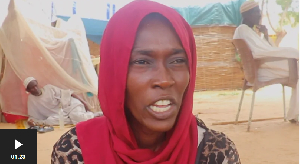
 Dis fit be di only food dis children go get for a day
Di women for di community kitchen for di war torn Sudanese city of el-Fasher siddon togeda in desperation.
"Our children dey die bifor our eyes," one of dem tell BBC.
"We no know wetin to do. Dem dey innocent. Dem no get anytin to do wit di army or [dia paramilitary rival] di Rapid Support Forces. Wetin we dey suffer worse pass wetin you fit can imagine."
Food dey very scarce for el-Fasher, di prices of food don go up to di point wey be say money wey we dey use buy food for one week, na only one day food we fit take am buy now.
International aid organisations don condemn di "calculated use of starvation as a weapon of war".
Di hunger crisis dey worse wit di outbreak of cholera wey dey sweep through di squalid camps of those wey di crisis displace.
Di medical charity Doctors Without Borders (MSF) on Thursday, 14 August say Sudan dey experience di worst cholera outbreak di kontri don see in years, wey di ongoing civil war cause.
Sudan don record nearly 100,000 cases and 2,470 deaths ova di past year, authorities say di current epicentre na near el-Fasher.
BBC don get rare footage of pipo wey still dey trapped for di city, wey one local activist send to us, na one freelance cameraman feem di video.
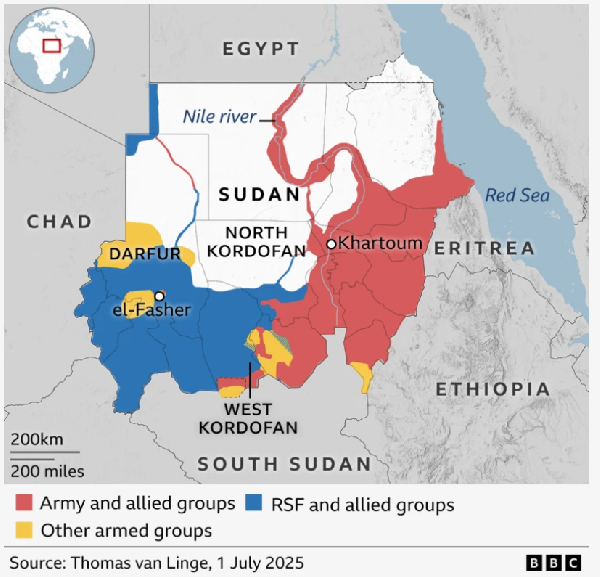
Di Sudanese army dey battle di Rapid Support Forces (RSF) for more dan two years afta dia commanders gada stage coup and later fall out.
El-Fasher, for di western Darfur region, na one of di most brutal frontlines for di conflict.
Di paramilitaries tighten dia 14-month blockade afta dem lost control of di capital Khartoum, earlier dis year.
Dem step up dia battle for el-Fasher, di last foothold of di armed forces for Darfur. Di fight-fight escalate dis week into one of di most intense RSF attacks wey di city don witness yet.
For di north and centre of of di kontri wia di army fight to get back territory from di RSF, food and medical aid don add to di civilian suffering.
But di situation dey very serious for di conflict zones of western and southern Sudan.
For di Matbakh-al-Khair communal kitchen for el-Fasher late last month, volunteers bin turn ambaz into porridge. Dis na wetin dey remain from peanuts afta dem don extract di oil, dem dey normally feed am to animals.
Sometimes, dem dey get sorghum or millet but on di day dem feem, di kitchen manager say: "Flour or bread no dey."
"Now e don reach di point wey be say na ambaz we dey chop. May God deliver us from dis wahala, nothing dey to buy for market," e add.
UN don double dia appeal for humanitarian pause to allow food convoys enta di city, as dia Sudan envoy Sheldon Yett for dis week again beg di warring sides to observe dia obligations under international law.
Di army don give clearance for di trucks to enta but di UN still dey wait for official word from di paramilitary group.
RSF advisers say dem believe say dem go use di humanitarian pause carry food and weapons for di army "besieged militias" wey dey inside el-Fasher.
Dem also claim say di the paramilitary group and dia allies dey set up "safe routes" for civilians to comot di city.
Di RSF bin issue one statement to deny di widespread allegations say dem dey target civilians for el-Fasher, dem claim say local armed groups for di city dey use civilians as human shields.
For residents of di city, di battle na to remain alive wen dem begin attack and hustle for any food dem fit get.
Local responders fit receive some emergency cash through one digital banking system, but e no dey go very far.
"Di prices for markets don go very high," Mathilde Vu, advocacy manager for di Norwegian Refugee Council tok.
"Today, $5,000 [£3,680] dey cover one meal for 1,500 pipo inside one single day. Three months ago, di same amount fit feed them for one week."
Doctors say pipo dey die of malnutrition. E no dey possible to know how many - one report wey quote one regional health official put di number at more dan 60 last week.
Hospitals no fit cope. Few of dem still dey operate. Dem dey short of medical supplies to help di pipo wey dey starve, and those injured for di continuous attacks.
"We get many malnourished children wey dey admitted for hospital but unfortunately, we no get any single sachet of [therapeutic food]," Dr Ibrahim Abdullah Khater, one paediatrician for di Al Saudi Hospital tok, e say five severely malnourished children currently dey for di ward and dem also get medical complications.
"Dem just dey wait to die," e tok.
Wen hunger crises hit, those wey usually dey die first na di most vulnerable, pipo wey no dey healthy or those wey dey suffer from pre-existing conditions.
"Di situation dey very worse, e dey very terrible," di doctor tell us for one voice message.
"Di children of el-Fasher dey die on a daily basis sake of lack of food, lack of medicine. Unfortunately, di international community just dey look."
International non-governmental organisations wey dey work for Sudan issue one urgent statement dis week wia dem declare say "sustained attacks, obstruction of aid and targeting of critical infrastructure demonstrate a deliberate strategy to break di civilian population through hunger, fear, and exhaustion".
Dem tok say "unconfirmed reports of recent food hoarding for military use add to di suffering of civilians".
"No safe passage dey out of di city, as roads dey blocked and those wey try to run dey face attacks, taxation at checkpoints, community-based discrimination and death," di organisations tok.
Hundreds of thousands of people bin run earlier, many of dem from Zamzam displaced persons camp wey dey di edge of el-Fasher, wey di RSF seize for April.
Dem land for Tawila, one town wey dey 60km (37 miles) west of di city, weak and dehydrated, wit accounts of violence and extortion along di road from RSF-allied groups.
Life dey safer for di crowded camps, but disease dey kill dem - most deadly of all: na cholera, wey polluted water dey cause.
Destruction of water infrastructure plus lack of food and medical care trigger di outbreak. Flooding for di rainy season come make am worse.
Unlike el-Fasher, for Tawila aid workers at least get access, but dia supplies dey limited, John Joseph Ocheibi, di on-site project coordinator for one group wey di name na The Alliance for International Medical Action tok.
"We get shortages in terms of [washing facilities], in terms of medical supplies, to fit deal wit dis situation," e tell BBC. "We dey hustle for resources to see how best we go fit respond."
MSF project coordinator Sylvain Penicaud estimate say na only three litres of water each pesin fit get per day for di camps, wey e say dey "way below di basic need, and e force pipo to get water from contaminated sources".
Zubaida Ismail Ishaq dey lie down for di tent clinic. She dey seven months pregnant, she dey weak, skinny and tired. Her story na tale of trauma wey many pipo know.
She tell us say she bin dey do business wit di small money she get, bifor she run comot from el-Fasher.
Armed men on di road to Tawila capture her husband. Her daughter get injury for head.
Zubaida and her mother catch cholera shortly afta dem land for di camp.
"We dey drink water wey we no boil," she tok. "Nobody dey to give us water. Since we come here, I no get anytin."
For el-Fasher, many women wey dey di clustered soup kitchen beg us for help - any kind of help.
"We don tire. We want make dem lift dis siege," Faiza Abkar Mohammed tok. "Even if dem airdrop food, airdrop anything – we dey completely exhausted."
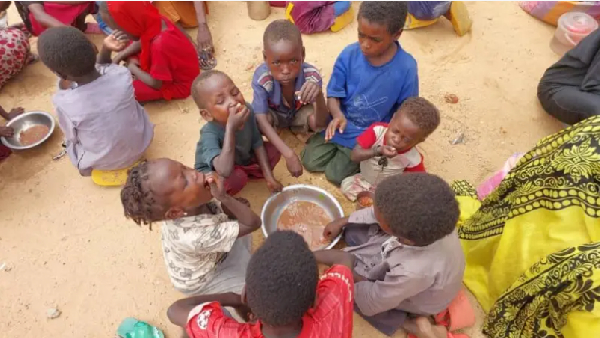
Dis fit be di only food dis children go get for a day
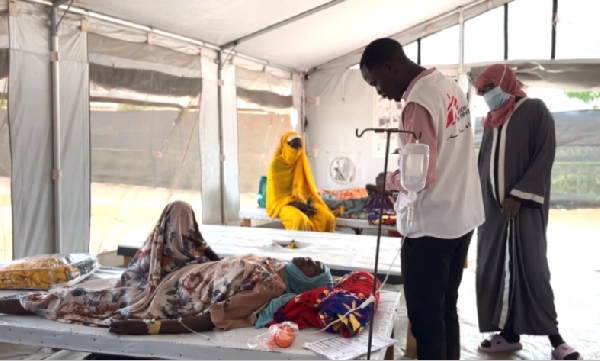
Dem build makeshift centres to treat patients wey get cholera



Copyright © 1994 - 2025 GhanaWeb. All rights reserved.










