Business News of 2026-09-02
$1.7 billion gold trade cost is justified, BoG should not bear it - Report
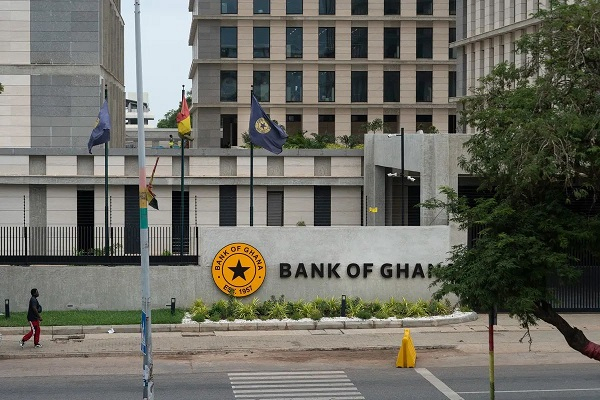 Ghana’s reported US$1.7 billion cost associated with the Bank of Ghana’s Domestic Gold Purchase Programme should not be judged as though it were an ordinary commercial trading loss. The more important question is whether the country received sufficient macroeconomic value in return.
On that test, there is a strong argument that the cost was worthwhile even though the accounting treatment going forward should change.
The International Monetary Fund has estimated that the scaling-up of the programme in 2025 generated losses exceeding US$1.7 billion, equivalent to about 1.5% of GDP.
Yet the programme simultaneously helped mobilize enormous foreign-exchange resources. GoldBod says more than US$10.8 billion in foreign exchange was generated through gold purchases and exports, with about US$10.6 billion intermediated into the market.
International reserves rose from US$8.9 billion in 2024 to roughly US$13.8 billion by December 2025, while the cedi appreciated by more than 41%.
These outcomes matter. A central bank does not exist to maximize trading profits. Its fundamental responsibility is monetary and financial stability. If acquiring domestic gold helped dramatically increase foreign-exchange liquidity, strengthen reserves, reduce pressure on the cedi and contribute to the collapse in inflation, then part of the apparent financial cost should properly be understood as the price of stabilization.
Moreover, the US$1.7 billion figure requires careful interpretation. The Institute of Economic Affairs has argued that roughly 90% of the reported amount principally reflects exchange-rate valuation differences rather than an equivalent destruction of national wealth. GoldBod itself has also stressed that it was acting as the BoG’s buying agent and that the programme’s reported cost should not simply be described as a GoldBod trading loss.
That said, government is absolutely right to insist that such costs should not remain indefinitely on the central bank’s balance sheet.
This is fundamentally a fiscal policy cost disguised as a monetary operation. If government directs the state to purchase gold at terms designed to achieve national economic objectives, reserve accumulation, currency stabilization, formalization of the gold trade and suppression of smuggling then the sovereign should ultimately bear the associated quasi-fiscal cost.
Loading that cost onto the BoG weakens the institution’s own balance sheet and can undermine its capacity to conduct independent monetary policy.
There is also a crucial principle of accountability here: the institution that makes or authorizes a fiscal policy decision should bear its financial consequences. The BoG should not have to sacrifice its capital and future earnings to finance government policy.
Going forward, therefore, the appropriate model is straightforward. GoldBod should operate commercially, government should explicitly budget for any strategic subsidies or stabilization costs it requires, and the BoG should concentrate on monetary stability, reserves management and banking-system supervision.
Ghana does not need to apologize for the US$1.7 billion but it should not romanticize it either. If the expenditure helped avert a far more damaging currency and inflation crisis, it was a worthwhile national investment. But worthwhile does not mean invisible. Future costs should be transparently appropriated to the national budget, where Parliament and taxpayers can see, debate and scrutinize them.
That is not merely better accounting. It is better economic governance.
Ghana’s reported US$1.7 billion cost associated with the Bank of Ghana’s Domestic Gold Purchase Programme should not be judged as though it were an ordinary commercial trading loss. The more important question is whether the country received sufficient macroeconomic value in return.
On that test, there is a strong argument that the cost was worthwhile even though the accounting treatment going forward should change.
The International Monetary Fund has estimated that the scaling-up of the programme in 2025 generated losses exceeding US$1.7 billion, equivalent to about 1.5% of GDP.
Yet the programme simultaneously helped mobilize enormous foreign-exchange resources. GoldBod says more than US$10.8 billion in foreign exchange was generated through gold purchases and exports, with about US$10.6 billion intermediated into the market.
International reserves rose from US$8.9 billion in 2024 to roughly US$13.8 billion by December 2025, while the cedi appreciated by more than 41%.
These outcomes matter. A central bank does not exist to maximize trading profits. Its fundamental responsibility is monetary and financial stability. If acquiring domestic gold helped dramatically increase foreign-exchange liquidity, strengthen reserves, reduce pressure on the cedi and contribute to the collapse in inflation, then part of the apparent financial cost should properly be understood as the price of stabilization.
Moreover, the US$1.7 billion figure requires careful interpretation. The Institute of Economic Affairs has argued that roughly 90% of the reported amount principally reflects exchange-rate valuation differences rather than an equivalent destruction of national wealth. GoldBod itself has also stressed that it was acting as the BoG’s buying agent and that the programme’s reported cost should not simply be described as a GoldBod trading loss.
That said, government is absolutely right to insist that such costs should not remain indefinitely on the central bank’s balance sheet.
This is fundamentally a fiscal policy cost disguised as a monetary operation. If government directs the state to purchase gold at terms designed to achieve national economic objectives, reserve accumulation, currency stabilization, formalization of the gold trade and suppression of smuggling then the sovereign should ultimately bear the associated quasi-fiscal cost.
Loading that cost onto the BoG weakens the institution’s own balance sheet and can undermine its capacity to conduct independent monetary policy.
There is also a crucial principle of accountability here: the institution that makes or authorizes a fiscal policy decision should bear its financial consequences. The BoG should not have to sacrifice its capital and future earnings to finance government policy.
Going forward, therefore, the appropriate model is straightforward. GoldBod should operate commercially, government should explicitly budget for any strategic subsidies or stabilization costs it requires, and the BoG should concentrate on monetary stability, reserves management and banking-system supervision.
Ghana does not need to apologize for the US$1.7 billion but it should not romanticize it either. If the expenditure helped avert a far more damaging currency and inflation crisis, it was a worthwhile national investment. But worthwhile does not mean invisible. Future costs should be transparently appropriated to the national budget, where Parliament and taxpayers can see, debate and scrutinize them.
That is not merely better accounting. It is better economic governance.

