
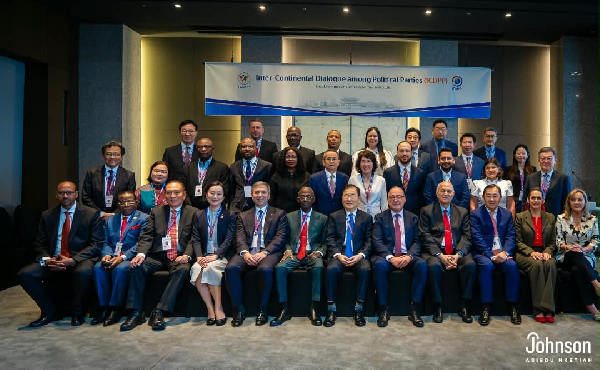
 The character of a government is largely formed long before a single cabinet minister is appointed or a ballot is cast, Johnson Asiedu Nketiah argued during a high-level address in Seoul on September 7, 2026.
Speaking at the inaugural Inter-Continental Dialogue on Political Parties, Asiedu Nketiah challenged the conventional political focus on election-night outcomes, placing the onus instead on the internal health, discipline, and preparation of political parties themselves.
“A country pays a heavy price when its political parties become highly effective at winning elections but insufficiently serious about preparing people to govern,” Asiedu Nketiah told delegates.
The National Chairman of Ghana’s National Democratic Congress (NDC) delivered the address on behalf of political parties participating in the African Political Parties Initiative (APPI), an initiative established by the Africa Governance Centre (AGC).
The historic dialogue also convened representatives from the International Conference of Asian Political Parties (ICAPP) and the Permanent Conference of Political Parties of Latin America and the Caribbean (COPPPAL), establishing a new cross-regional channel for institutional cooperation among political parties from Africa, Asia, Latin America, and the Caribbean.
Asiedu Nketiah’s central thesis was that elections grant political authority, but they do not manufacture competence, judgment, or discipline overnight.
By the time a party wins power, its years of internal decision-making, including whom it trusts, the qualities it rewards, the conduct it tolerates, and how seriously it treats policy, have already become part of the nation’s governing reality.
He emphasised that public officials, including ministers, legislators, and senior appointees, arrive in office carrying habits, attitudes towards dissent, and standards of responsibility forged over years within their political parties.
Consequently, the distance between party headquarters and the machinery of government is much shorter than it often appears.
Contrasting the distinct demands of campaigning and governing, Asiedu Nketiah noted that while campaigns reward speed, persuasion, and electoral coalitions, governance exposes leaders to complex realities that cannot be resolved by slogans or electoral arithmetic.
Budgets force difficult choices, while policies create far-reaching consequences.
Therefore, he argued, the transition from opposition to government should never be treated as the starting point for preparation.
Parties that wait until victory to find individuals who understand the economy, public administration, or institutional reform have already lost valuable time.
Furthermore, Asiedu Nketiah challenged political institutions to examine their informal curricula—the unwritten rules regarding who succeeds, what conduct is rewarded, and whether competence can survive alongside ambition.
When a party enters government, he said, that internal culture crosses the gates of the state.
He also cautioned against reducing leadership development to the search for a single charismatic presidential or prime ministerial candidate.
Effective governance, he noted, depends on depth across the entire political system, including competent ministers, rigorous legislators, and prudent advisers.
Stronger institutions, he argued, are those that consistently produce capable people rather than relying on a small circle of figures whenever responsibility arises.
Asiedu Nketiah concluded that while electoral victory decides who governs next, it cannot guarantee that those leaders will be ready for the weight of office.
The ultimate test of a political party, he said, lies in what it does during the years when no election is imminent—the standards it protects, the depth it builds, and whether it prepares to serve the country rather than merely inherit its offices.
The character of a government is largely formed long before a single cabinet minister is appointed or a ballot is cast, Johnson Asiedu Nketiah argued during a high-level address in Seoul on September 7, 2026.
Speaking at the inaugural Inter-Continental Dialogue on Political Parties, Asiedu Nketiah challenged the conventional political focus on election-night outcomes, placing the onus instead on the internal health, discipline, and preparation of political parties themselves.
“A country pays a heavy price when its political parties become highly effective at winning elections but insufficiently serious about preparing people to govern,” Asiedu Nketiah told delegates.
The National Chairman of Ghana’s National Democratic Congress (NDC) delivered the address on behalf of political parties participating in the African Political Parties Initiative (APPI), an initiative established by the Africa Governance Centre (AGC).
The historic dialogue also convened representatives from the International Conference of Asian Political Parties (ICAPP) and the Permanent Conference of Political Parties of Latin America and the Caribbean (COPPPAL), establishing a new cross-regional channel for institutional cooperation among political parties from Africa, Asia, Latin America, and the Caribbean.
Asiedu Nketiah’s central thesis was that elections grant political authority, but they do not manufacture competence, judgment, or discipline overnight.
By the time a party wins power, its years of internal decision-making, including whom it trusts, the qualities it rewards, the conduct it tolerates, and how seriously it treats policy, have already become part of the nation’s governing reality.
He emphasised that public officials, including ministers, legislators, and senior appointees, arrive in office carrying habits, attitudes towards dissent, and standards of responsibility forged over years within their political parties.
Consequently, the distance between party headquarters and the machinery of government is much shorter than it often appears.
Contrasting the distinct demands of campaigning and governing, Asiedu Nketiah noted that while campaigns reward speed, persuasion, and electoral coalitions, governance exposes leaders to complex realities that cannot be resolved by slogans or electoral arithmetic.
Budgets force difficult choices, while policies create far-reaching consequences.
Therefore, he argued, the transition from opposition to government should never be treated as the starting point for preparation.
Parties that wait until victory to find individuals who understand the economy, public administration, or institutional reform have already lost valuable time.
Furthermore, Asiedu Nketiah challenged political institutions to examine their informal curricula—the unwritten rules regarding who succeeds, what conduct is rewarded, and whether competence can survive alongside ambition.
When a party enters government, he said, that internal culture crosses the gates of the state.
He also cautioned against reducing leadership development to the search for a single charismatic presidential or prime ministerial candidate.
Effective governance, he noted, depends on depth across the entire political system, including competent ministers, rigorous legislators, and prudent advisers.
Stronger institutions, he argued, are those that consistently produce capable people rather than relying on a small circle of figures whenever responsibility arises.
Asiedu Nketiah concluded that while electoral victory decides who governs next, it cannot guarantee that those leaders will be ready for the weight of office.
The ultimate test of a political party, he said, lies in what it does during the years when no election is imminent—the standards it protects, the depth it builds, and whether it prepares to serve the country rather than merely inherit its offices.