Business News of 2026-09-13
Ghana pitches three climate projects worth up to US$175m to Chinese investors
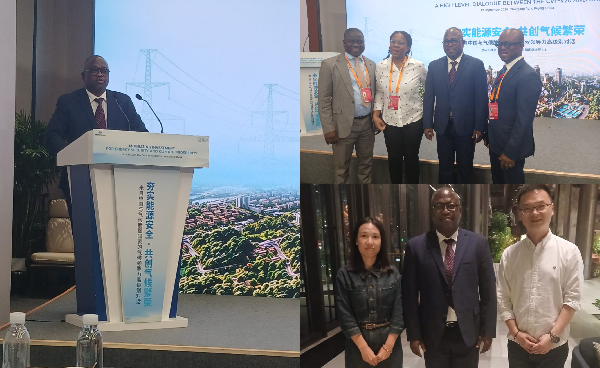 Ghana has presented three investment-ready climate projects worth an estimated US$135 million to US$175 million to Chinese investors and technology providers as the country intensifies efforts to translate its Climate Prosperity Plan into investments in green industrialisation, climate-smart agriculture, carbon finance and sustainable infrastructure.
The projects were presented by the Minister of State for Climate Change and Sustainability, Seidu Issifu, during the Global South Perspective panel at the China International Fair for Trade in Services (CIFTIS) 2026 in Beijing, China.
The presentation formed part of a high-level dialogue between the Climate Vulnerable Forum (CVF), the Vulnerable Twenty Group (V20) and China under the theme, “Mobilising Investment for Energy Security and Climate Prosperity”.
The dialogue sought to connect country-owned Climate Prosperity Plans with Chinese technology, finance, investment and industrial capacity across three key areas: green industrialisation and electrotech; resilient infrastructure and water security; and climate-smart agriculture and value chains.
Speaking about Ghana’s priority areas for Chinese collaboration, Issifu identified technology transfer, affordable financing and digital measurement, reporting and verification (MRV) systems as critical requirements for accelerating the country’s green transition.
He stressed that Ghana was seeking partnerships that would promote local production and technology transfer rather than simply importing finished products.
“We do not want to only import solar panels and e-bikes. We want to assemble them in Ghana,” he said.
The minister identified battery energy storage systems, solar mini-grids, solar water pumps and electric mobility assembly as areas where Chinese technology and investment could support Ghana’s green industrialisation and the government’s 24-hour economy agenda.
He also called for increased use of equity investment, joint ventures and blended finance, noting that the high cost of capital remains a major constraint to investment in many climate-vulnerable economies.
According to him, instruments such as partial credit guarantees, subordinated debt and first-loss capital could help reduce investment risks and attract greater private-sector participation.
Three projects presented
Issifu highlighted three projects from Ghana’s Climate Prosperity Plan Investment Compendium that he said were ready for engagement with Chinese partners.
Green Mobility Initiative
The first is the Green Mobility Initiative, which requires an estimated US$30 million to US$50 million in investment.
The project seeks to accelerate electric mobility along Ghana’s northern corridor and in Accra through the deployment of electric bicycles, electric three-wheelers, charging infrastructure and battery-swapping stations.
Ghana is seeking a Chinese electric-vehicle technology partner to establish a local assembly plant for e-bikes and lithium batteries.
The initiative would also explore pay-as-you-go financing for riders and the generation of carbon credits under Ghana’s Article 6 framework.
Issifu cited the business model being tested by Wahu Mobility in Ghana as evidence of market potential.
He said the project would enable Ghana to move beyond importing electric vehicles towards local manufacturing, job creation, technology transfer and the development of a domestic green mobility value chain.
Forest Prosperity Programme and Climate-smart Shea Value Chain
The second opportunity is the Forest Prosperity Programme and Climate-smart Shea Value Chain, which requires approximately US$25 million in investment, alongside a proposed US$15 million carbon advance.
The programme seeks to restore about 10,000 hectares of degraded land and establish 50,000 smallholder shea and cashew agroforestry systems across five northern regions of Ghana.
It will also incorporate shea processing and cold-storage infrastructure to increase agricultural value addition, strengthen climate resilience and improve rural livelihoods.
The project has an estimated carbon potential of approximately 1.2 million tonnes of carbon dioxide equivalent over 10 years.
Ghana is seeking Chinese partners to provide solar-powered cold-chain and shea-processing technologies, as well as carbon finance through a proposed Article 6.2 offtake arrangement with Chinese corporate buyers.
The country is also seeking investment in digital MRV systems to support the monitoring and aggregation of smallholder activities.
Akosombo Sustainable Textile Park
The third project is the Akosombo Sustainable Textile Park, with an estimated investment requirement of US$80 million to US$100 million.
The proposed net-zero industrial park at Akosombo would be powered by a combination of 50 megawatts of solar energy and hydropower and support garment and textile manufacturing for export under the African Continental Free Trade Area (AfCFTA).
Issifu said the project had several investment-readiness elements, including secured land and a hydro connection, an advanced Environmental Protection Agency permitting process and confirmed interest from an anchor tenant.
Ghana is seeking a Chinese textile and green industrial-zone developer to serve as an anchor co-developer, with expertise in solar manufacturing, grid systems and wastewater recycling technologies.
The proposed development would be structured through a Special Purpose Vehicle (SPV) involving Ghana’s industrial park development institutions.
Ghana seeks project-matching partnerships
Issifu used the platform to invite Chinese companies, financial institutions and technology providers with relevant expertise to engage directly with Ghana on the three projects.
He said companies with electric vehicle and battery technology could explore opportunities under the Green Mobility Initiative, while firms specialising in agricultural technology, cold chains and high-integrity carbon markets could participate in the Forest Prosperity and Shea Value Chain project.
He further identified the Akosombo Sustainable Textile Park as an opportunity for companies with expertise in industrial park development and sustainable manufacturing.
The approach reflects the broader objective of the CVF-V20-China dialogue to move from general discussions on climate finance towards direct investment, joint ventures, technology partnerships and blended finance.
Issifu said Ghana’s investment proposition was anchored in its revised Climate Prosperity Plan and Investment Compendium, which are intended to provide a country-owned pipeline of investable projects.
He said the framework would give investors greater clarity on Ghana’s climate priorities while presenting specific projects through which those priorities could be implemented.
The minister also disclosed that Ghana was seeking Cabinet approval for proposed Climate Change and Sustainability Units as part of efforts to strengthen climate coordination and investment implementation at the sub-national level.
The proposed units are expected to support the aggregation and implementation of climate-related investments at the local level, following nationwide consultations being undertaken by the Office of the Minister of State for Climate Change and Sustainability.
Issifu said Ghana had moved beyond identifying broad climate needs and was now focused on matching specific projects with investors, technology providers and financial institutions.
He invited Chinese partners to participate in a proposed project-matching session within 90 days of the Beijing dialogue, followed by further engagement in Accra in the first quarter of 2027, with the aim of advancing the projects towards implementation and investment decisions.
The three projects form part of Ghana’s strategy to use climate action as a platform for industrialisation, job creation, technology transfer, export growth, agricultural value addition and investment mobilisation.
The Green Mobility Initiative links clean transport with local manufacturing and carbon finance; the Forest Prosperity Programme combines ecosystem restoration, agriculture, rural livelihoods and carbon markets; while the Akosombo Sustainable Textile Park connects renewable energy with sustainable manufacturing and access to the African continental market.
Ghana has presented three investment-ready climate projects worth an estimated US$135 million to US$175 million to Chinese investors and technology providers as the country intensifies efforts to translate its Climate Prosperity Plan into investments in green industrialisation, climate-smart agriculture, carbon finance and sustainable infrastructure.
The projects were presented by the Minister of State for Climate Change and Sustainability, Seidu Issifu, during the Global South Perspective panel at the China International Fair for Trade in Services (CIFTIS) 2026 in Beijing, China.
The presentation formed part of a high-level dialogue between the Climate Vulnerable Forum (CVF), the Vulnerable Twenty Group (V20) and China under the theme, “Mobilising Investment for Energy Security and Climate Prosperity”.
The dialogue sought to connect country-owned Climate Prosperity Plans with Chinese technology, finance, investment and industrial capacity across three key areas: green industrialisation and electrotech; resilient infrastructure and water security; and climate-smart agriculture and value chains.
Speaking about Ghana’s priority areas for Chinese collaboration, Issifu identified technology transfer, affordable financing and digital measurement, reporting and verification (MRV) systems as critical requirements for accelerating the country’s green transition.
He stressed that Ghana was seeking partnerships that would promote local production and technology transfer rather than simply importing finished products.
“We do not want to only import solar panels and e-bikes. We want to assemble them in Ghana,” he said.
The minister identified battery energy storage systems, solar mini-grids, solar water pumps and electric mobility assembly as areas where Chinese technology and investment could support Ghana’s green industrialisation and the government’s 24-hour economy agenda.
He also called for increased use of equity investment, joint ventures and blended finance, noting that the high cost of capital remains a major constraint to investment in many climate-vulnerable economies.
According to him, instruments such as partial credit guarantees, subordinated debt and first-loss capital could help reduce investment risks and attract greater private-sector participation.
Three projects presented
Issifu highlighted three projects from Ghana’s Climate Prosperity Plan Investment Compendium that he said were ready for engagement with Chinese partners.
Green Mobility Initiative
The first is the Green Mobility Initiative, which requires an estimated US$30 million to US$50 million in investment.
The project seeks to accelerate electric mobility along Ghana’s northern corridor and in Accra through the deployment of electric bicycles, electric three-wheelers, charging infrastructure and battery-swapping stations.
Ghana is seeking a Chinese electric-vehicle technology partner to establish a local assembly plant for e-bikes and lithium batteries.
The initiative would also explore pay-as-you-go financing for riders and the generation of carbon credits under Ghana’s Article 6 framework.
Issifu cited the business model being tested by Wahu Mobility in Ghana as evidence of market potential.
He said the project would enable Ghana to move beyond importing electric vehicles towards local manufacturing, job creation, technology transfer and the development of a domestic green mobility value chain.
Forest Prosperity Programme and Climate-smart Shea Value Chain
The second opportunity is the Forest Prosperity Programme and Climate-smart Shea Value Chain, which requires approximately US$25 million in investment, alongside a proposed US$15 million carbon advance.
The programme seeks to restore about 10,000 hectares of degraded land and establish 50,000 smallholder shea and cashew agroforestry systems across five northern regions of Ghana.
It will also incorporate shea processing and cold-storage infrastructure to increase agricultural value addition, strengthen climate resilience and improve rural livelihoods.
The project has an estimated carbon potential of approximately 1.2 million tonnes of carbon dioxide equivalent over 10 years.
Ghana is seeking Chinese partners to provide solar-powered cold-chain and shea-processing technologies, as well as carbon finance through a proposed Article 6.2 offtake arrangement with Chinese corporate buyers.
The country is also seeking investment in digital MRV systems to support the monitoring and aggregation of smallholder activities.
Akosombo Sustainable Textile Park
The third project is the Akosombo Sustainable Textile Park, with an estimated investment requirement of US$80 million to US$100 million.
The proposed net-zero industrial park at Akosombo would be powered by a combination of 50 megawatts of solar energy and hydropower and support garment and textile manufacturing for export under the African Continental Free Trade Area (AfCFTA).
Issifu said the project had several investment-readiness elements, including secured land and a hydro connection, an advanced Environmental Protection Agency permitting process and confirmed interest from an anchor tenant.
Ghana is seeking a Chinese textile and green industrial-zone developer to serve as an anchor co-developer, with expertise in solar manufacturing, grid systems and wastewater recycling technologies.
The proposed development would be structured through a Special Purpose Vehicle (SPV) involving Ghana’s industrial park development institutions.
Ghana seeks project-matching partnerships
Issifu used the platform to invite Chinese companies, financial institutions and technology providers with relevant expertise to engage directly with Ghana on the three projects.
He said companies with electric vehicle and battery technology could explore opportunities under the Green Mobility Initiative, while firms specialising in agricultural technology, cold chains and high-integrity carbon markets could participate in the Forest Prosperity and Shea Value Chain project.
He further identified the Akosombo Sustainable Textile Park as an opportunity for companies with expertise in industrial park development and sustainable manufacturing.
The approach reflects the broader objective of the CVF-V20-China dialogue to move from general discussions on climate finance towards direct investment, joint ventures, technology partnerships and blended finance.
Issifu said Ghana’s investment proposition was anchored in its revised Climate Prosperity Plan and Investment Compendium, which are intended to provide a country-owned pipeline of investable projects.
He said the framework would give investors greater clarity on Ghana’s climate priorities while presenting specific projects through which those priorities could be implemented.
The minister also disclosed that Ghana was seeking Cabinet approval for proposed Climate Change and Sustainability Units as part of efforts to strengthen climate coordination and investment implementation at the sub-national level.
The proposed units are expected to support the aggregation and implementation of climate-related investments at the local level, following nationwide consultations being undertaken by the Office of the Minister of State for Climate Change and Sustainability.
Issifu said Ghana had moved beyond identifying broad climate needs and was now focused on matching specific projects with investors, technology providers and financial institutions.
He invited Chinese partners to participate in a proposed project-matching session within 90 days of the Beijing dialogue, followed by further engagement in Accra in the first quarter of 2027, with the aim of advancing the projects towards implementation and investment decisions.
The three projects form part of Ghana’s strategy to use climate action as a platform for industrialisation, job creation, technology transfer, export growth, agricultural value addition and investment mobilisation.
The Green Mobility Initiative links clean transport with local manufacturing and carbon finance; the Forest Prosperity Programme combines ecosystem restoration, agriculture, rural livelihoods and carbon markets; while the Akosombo Sustainable Textile Park connects renewable energy with sustainable manufacturing and access to the African continental market.

