Business News of 2026-09-23
Aliko Dangote opens up on $20 billion refinery struggles and 'oil mafia'
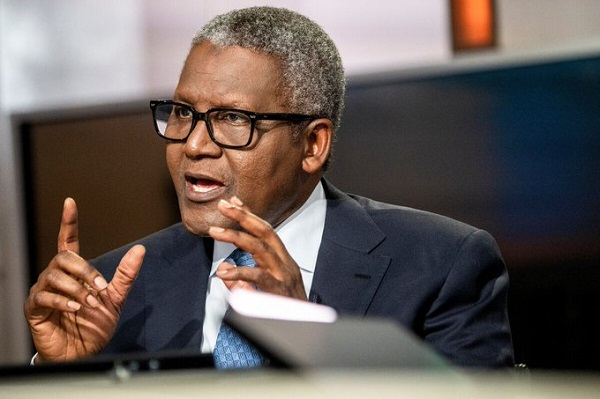 African billionaire industrialist Aliko Dangote has opened up about the immense setbacks and personal risks involved in building his $20 billion mega-refinery, describing the complex project as the most challenging task of his life.
Speaking in an interview on Al Jazeera on Monday, September 20, 2026, the President and CEO of the Dangote Group likened the journey to navigating uncharted and treacherous waters.
GUTA calls for friendly approach to VAT compliance exercise
“It was an Atlantic Ocean that I was trying to cross, and anytime I go forward, I realise that I’ve actually gone so far, so turning back wasn’t the case,” Dangote said during the programme.
The billionaire revealed that the refinery’s challenges began long before construction started at its current site in Lagos.
Initial efforts to establish a free trade zone and port facility in neighbouring Ogun State were stalled for more than three years due to political resistance.
“First of all, we had human challenges where we bought a free trade zone, where we were supposed to build a port for other users... and then it was blocked by the then governor of Ogun State for three and a half years... he didn’t see the benefit,” Dangote explained.
The delay locked up capital secured from financiers, causing the company to incur significant interest charges on unused loans held in escrow.
Dangote Group eventually relocated the project to Lagos following the political stalemate and purchased a new site for $100 million.
However, the move brought further complications.
“Actually, the manager who was running the entire zone was killed; right there they shot him,” Dangote said, noting that it took nearly a year and a half to fully secure access to the land.
When construction finally began, engineers faced difficult environmental conditions.
Much of the land was swampy, requiring eight months of clearing tree roots to prevent regrowth, followed by a massive sand-filling exercise to protect the site against rising sea levels and flooding.
To stabilise the area, crews pumped 65 million tonnes of sand over 18 months to raise the land level by 1.5 metres.
Because existing local roads could not support the movement of ultra-heavy equipment, the group had to construct a specialised heavy-duty road capable of carrying up to 3,000 tonnes for a single item, as well as a private port facility to receive the massive components.
Beyond the physical and logistical hurdles, Dangote also pointed to intense resistance from entrenched business interests, which he described as the country’s “oil mafia”.
He said powerful forces linked to petroleum importation and subsidy systems worked behind the scenes to derail the refinery.
“The oil mafia is more deadly than the one in drugs because, with the oil mafia, there are so many people who are involved,” he said, reiterating his determination to overcome resistance to local refining across the continent.
Despite the challenges and opposition, Dangote emphasised that the $20 billion facility remains a key driver of West Africa’s energy independence and long-term industrialisation goals.
Aliko Dangote: Refining Nigeria’s oil, helping Africa, and creating wealth
ANAS/MA

