Religion of 2026-10-15
Church of Jesus Christ of Latter-day Saints backs education, skills to unlock West Africa’s youth potential
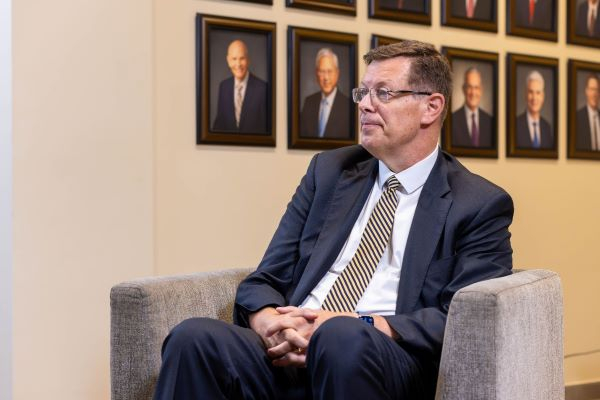 West Africa’s large and youthful population can become a source of economic strength if young people are given access to quality education, relevant skills, and opportunities to participate productively in the economy.
This is according to Elder Clark G Gilbert, a member of the Quorum of the Twelve Apostles of The Church of Jesus Christ of Latter-day Saints.
Elder Gilbert said the potential he had seen among young people across West Africa demonstrated the capacity of the region’s youth to contribute significantly to their communities and economies.
But he said education would have to be connected to opportunity if that potential was to be fully realised.
“Talent is equally distributed, but opportunities are not,” he said during a visit to West Africa.
He said the observation was particularly evident in his interactions with African missionaries, whom he described as capable and ambitious but who often returned to environments where opportunities were more limited than those available to their counterparts in developed economies. Elder Gilbert said expanding access to education was one way of narrowing that opportunity gap.
He cited BYU-Pathway Worldwide, the Church’s online higher education programme, which began in Accra in 2011 and has expanded across Africa.
“Today, across all of West Africa, we have almost 40,000 students,” he said.
The programme offers courses in fields including accounting, project management, social media marketing, digital marketing and healthcare management. Students can begin with job-skills certificates before progressing towards associate and bachelor’s degrees.
Elder Gilbert said the programme used the same curriculum and assessments as the Church’s universities in the United States, while online delivery helped reduce the cost and geographical barriers associated with conventional higher education.
He said the model was also intended to make graduates immediately useful in the workplace rather than leaving them with academic qualifications without practical competencies. “Education makes opportunities available,” he said.
The argument comes as Nigeria continues to grapple with the challenge of translating its large youth population into productive employment. Analysts have recently warned that gaps between education and labour-market needs were limiting young people’s transition into productive employment, arguing that education should be assessed by the capabilities learners acquire rather than simply the number of certificates awarded.
Elder Gilbert said digital education could provide another avenue for African young people to access employment beyond their immediate geographical markets. He said some BYU-Pathway graduates had secured remote jobs with employers outside their countries, allowing them to earn income while remaining in Africa.
“Some of the jobs are local jobs, but some of the jobs are what we call remote jobs because they’re educated and that brings GDP into the country,” he said.
The potential is particularly relevant as employers increasingly demand digital and technical capabilities alongside formal qualifications. Elder Gilbert said education should therefore develop the whole individual, including communication, leadership, work ethic and the ability to collaborate with and develop others.
He said the long-term objective was to produce young people who were not only employable but capable of contributing to their families, communities and economies.

