Business News of 2026-10-16
UK calls for debt relief, more investment for developing countries
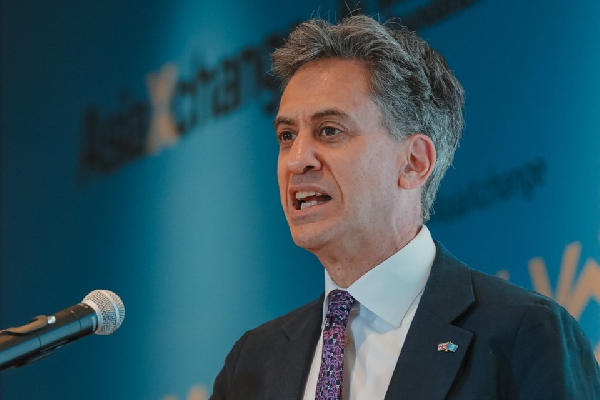 The United Kingdom has called for reforms to the global financial system to ease debt pressures on developing countries, attract private investment and strengthen their resilience to climate-related shocks.
UK Foreign Secretary Ed Miliband said developing countries were facing high debt-servicing costs, rising food and fuel prices, climate damage and growing conflict, requiring coordinated international action.
Speaking at a Rockefeller Foundation event in Bangkok, Thailand, on Wednesday, October 14, 2026, he said the UK would prioritise debt, investment, resilience and support for fragile states during its presidency of the Group of 20 (G20) in 2027.
Ghana's Climate Minister calls for stronger parliamentary role in climate finance
Miliband said tackling the challenges was both a moral responsibility and in the UK’s national interest, given the impact of global instability on food security, energy supplies, migration and international security.
“The same issues as 20 years ago persist about the fundamental failings of the global financial system and indeed of the global order to properly serve developing countries,” he said.
He added that although the nature of the challenges had changed, the inequalities between the Global North and the Global South remained
Miliband said debt-servicing costs in sub-Saharan Africa had reached a 25-year high, with countries spending more than three and a half times as much on debt payments as on education.
He called for a new approach that would allow countries to repay debts over longer periods and refinance them at better rates, freeing up resources for development.
“We need a new deal on debt, a deal that supports countries to repay over longer time horizons and, crucially, refinancing with better rates to give developing countries precious fiscal space,” he said.
He also called for faster debt restructuring under the G20 Common Framework and reforms to prevent a single private lender from blocking restructuring agreements.
Miliband urged multilateral development banks to make greater use of their balance sheets to increase lending capacity. He also announced plans for the UK to convene an international summit on illicit finance in 2027.
He said Africa loses an estimated $90 billion annually through illicit capital flows.
The Foreign Secretary said public funding and debt relief alone would not meet developing countries’ financing needs.
He urged development banks to improve how they share investment risks and attract private capital.
“We know global savings are worth hundreds of trillions of dollars. We know that capital stays overwhelmingly in rich countries. Even a fraction of it would make a huge difference to lower-income countries,” he said.
Speaking on climate change, Miliband called for more investment in preparedness, early-warning systems and resilient infrastructure rather than relying mainly on funding after disasters.
He said only 2% of crisis financing was arranged in advance, despite 35% of shocks being predictable.
Miliband warned that the world could experience its first decade in more than a generation without meaningful progress in reducing extreme poverty, which affects more than 800 million people.
He cited conflict and instability in countries such as Sudan and Afghanistan as major obstacles to development.
'We tell others to follow Ghana's steps' – IMF Director lauds economic reforms
He urged multilateral development banks, the International Monetary Fund and the United Nations to coordinate their efforts and work with local leaders.
“The purpose of political leadership is not to comment; it is to act,” he said, calling for greater international cooperation to address the challenges facing developing countries.
Story by Mawuli Ahorlumegah, reporting from the 2026 IMF/World Bank Annual Meetings in Thailand, Bangkok
The United Kingdom has called for reforms to the global financial system to ease debt pressures on developing countries, attract private investment and strengthen their resilience to climate-related shocks.
UK Foreign Secretary Ed Miliband said developing countries were facing high debt-servicing costs, rising food and fuel prices, climate damage and growing conflict, requiring coordinated international action.
Speaking at a Rockefeller Foundation event in Bangkok, Thailand, on Wednesday, October 14, 2026, he said the UK would prioritise debt, investment, resilience and support for fragile states during its presidency of the Group of 20 (G20) in 2027.
Ghana's Climate Minister calls for stronger parliamentary role in climate finance
Miliband said tackling the challenges was both a moral responsibility and in the UK’s national interest, given the impact of global instability on food security, energy supplies, migration and international security.
“The same issues as 20 years ago persist about the fundamental failings of the global financial system and indeed of the global order to properly serve developing countries,” he said.
He added that although the nature of the challenges had changed, the inequalities between the Global North and the Global South remained
Miliband said debt-servicing costs in sub-Saharan Africa had reached a 25-year high, with countries spending more than three and a half times as much on debt payments as on education.
He called for a new approach that would allow countries to repay debts over longer periods and refinance them at better rates, freeing up resources for development.
“We need a new deal on debt, a deal that supports countries to repay over longer time horizons and, crucially, refinancing with better rates to give developing countries precious fiscal space,” he said.
He also called for faster debt restructuring under the G20 Common Framework and reforms to prevent a single private lender from blocking restructuring agreements.
Miliband urged multilateral development banks to make greater use of their balance sheets to increase lending capacity. He also announced plans for the UK to convene an international summit on illicit finance in 2027.
He said Africa loses an estimated $90 billion annually through illicit capital flows.
The Foreign Secretary said public funding and debt relief alone would not meet developing countries’ financing needs.
He urged development banks to improve how they share investment risks and attract private capital.
“We know global savings are worth hundreds of trillions of dollars. We know that capital stays overwhelmingly in rich countries. Even a fraction of it would make a huge difference to lower-income countries,” he said.
Speaking on climate change, Miliband called for more investment in preparedness, early-warning systems and resilient infrastructure rather than relying mainly on funding after disasters.
He said only 2% of crisis financing was arranged in advance, despite 35% of shocks being predictable.
Miliband warned that the world could experience its first decade in more than a generation without meaningful progress in reducing extreme poverty, which affects more than 800 million people.
He cited conflict and instability in countries such as Sudan and Afghanistan as major obstacles to development.
'We tell others to follow Ghana's steps' – IMF Director lauds economic reforms
He urged multilateral development banks, the International Monetary Fund and the United Nations to coordinate their efforts and work with local leaders.
“The purpose of political leadership is not to comment; it is to act,” he said, calling for greater international cooperation to address the challenges facing developing countries.
Story by Mawuli Ahorlumegah, reporting from the 2026 IMF/World Bank Annual Meetings in Thailand, Bangkok

