Entertainment of 2026-11-06
Ghana gets high-tech equipment under US$4.5m deal to save forts and castles
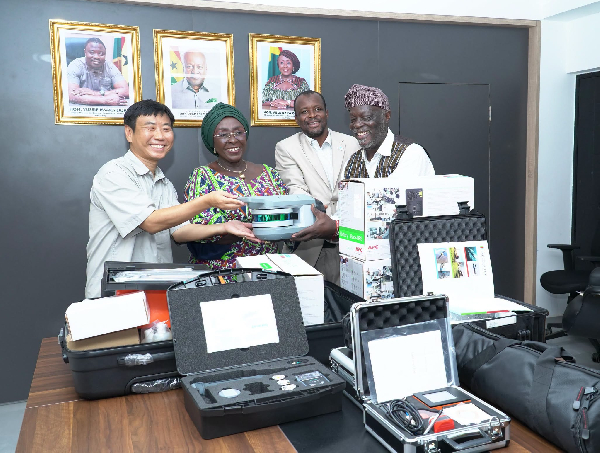 Ghana is receiving specialised scientific equipment under a US$4.5 million South Korean-funded project to detect structural damage, monitor climate-related deterioration and protect some of the country's historic forts and castles from destruction.
The latest consignment, presented by the Government of the Republic of Korea in Accra, forms part of the Korea-Ghana Heritage Project, a five-year intervention running from 2026 to 2030 to strengthen the preservation and management of Ghana's historic heritage sites.
The equipment is expected to give the Ghana Museums and Monuments Board (GMMB) access to modern technology for examining the physical condition of the monuments, identifying hidden structural weaknesses and tracking damage caused by environmental conditions.
Among the specialised equipment being provided under the wider project are digital microscopes, ultrasonic testing devices, non-destructive moisture meters, crack gauges and monitoring sensor systems.
Other equipment includes magnetic susceptibility meters, strength-test rebound hammers, infrared thermal imaging cameras, drones, high-resolution cameras, 3D scanners and GPS survey instruments.
The technology is expected to play different but complementary roles in protecting the monuments.
Digital microscopes will allow conservation experts to examine surfaces and identify deterioration that may not be visible to the naked eye, while ultrasonic testing devices will help assess internal structural conditions without damaging the historic buildings.
Moisture meters will help detect dampness and water penetration, which can weaken walls and accelerate the deterioration of old structures. Crack gauges and monitoring sensors, meanwhile, will allow experts to measure and track the development of cracks over time, helping them identify potentially dangerous structural changes before they become more serious.
The infrared thermal imaging cameras will assist in detecting temperature variations and possible moisture-related problems, while drones and high-resolution cameras will provide aerial images and detailed visual records of the sites.
The 3D scanners and GPS instruments will also support accurate digital documentation, mapping and measurement of the historic structures, providing conservation experts with reliable data to guide restoration and maintenance work.
The equipment handover is part of South Korea's US$4.5 million commitment to Ghana's heritage preservation efforts, which also covers technical assistance, research and capacity building.
The Minister for Tourism, Culture and Creative Arts, Abla Dzifa Gomashie, expressed appreciation to the Korean government for its continued support, noting that the intervention would strengthen Ghana's ability to protect its historic monuments against the growing effects of climate change.
The project is particularly important as several of Ghana's coastal forts and castles face increasing environmental threats, including coastal erosion, flooding, salt-induced deterioration, structural instability and extreme weather conditions.
The initial phase of the programme covers six historic sites in the Greater Accra Region: Ussher Fort and James Fort in Jamestown, Christiansborg Castle in Osu, Fort Augustaborg in Teshie, Fort Vernon in Prampram and Fort Fredensborg at Old Ningo.
These monuments form part of Ghana's Forts and Castles World Heritage property and carry significant historical importance, particularly in documenting the transatlantic slave trade and the country's encounters with European colonial powers.
Beyond supplying equipment, the five-year partnership is expected to establish a scientific climate-risk assessment and monitoring system, develop digital risk maps and strengthen the technical capacity of institutions responsible for heritage conservation.
It will also support the development of a national climate change response policy for heritage sites, site-specific conservation plans and regional guidelines for protecting cultural heritage against climate-related threats.
The initiative is being implemented through cooperation between the Korean National Commission for UNESCO and the Ghana Commission for UNESCO, alongside relevant Ghanaian institutions, including the GMMB.
The latest equipment handover therefore represents part of a broader effort to move Ghana's heritage preservation system towards scientific monitoring and preventive maintenance, rather than waiting for historic structures to suffer serious damage before restoration work begins.
For Ghana, the challenge is no longer simply maintaining old buildings but ensuring that centuries-old monuments survive the combined pressures of climate change, environmental deterioration and inadequate conservation systems.
EA

