Business News of 2026-11-06
Disinflation lifts real cost of borrowing despite lower lending rates
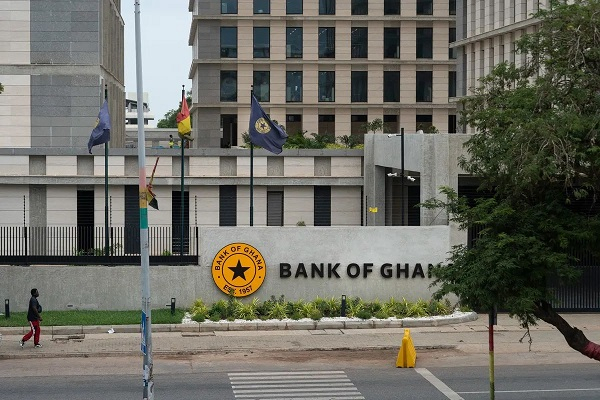 Ghana’s rapid disinflation has raised the real cost of borrowing, even as bank lending rates have nearly halved in under two years, an analysis of central bank figures shows.
Disinflation, a sharp slowdown in the rate at which prices rise, has been the central bank’s biggest success of the past two years. But because inflation has fallen faster than lending rates, borrowers are now paying more in real terms than they did at the height of the crisis.
Bank of Ghana Governor Dr Johnson Pandit Asiama told the launch of the Ghana Statistical Service’s “Ghana in Numbers 2025” report in Accra on Thursday last week that the average lending rate had fallen from 30.25 per cent in December 2024 to 15.78 per cent in September 2026. Inflation, he said, has been in single digits for 13 consecutive months.
The pace of disinflation explains the paradox. Annual inflation stood at 23.8 per cent in December 2024 and had fallen to 5.2 per cent by September 2026, a drop of 18.6 percentage points. Lending rates fell by 14.47 percentage points over the same period, so prices slowed faster than borrowing costs.
The real interest rate, the lending rate minus inflation, captures the effect. In December 2024, a borrower paying 30.25 per cent with inflation at 23.8 per cent faced a real rate of about 6.5 per cent. By September 2026, a borrower paying 15.78 per cent with inflation at 5.2 per cent faced a real rate of about 10.6 per cent.
The inflation-adjusted cost of a bank loan has therefore risen by roughly four percentage points. When inflation was high, it eroded the value of debt, quietly reducing what borrowers owed in real terms. With disinflation, that cushion has largely gone, and the loan has to be repaid in money that holds its value.
Yet borrowing has surged. Growth in real private sector credit rose from 0.20 per cent in December 2024 to 26.42 per cent in September 2026, the Governor said.
Disinflation itself helps explain why. Stable prices make it easier for businesses to plan, price contracts and project cash flows. Lower uncertainty reduces the risk of taking on debt, even at a higher real rate.
Cash flow matters too. Businesses pay interest in nominal cedis, and a loan at 15.78 per cent costs far less in monthly repayments than one at 30.25 per cent. For firms managing tight working capital, the lower headline rate eases the immediate burden.
Banks have also had stronger reasons to lend. As disinflation pulled down yields on government securities, the 91-day Treasury bill rate fell to 5.38 per cent in August from 10.26 per cent a year earlier, according to the Bank of Ghana’s October Investor Bulletin. President John Dramani Mahama has said the fall in Treasury bill rates from about 29 per cent to roughly seven per cent made it more attractive for banks to lend to private companies.
The gap is wide. A bank earning about 5.4 per cent on a three-month bill can earn about 15.8 per cent on an average private loan, a margin of more than 10 percentage points. With government paper yielding little, private lending has become the more profitable use of deposits.
The credit boom shows signs of moderating. The Investor Bulletin put real private sector credit growth at 29.0 per cent in August, so the Governor’s September figure of 26.42 per cent suggests lending growth peaked in mid-year. Nominal loans and advances stood at GH¢129.2 billion in August, up 35.5 per cent year-on-year.
Lending rates are also falling more slowly. The average rate eased only from 15.94 per cent in August to 15.78 per cent in September, a decline of 16 basis points. The Monetary Policy Committee has held the policy rate at 14 per cent since March, after cutting it by a cumulative 1,400 basis points from 28 per cent.
Averages hide wide differences. In the first half of 2026, some large firms borrowed at single-digit rates while small firms faced rates above 30 per cent. For smaller borrowers, the real cost of credit is far higher than the 10.6 per cent average.
Asset quality, so far, has held up. The industry’s non-performing loan ratio fell to 15.7 per cent in August from 20.8 per cent a year earlier, and excluding fully provisioned loss loans the ratio stood at 3.8 per cent.
The figures put disinflation at the centre of the next policy debate. With inflation now below the central bank’s 6 to 10 per cent target band and real lending rates above 10 per cent, the Monetary Policy Committee will weigh how much room disinflation has created for further rate cuts when it meets from November 16 to 18.
The Governor said the Bank aims to make formal financial services “more accessible, affordable and convenient,” particularly for young people, women, small businesses and underserved communities. Whether lending rates catch up with disinflation will help decide how far that goal is met.

