SLTF to fully digitalise student loan applications - Dr Saajida Shiraz
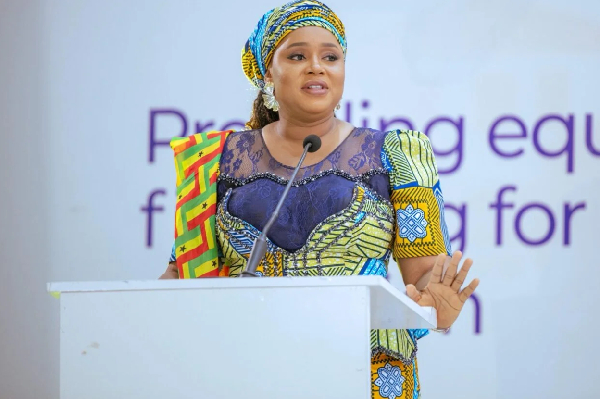
The Students Loan Trust Fund (SLTF) will fully digitalise its student loan application system from the 2026/2027 academic year, allowing applicants to complete key stages of the process without visiting offices or banking halls.
The Executive Chief Executive Officer of the SLTF, Dr Saajida Shiraz, said students would be able to verify their identities, open e-bank accounts and sign loan agreements electronically from their homes.
Dr Shiraz made this known during her welcome address at the 6th Association of African Higher Education Financing Agencies (AAHEFA) International Conference on Monday, September 14, 2026, at the La Palm Royal Beach Hotel in Accra.
10 most expensive neighbourhoods to live in Accra
The conference is being hosted by the SLTF under the theme, “Digital Transformation in Higher Education Financing: The Role of Technological Advancements in Ensuring Sustainable, Inclusive and Resilient Higher Education Financing Systems in Africa.”
According to Dr Shiraz, students will be able to verify their identities in real time through the National Identification Authority’s database and their institutional enrolment databases.
They will also be able to open e-bank accounts with GCB Bank and sign their loan agreements electronically from their homes.
“Starting this academic year, our loan application system will be fully digitalised. Students will be able to validate their identities through live, real-time verification, open e-bank accounts and append their signatures to loan agreements without leaving the comfort of their homes,” she said.
Dr Shiraz also announced the introduction of a 24-hour artificial intelligence chatbot, SIKA, to respond to student enquiries.
She explained that SIKA, which means “money” in a traditional Ghanaian name, also stands for Student Information and Knowledge Assistant.
“This year, we will also deploy our 24-hour AI chatbot, SIKA, which will become the frontline service assistant for all student enquiries,” Dr Shiraz stated.
She further disclosed that the SLTF had integrated its systems with the Controller and Accountant-General’s Department to strengthen the sustainability of the student loan scheme.
She said student loan repayment had now been formally recognised as a statutory deduction.
Dr Shiraz said the use of technology in higher education financing should not only make the process easier but also help create systems that are sustainable, inclusive and resilient.
“Advances in technology can make access to tertiary education more equitable and inclusive, while also strengthening the sustainability and resilience of higher education financing funds,” she said.
She urged African higher education financing agencies to use the AAHEFA conference to share experiences, discuss challenges and identify practical areas for collaboration.
She noted that institutions across the continent should learn from one another rather than develop new solutions to challenges that had already been addressed elsewhere.
Dr Shiraz said the ultimate goal should be to ensure that financial difficulties do not prevent capable young Africans from accessing higher education.
“We are not competitors. We are colleagues carrying, in different currencies and under different laws, a common responsibility to stand between a capable young African and the financial circumstance that would otherwise keep them out of a lecture hall,” she said.
Speaking at the event, Deputy Minister for Education and Member of Parliament for Builsa South, Dr Clement Abas Apaak, called for a fundamental transformation of higher education financing systems across Africa to ensure that young people have access to quality education and the skills needed to participate meaningfully in the economies of the future.
He said the discussion should go beyond the traditional challenges of funding universities and focus on Africa’s youthful population and the continent’s ability to equip young people for a rapidly changing world.
“This is not simply a conference about higher education financing. It is a conversation about Africa's young people and whether Africa's young people would have the opportunity to acquire the knowledge and skills to participate meaningfully in the economies of tomorrow,” he said.
He noted that Africa’s youthful population represents a significant economic advantage, but stressed that the demographic dividend could only be realised if young people have access to quality education, relevant skills and productive employment.
According to him, failure to provide such opportunities could turn the continent’s youthful population from an economic advantage into a major development challenge.
Dr Apaak therefore urged governments, financing agencies, universities, financial institutions and dvelopment partners to regard higher education financing as a strategic investment in Africa’s future rather than simply an expenditure item.
“When we finance education of young people, we build human capital, strengthen institutions, and lay the foundation for the next generation,” he said.
He acknowledged, however, that demand for higher education was increasing at a time when governments were operating under difficult financial conditions, while universities were under pressure to expand capacity and families were facing rising educational costs.
He said the challenge was compounded by rapid technological changes that were reshaping the world of work.
Artificial intelligence, digital platforms and changing business models, he noted, were creating new demands for skills such as digital literacy, data analysis, problem-solving and adaptability.
Dr Apaak also referred to growing concerns among some AI developers about the potential risks associated with the rapid development of artificial intelligence, noting that discussions about the technology must be accompanied by caution and responsible governance.
He argued that financing systems must evolve alongside education systems, warning that Africa could not finance the future using assumptions developed for the past.
“Digital transformation is no longer optional. It is a necessity,” he said.
The 6th AAHEFA International Conference has brought together higher education financing agencies and partners from across Africa to discuss ways of improving tertiary education financing through technology and stronger institutional cooperation.
ANAS/MA
AI Adoption: Businesses must solve real problems, not chase trends – Carlos Amoako
Source: www.ghanaweb.com« Previous |
Next »