Ghana opens 5G spectrum to competition as exclusive model ends
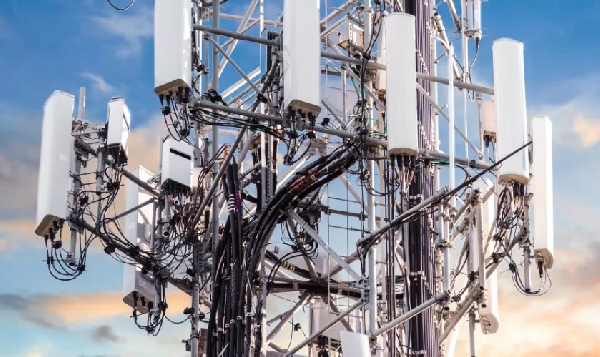
Ghana has opened up its 5G market to greater competition after ending the exclusive wholesale arrangement that gave Next Gen Infraco (NGIC) the sole mandate to provide 5G infrastructure to mobile network operators.
The decision marks a significant shift in the country’s approach to 5G deployment, with telecommunications companies now being allowed to pursue their own network infrastructure and spectrum arrangements.
Under the previous model, NGIC was granted exclusive rights to provide wholesale 5G services, with the arrangement originally expected to remain in place until 2034.
NGIC partnered with Radisys, a subsidiary of Indian billionaire Mukesh Ambani’s Reliance Industries, as part of efforts to develop and deploy Ghana’s 5G infrastructure.
The government has since revoked the exclusivity arrangement as it seeks to promote competition, attract further investment and accelerate the expansion of high-speed mobile connectivity across the country.
As part of the new framework, the National Communications Authority (NCA) opened spectrum in the 700 MHz, 2.3 GHz and 3 GHz bands for competitive applications.
Several telecommunications operators, including MTN Ghana, Telecel Ghana and Goal Telecommunications, qualified to participate in the licensing process.
MTN Ghana has already emerged as the successful applicant for two lots in the 700 MHz band, paying a combined licence fee of US$100.9 million.
The licensing process for the 2.3 GHz and 3 GHz bands is also progressing, with the NCA expected to complete the remaining stages of the allocation process.
The changes are expected to reshape Ghana’s telecommunications market by giving operators greater flexibility in deploying 5G infrastructure while increasing competition in the provision of high-speed mobile services.
Telecel Ghana, for instance, has announced plans to launch commercial 5G services on its own network in December 2026.
Telecel Group CEO Moh Damush said the company intends to move ahead with its independent rollout.
“We plan to launch the service in December this year on our own network,” Moh Damush said.
The development is expected to give consumers more options while encouraging network operators to invest in coverage, capacity and new digital services.
The NCA has said the spectrum allocation process is intended to support faster data speeds, lower latency and improved connectivity for consumers and businesses.
The shift also comes as the government seeks to accelerate Ghana’s digital transformation and expand access to advanced telecommunications infrastructure.
With additional files from Bloomberg
MA
Inside Ghana’s Abandoned Engineering Powerhouse: What Went Wrong?
Source: www.ghanaweb.com« Previous |
Next »