Unpaid ECG bills could affect borrowers’ credit records - BoG
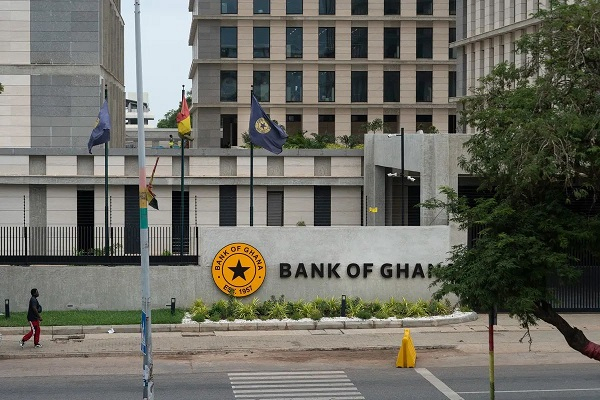
Ghanaians who fall behind on their electricity bills could soon find it harder to get a loan. The Bank of Ghana is working to bring the Electricity Company of Ghana (ECG) into the country’s credit reporting system.
The central bank’s 2025 Credit Reporting Activity Annual Report, published by its Financial Stability Department, says the Bank engaged ECG and the Microfinance and Small-Scale Loans Centre (MASLOC) during the year “to develop modalities for enrolment onto the credit reporting system.”
If the plan goes ahead, a customer’s payment record with ECG, and a borrower’s repayment record with MASLOC, the state agency that lends to small businesses, could be shared with credit bureaus. Banks and other lenders would then see that information when deciding whether to approve a loan.
Under the Credit Reporting Act, 2007 (Act 726), financial institutions licensed by the Bank of Ghana must obtain a credit report from a licensed bureau before approving or refusing a loan. A poor record, including unpaid bills, could therefore weigh against a borrower.
The report does not say when ECG or MASLOC will join the system, what information they will share, or whether customers will be notified before their records are submitted.
The two institutions bring very different records into the system. ECG has struggled for years to collect what it is owed. It launched a nationwide drive dubbed “Operation All Must Pay” in July 2025, targeting residential, commercial, industrial and government customers with unpaid bills. Its Volta Region office ran another mass recovery exercise across the Volta and Oti regions from September 23 to October 2 this year, covering all categories of customers in arrears.
The government says it spends an average of US$1.5 billion a year covering shortfalls in the energy sector.
MASLOC’s repayment problem is even starker. Its Chief Executive, Abibata Shanni Mahama Zakaria, has said the agency recovers only about 45 per cent of the loans it disburses nationwide, against the roughly 80 per cent she said any credible microfinance institution should achieve. Recovery rates in the Volta and Oti regions were as low as 11 per cent and 16 per cent. She blamed the problem partly on a belief among some borrowers that MASLOC loans are free.
For defaulting MASLOC borrowers, a credit record would be a powerful new incentive to pay, as unpaid debts could follow them to any bank they approach.
With ECG customers, the risk is that disputed bills end up counting against them. Billing is one of the most common sources of complaints against the power distributor.
In September, the Greater Accra office of the Public Utilities Regulatory Commission (PURC) identified billing as a major source of consumer complaints. These included high bills, meter-reading problems, delays in resolving disputes and gaps between expected and actual consumption. PURC said delays in installing and replacing meters had contributed to estimated billing, illegal connections and disputes over consumption.
ECG district managers at the same meeting cited a transition to a new billing system, following the shutdown of the previous one, as one factor behind some billing challenges.
In February, PURC launched nationwide investigations into complaints of disappearing prepaid electricity credits, acknowledging that it had no dedicated system to track such losses routinely.
Complaints are also rising. In the Central Region, complaints to PURC rose from 312 in the first quarter of 2024 to 359 in 2025 and 444 in 2026, with ECG accounting for 80 per cent of this year’s cases.
The credit reporting system is already struggling with accuracy. Complaints and disputes received by credit bureaus rose 90.8 per cent to 3,085 in 2025, from 1,617 in 2024. They related to delayed updates and inaccurate information on credit reports.
The timing adds another layer. The government is preparing to bring private operators into ECG under a private sector participation arrangement. Cabinet’s original approval covered billing and revenue collection, the very data that would feed into credit reports.
The ECG plan is part of a wider shift away from a credit system built around banks. The report says the system has moved “beyond a predominantly bank-centric model toward a more integrated data ecosystem.”
The expansion is already well advanced. Under the Credit Reporting Regulations, 2020 (L.I. 2394), the central bank opened the system to non-financial institutions, and 36 have now been designated to take part.
Many of them are not lenders. The list includes shopping malls such as Accra Mall, West Hills Mall, Junction Shopping Mall and Takoradi Mall, and Broll Ghana, which is listed as representing landlords. It also includes property developers including A&C Developers, Agridev Real Estate, Fairllop Property Developers, Grit Accra and Renmo Homes, as well as Marina Market Ghana and Clubhouse Ghana.
Most are designated as both “authorized users” and “data providers.” That means they can check the credit records of prospective customers and also report people and businesses that owe them money. For tenants and traders, unpaid rent can now follow them in the same way an unpaid loan does.
Other participants include car dealers MAC Autos and Spare Parts Ghana and MG Auto Trading Ghana, payments firm Zeepay, agri-tech company Farmerline, the Ghana Shippers Authority, Development Bank Ghana and the Social Security and National Insurance Trust (SSNIT). The receivers of 23 defunct savings and loans companies and 347 collapsed microfinance companies are also in the system, allowing debts owed to those failed institutions to be recorded against borrowers.
The central bank argues the changes will widen access to credit. Many Ghanaians have no loan history, and a record of paying electricity bills or rent on time could help them qualify for loans.
Few Ghanaians check their records. The law entitles every borrower to one free credit report a year, but only 305 free reports were requested in 2025, down from 422 the year before. Total self-enquiries stood at just 1,324, against an average of 65.2 million loan records submitted to the bureaus every month. The Bank acknowledged that self-enquiries “remain low.”
The Bank of Ghana plans to build a Data Hub for credit reporting in 2026. Through it, banks, lenders and utility companies would submit standardized data to the credit bureaus via the central bank. The Bank says the hub will improve data quality and help reduce non-performing loans in the banking industry.
Source: economytimesnews.com« Previous |
Next »