Three Daughters, One Business Empire: Inside Aliko Dangote's succession plans
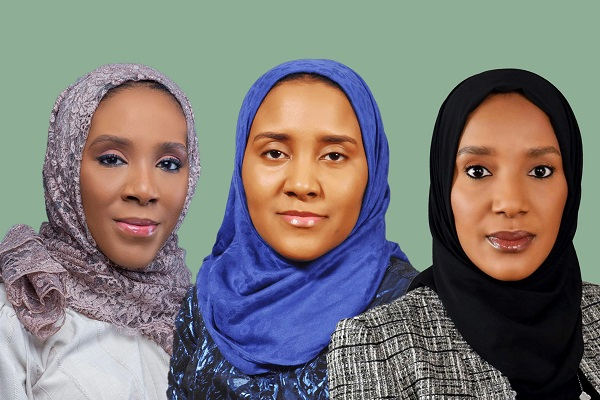
Nigerian billionaire and industrialist Aliko Dangote is preparing his three daughters for bigger roles in his multibillion-dollar business empire, as a planned share sale in his oil refinery could push his fortune to about $58 billion.
47-year-old Mariya Dangote, 42-year-old Halima Dangote and 40-year-old Fatima Dangote, have spent more than a decade working within their father's sprawling business group, which spans cement, sugar, fertiliser and energy.
For years, the sisters have largely stayed out of the public spotlight. That is beginning to change.
All three were promoted to senior leadership positions this year, signalling a new phase for the family-owned conglomerate. A Bloomberg Businessweek profile published on Thursday, October 22, 2026, provided a rare insight into the sisters' responsibilities, ambitions and the family's plans for the future.
Despite their expanded roles, none is being positioned to immediately replace their 69-year-old father as head of the business empire.
"This isn't, for now, a succession for the top job," Mariya Dangote told Bloomberg.
Instead, the plan is to distribute greater responsibility for the group's existing businesses among the sisters, allowing their father Aliko Dangote to devote more attention to his refinery and fertiliser operations.
"He doesn't want to be in day-to-day chairmanship of all the businesses. But he has no plans to step down," Mariya said.
Aliko Dangote has previously told Nigerian media that he is monitoring the performance of all three daughters and expects one of them to take over the business someday. He however declined to be interviewed for the Bloomberg report.
Three daughters, three areas of responsibility
Rather than compete for a single leadership position, the sisters are carving out distinct roles within the family business, with each focusing on the areas where they believe they can all make the greatest contribution.
Mariya, the eldest, oversees commercial strategy for the group's cement and food businesses, including sugar and salt. Based in Lagos, she also joined the board of Dangote Cement Plc after her father stepped down as chairman.
Halima, who lives in Dubai, is responsible for the family office, which brings together financial and legal advisers to manage the family's wealth and plan for its preservation across generations.
The family office is expected to become more visible from early 2027. Speaking to Bloomberg TV in August this year, Halima said the broader ambition was to build businesses capable of surviving for "eight to 10 generations."
Fatima, who is a lawyer who worked at a leading Nigerian law firm before joining her father's business in 2012, heads corporate communications and oversees sales for the group's fertiliser and energy businesses from Lagos.
For the sisters, this arrangement is about complementing one another rather than competing for control.
"I wouldn't say that there is one of us gearing up to be the president-CEO," Fatima said.
She continued, "As sisters we want to have control of different aspects of the business. We all have our strengths, so we are focused on where we feel we are the strongest."
In February this year, the Dangote Group signalled the shift when an internal memo described the promotions of the three sisters as an effort to "empower a new generation to take on expanded responsibilities in shaping our future."
Breaking barriers as women in business
The sisters' growing influence also reflects a significant personal journey shaped by their upbringing in Kano, a predominantly Muslim city of about five million people in northern Nigeria.
In a region where women remain underrepresented in business leadership, the three have had to navigate cultural expectations while establishing themselves within one of Africa's largest business empires.
"We are young Muslim women from the north, where it's not the norm to work all the time," Halima said.
The challenge of proving themselves has also not disappeared, even within their own family, Fatima acknowledged.
Mariya's path differed from those of her younger sisters. She married in her early 20s and remained in Kano while Halima and Fatima attended boarding school and university in the United Kingdom.
She later had to seek her husband's permission to pursue a Master of Business Administration (MBA), which she completed at Coventry University in England in 2015.
"In my culture, women are just meant to be housekeepers, taking care of kids, husbands," she said.
After their father's second divorce, their grandmother became the main caregiver for the three girls, helping shape their outlook on women's potential and independence.
"She taught us how powerful a woman can be," Halima said.
Fatima Wali-Abdurrahman, who is also a board member of Dangote Industries Ltd., the group's holding company, said few men in their community would give their daughters comparable levels of responsibility.
The family's changing leadership structure extends beyond the sisters themselves. Fatima Dangote's husband, who is a pilot, now heads infrastructure and logistics for the group.
A $20 billion refinery at the centre of Aliko Dangote's fortune
As discussions about the family's future leadership continue, Aliko Dangote's business empire is approaching a potentially historic financial milestone.
The group generates about $20 billion in annual sales, with its flagship asset being the $20 billion Dangote Petroleum Refinery & Petrochemicals complex near Lagos. The facility has its own jetty, dam, power station and highway, underscoring the scale of the industrial project.
The refinery's initial public offering (IPO), scheduled to close on October 27, 2026 is offering about 3 percent of the business and is expected to raise at least $1.6 billion from the offer.
If completed as expected, the sale would become the largest IPO in African history.
Aliko Dangote is however expected to retain more than 80 percent of the refinery's shares. According to the Bloomberg Billionaires Index, the IPO listing could increase his fortune by nearly two-thirds to about $58 billion.
The refinery is not the only business preparing to tap the capital markets. Dangote Cement is also working towards a secondary listing on the London Stock Exchange, while the group's fertiliser business is preparing its own share sale.
The transactions could broaden investor participation in the group's businesses while positioning the family to manage its expanding commercial interests over the long term.
Despite the group's size and expansion ambitions, its dominance in key Nigerian industries continues to attract scrutiny.
Dangote Cement controls more than 60 percent of Nigeria's cement market. The country's competition regulator, however, says it is investigating the company and two smaller rivals following a sharp rise in prices this year.
The companies have since attributed the increases to higher energy and logistics costs, as well as the weaker naira.
In the petroleum sector, Aliko Dangote has urged fuel distributors to buy refined products locally and has taken legal action to challenge their import licences.
His daughter Mariya also rejected suggestions that protection from imports was responsible for the group's success.
"In the media, some people say Aliko Dangote wants to monopolize the industry, but it's not like that," she said.
For Dangote, the next phase appears to involve more than identifying a successor. It is also about ensuring that the businesses can operate effectively without requiring him to oversee every major decision.
His daughters' expanded responsibilities, Halima's focus on managing family wealth across generations and the planned share sales all point to an effort to establish structures capable of sustaining the conglomerate well into the future.
Although Dangote has no immediate plans to step down, the sisters are gradually taking on greater responsibility for the empire they may one day help lead.
For now, they are not presenting themselves as rivals for their father's position. Instead, they are building their leadership records across different parts of the business as one of Africa's wealthiest families prepares for the challenge of transforming a founder-led empire into a multigenerational enterprise.
With additional files from Bloomberg
MA
Source: www.ghanaweb.com« Previous |
Next »