Today in History: Kotoka’s birth and the commission that helped shape Ghana’s independence
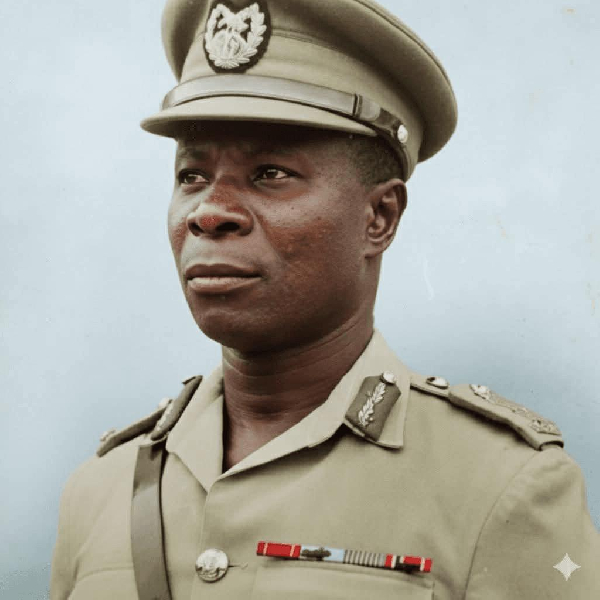
October 26 occupies a distinctive place in Ghana’s political history, linking the birth of Lieutenant-General Emmanuel Kwasi Kotoka, a central figure in the 1966 coup that toppled President Kwame Nkrumah, to the colonial government’s authorisation of the Coussey Commission in 1948, an important step in the constitutional developments that preceded Ghana’s independence.
The two events, separated by 22 years, represent different chapters in the country’s political evolution: one associated with military intervention in government and the other with efforts to reform colonial administration amid growing demands for self-government.
E.K. Kotoka: From Alakple to the centre of Ghanaian power
Born on October 26, 1926, in Alakple, near Keta in the Volta Region, Emmanuel Kwasi Kotoka would become one of the most consequential and controversial military figures in Ghana’s post-independence history.
His early life did not immediately point towards a future at the centre of national politics. He attended Alakple Roman Catholic School and Anloga Senior School before training as a Catholic teacher-catechist. He briefly worked as a teacher and later trained as a goldsmith, qualifying in January 1947. Financial difficulties, however, forced him to abandon the trade.
In July 1947, Kotoka enlisted as a private in the Gold Coast Regiment at the Infantry School in Teshie, Accra. His rise through the military ranks was swift. He became a sergeant in 1948 and a company sergeant-major by 1951 before receiving further military training in Britain and earning his commission as a lieutenant in November 1954.
His military career also took him beyond Ghana’s borders. During the Congo crisis in the early 1960s, he served with Ghanaian troops involved in United Nations operations. His conduct during military operations earned him the Ghana Service Order for exceptional bravery in 1963.
Yet it was his role in Ghana’s domestic politics that ultimately defined his place in the nation’s history.
On February 24, 1966, Kotoka became one of the leading figures in the military and police operation that overthrew Nkrumah’s government while the President was outside the country on a peace mission to Hanoi, North Vietnam.
The operation, codenamed Operation Cold Chop, brought an abrupt end to Nkrumah’s administration. The coup plotters announced the takeover, removed the government and suspended the Constitution.
Kotoka subsequently became a member of the National Liberation Council (NLC), the military government established after the coup, and was promoted to major-general. He also served as General Officer Commanding the Ghana Armed Forces.
The coup remains a defining episode in Ghana’s political history. Although its supporters at the time welcomed the overthrow of Nkrumah, the seizure of power by the military also marked a major interruption in constitutional civilian government.
Kotoka’s own political journey ended violently. On April 17, 1967, he was killed during an unsuccessful counter-coup attempt at Accra Airport, aged 40. The airport was subsequently named Kotoka International Airport in his honour.
His legacy, therefore, extends beyond his military achievements. It also raises enduring questions about military intervention, political authority and the cost of unconstitutional changes of government in Ghana.
October 26, 1948: The Coussey Commission and the road to independence
Twenty-two years after Kotoka’s birth, October 26 again became significant in Ghana’s history.
On that date in 1948, the British Colonial Office authorised Governor Sir Gerald Creasy to establish a 37-member committee known as the Coussey Commission, chaired by Justice Henley Coussey. Its formation followed the political upheaval that had shaken the Gold Coast earlier that year.
The events that preceded the commission were among the most consequential in the territory’s nationalist struggle.
On February 28, 1948, ex-servicemen marched towards Christiansborg Castle in Accra to present a petition over their grievances to the colonial administration. The march ended in tragedy when colonial police opened fire, killing three former servicemen: Sergeant Adjetey, Corporal Attipoe and Private Odartey Lamptey.
The shootings triggered widespread disturbances, looting and unrest that lasted several days and spread beyond Accra. Historical accounts commonly record 29 deaths and more than 200 people injured, although figures differ across accounts. The colonial administration declared a state of emergency, while nationalist leaders were arrested and detained. Six prominent figures associated with the United Gold Coast Convention (UGCC) became known as the Big Six.
The colonial government subsequently established the Watson Commission to investigate the disturbances. The inquiry examined the causes of the unrest and the grievances that had fuelled public discontent, including economic hardship, political exclusion and concerns about discrimination in trade.
The Coussey Commission followed as part of the search for constitutional reform.
Its recommendations included a restructured legislature, greater African participation in the executive and changes to local government. The proposals became an important foundation for subsequent constitutional arrangements in the Gold Coast.
The reforms contributed to the constitutional developments that led to the 1951 elections and the establishment of a new Legislative Assembly. They did not, on their own, secure independence, but they formed part of a wider political process shaped by nationalist agitation, negotiations, elections and demands for African self-government.
Ghana eventually gained independence from Britain on March 6, 1957, under the leadership of Kwame Nkrumah, becoming the first sub-Saharan African country under British colonial rule to achieve independence.
Two historical paths, one date
The connection between Kotoka’s birth in 1926 and the authorisation of the Coussey Commission in 1948 is chronological rather than causal. The two events arose from different circumstances, but both illuminate the political transformations that shaped modern Ghana.
The Coussey Commission represented an attempt to respond to colonial-era unrest through constitutional change, although the pace and extent of reform remained contested. Kotoka, by contrast, later became associated with the military overthrow of an elected government, demonstrating how political power in Ghana could be reshaped outside constitutional processes.
Remembering October 26 offers an opportunity to examine not only the personalities and institutions that shaped Ghana’s past, but also the competing approaches to power, governance and national development that have influenced its political journey.
For Ghana, the significance of the date lies in the questions it raises about how governments are formed, how citizens demand change and how a nation balances political stability with constitutional rule.
EA
Source: www.ghanaweb.com« Previous |
Next »