Meet Cardinal Dery: The Catholic priest on the GH¢2 note who is on the way to sainthood
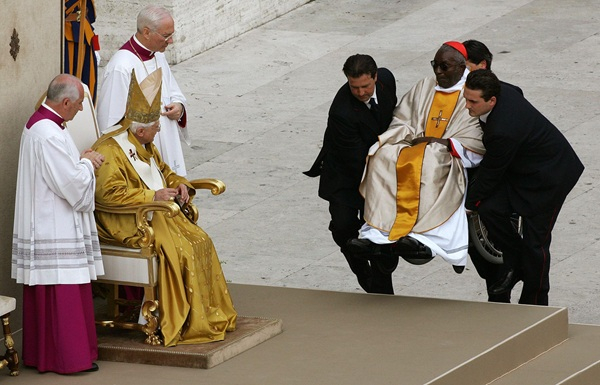
The late Ghanaian Catholic leader, Cardinal Peter Poreku Dery, has been honoured on Ghana's newly unveiled GH¢2 banknote, bringing renewed attention to the life and legacy of a man whose influence extended beyond the pulpit to education, healthcare, community development and religious leadership.
Cardinal Dery, who died in March 2008 at the age of 89, was one of Ghana's most distinguished Catholic clergymen. He served as the first Bishop of Wa, became the first Archbishop of Tamale and was elevated to the College of Cardinals by Pope Benedict XVI in 2006.
His appearance on the new GH¢2 note is particularly significant because, years after his death, the Catholic Church is still pursuing a cause for his beatification, a key stage on the path towards sainthood.
The new banknote, unveiled by President John Dramani Mahama on Thursday, November 12, 2026, forms part of the Bank of Ghana's Cedi Heritage Series. It carries a religious freedom theme, with Cardinal Dery's portrait on the front and the historic Larabanga Mosque on the reverse. The notes are expected to enter circulation on December 1, 2026.
Here are some important things to know about the late Cardinal.
Who was Cardinal Peter Poreku Dery?
Cardinal Peter Poreku Dery was born on May 10, 1918, at Zimuopare, near Nandom, in what is now the Upper West Region of Ghana.
He grew up in northern Ghana and went on to become a pioneering figure in the development of the Catholic Church in the northern part of the country.
He was ordained a Catholic priest on February 11, 1951, becoming the first Catholic priest from the Upper West Region.
His ecclesiastical career spanned several decades, during which he served in various capacities, including as a parish priest, Vicar General and cathedral administrator, before rising to become a bishop and eventually a cardinal.
According to the Vatican Press, in March 2006, Pope Benedict XVI elevated him to the College of Cardinals, making him the second Ghanaian to attain the position after Cardinal Peter Kodwo Appiah Turkson.
The roles he played in Ghana
Cardinal Dery's contribution to Ghana went beyond his responsibilities as a Catholic priest. He played significant roles in religious leadership, education, social development and the promotion of local cultural identity.
First Bishop of Wa
One of his most significant appointments came on March 16, 1960, when he was named the first Bishop of the newly established Diocese of Wa.
He received his episcopal ordination on May 8, 1960, and served in that capacity until his transfer to Tamale.
During his time in Wa, he worked to strengthen the Catholic Church and expand its presence in northern Ghana.
He also supported the establishment of educational institutions, including the St Francis Xavier Minor Seminary in Wa, and promoted the training of young people for the priesthood.
First Archbishop of Tamale
In 1972, Cardinal Dery was appointed Apostolic Administrator of the Diocese of Tamale, a responsibility he initially combined with his duties in Wa.
He was subsequently appointed Bishop of Tamale on November 18, 1974.
When the Diocese of Tamale was elevated to an archdiocese on May 30, 1977, he became its first Archbishop, a position he held until his retirement in 1994.
His leadership was instrumental in strengthening the Church's institutional presence and expanding its pastoral activities in northern Ghana.
His role in the promotion of education and community development
Cardinal Dery was also recognised for his commitment to improving access to education and supporting communities facing socio-economic challenges.
According to fides.org, the late cleric championed the establishment of schools and other educational institutions, believing that education was essential to improving the living conditions of people in northern Ghana.
His development initiatives also extended to healthcare, access to clean water and economic empowerment.
He supported community-based initiatives, including agricultural projects, farmers' cooperatives and credit unions, aimed at improving livelihoods and helping rural communities become economically independent.
He also advocated opportunities for women and girls, particularly through education and greater participation in community development.
Promotion of local languages in Catholic worship
Another important part of Cardinal Dery's legacy was his commitment to making Catholic worship accessible to local communities.
He championed liturgical inculturation, which involves incorporating elements of local cultures and languages into Christian worship.
He was particularly associated with the promotion of Dagaare in Catholic liturgy and composed a Mass in the language, helping make worship more accessible to local congregations.
His efforts helped strengthen the relationship between the Catholic Church and the cultural identities of communities in northern Ghana.
Leadership beyond the Catholic Church
Cardinal Dery's influence also extended to national and international religious institutions.
He served as President of the Ghana Catholic Bishops' Conference for two terms, from 1982 to 1988, and was involved in several organisations dedicated to strengthening the role of lay people in the Catholic Church.
He was also a member of the Pontifical Council for the Laity and served as coordinator of the Pan-African Council for the Laity.
Beyond his religious responsibilities, he served on the Council of State and the Ghana Education Service Council, contributing to national discussions on governance and education.
His elevation to Cardinal
One of the biggest milestones in Cardinal Dery's religious career came on March 24, 2006, when Pope Benedict XVI elevated him to the College of Cardinals.
The appointment made him the second Ghanaian to become a cardinal, after Peter Cardinal Kodwo Appiah Turkson, and brought international recognition to his contribution to the Catholic Church.
At the time of his elevation, Cardinal Dery was already retired as Archbishop of Tamale, having stepped down in 1994 after serving the archdiocese for several years.
His appointment was widely regarded as recognition of his contribution to the growth of Catholicism in Ghana and Africa.
Cardinal Dery’s death
Cardinal Dery died on March 6, 2008, in Tamale, at the age of 89.
His death occurred on the eve of Ghana's 51st Independence Day anniversary. He had spent several decades serving the Catholic Church, particularly in the northern parts of the country.
Following his death, Pope Benedict XVI sent a message of condolence to the Archbishop of Tamale, Archbishop Gregory Ebo Kpiebaya, and the late cardinal's family.
In his message, the Pope paid tribute to Cardinal Dery's dedication to the Church, describing him as a devoted pastor who served the faithful with humility, zeal and love for his neighbours.
He was laid to rest at the Our Lady of the Annunciation Cathedral in Tamale, leaving behind a legacy of religious leadership and community development.
How his journey to sainthood began
Although Cardinal Dery died in 2008, the Catholic Church in Ghana began taking steps towards having him recognised as a saint several years later.
In June 2013, the Ghana Catholic Church announced plans to open his cause for beatification during a memorial Mass held at the Tamale Jubilee Park.
A formal request was subsequently submitted to the Vatican's Congregation for the Causes of Saints on June 15, 2013, seeking permission to investigate his life, virtues and reputation for holiness.
On July 13, 2013, the Vatican granted a nihil obstat, a Latin expression meaning 'nothing stands in the way'.
The clearance allowed the investigation to proceed and earned Cardinal Dery the official title of Servant of God, the first formal stage in the Catholic Church's process towards sainthood.
The designation does not mean that he has been declared a saint. Rather, it allows the Church to investigate his life and determine whether he demonstrated the virtues required for possible canonisation.
The investigation into his life and virtues
The diocesan phase of Cardinal Dery's cause officially opened on May 9, 2015, in the Archdiocese of Tamale.
The investigation focused on collecting evidence about his life, pastoral work, personal virtues and reputation for holiness.
It also involved gathering testimonies from people who knew him and assessing his contributions to the Catholic Church and society.
By June 2016, investigators had interviewed 45 witnesses across several dioceses, including Tamale, Damongo, Yendi, Navrongo-Bolgatanga and Wa.
The testimonies and other documentary evidence were intended to help the Church establish whether Cardinal Dery lived a life of heroic Christian virtue.
The investigation forms part of the process through which the Vatican determines whether a candidate can advance to the next stage of sainthood.
What remains before Cardinal Dery can become a saint?
The Catholic Church has a structured process for recognising people as saints, and Cardinal Dery still has important stages to complete.
The first stage, which he has already attained, is recognition as a Servant of God.
The next major stage is a declaration as Venerable, which requires the Vatican to recognise that the candidate lived a life of heroic virtue.
Following that, the Church generally requires a miracle attributed to the candidate's intercession to be verified before beatification. The candidate is then given the title Blessed.
A further approved miracle is ordinarily required for canonisation, through which the Pope formally declares the individual a saint.
As of November 2026, Cardinal Dery remains recognised as a Servant of God. He has not yet been declared Venerable, Blessed or a saint.
The Catholic Church in Ghana continues to encourage prayers for the success of his cause.
Catholic bishops institute annual Mass for his beatification
In a renewed effort to advance Cardinal Dery's cause, the Ghana Catholic Bishops' Conference (GCBC), in March 2026, directed priests across the country to celebrate a special Holy Mass every March 7 in support of his beatification.
The directive, issued by the President of the Conference, Bishop Matthew Kwasi Gyamfi, encouraged priests, consecrated persons and the faithful to pray for the late cardinal's beatification.
The annual Mass is intended to keep his legacy alive while seeking divine intervention for the progress of his cause.
The bishops also urged Catholics to reflect on his life, particularly his humility, charity, dedication to worship and service to humanity.
The initiative represents a continued commitment by the Ghanaian Catholic Church to see Cardinal Dery's sainthood cause progress through the Vatican's established process.
What his appearance on the GH¢2 note represents
Cardinal Dery's appearance on the new GH¢2 banknote is a national recognition of his contribution to Ghana's religious and social development.
The denomination forms part of the Cedi Heritage Series unveiled by the Bank of Ghana on November 12, 2026, under a theme centred on religion and religious freedom.
His portrait appears on the front of the note, while the reverse features the Larabanga Mosque in the Savannah Region, one of Ghana's most historic Islamic monuments.
The pairing reflects Ghana's religious diversity and the importance of peaceful coexistence among Christianity, Islam and traditional African religions.
For the Catholic Church, the recognition also provides an opportunity to draw attention to the life of a clergyman whose influence went beyond religious leadership to education, healthcare, cultural identity and community development.
Although his journey towards sainthood is still ongoing, Cardinal Dery's place in Ghana's history has been further cemented through his appearance on the country's currency.
BAI
Dr Cassiel Ato Forson presents the 2027 Budget Statement and Economic Policy
2027 Budget: 'Come for your money' – Dr Ato Forson assures DDEP bondholders
Source: www.ghanaweb.com« Previous |
Next »