From Timber to Coconuts: Six major cocaine busts linked to Ghana abroad from 2025 to 2026
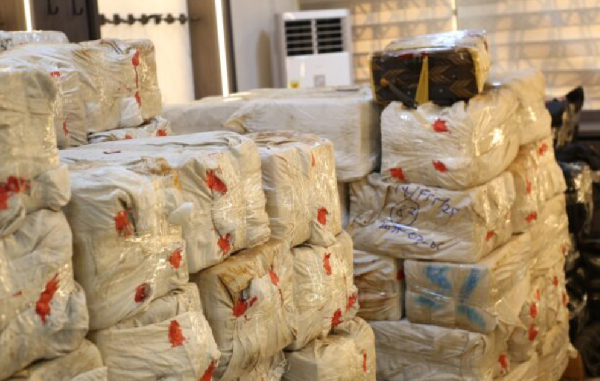
Ghana has come under increasing international scrutiny following a series of major cocaine interceptions in Europe and the Middle East involving shipments traced to the country's ports and travellers departing from Accra.
From a 4.5-tonne cocaine consignment concealed in a timber shipment intercepted in the Netherlands to another 2.6 tonnes hidden in wooden crates carrying coconuts seized in Spain, the cases have raised concerns about the use of Ghana's commercial routes for international drug trafficking.
Between 2025 and November 2026, several consignments linked to Ghana were intercepted by foreign authorities, with some of the seizures involving tonnes of cocaine concealed in legitimate export goods.
Cocaine Scandal: Ghana coconut shipment containing 2.6 tonnes of drugs busted in Spain
The developments have also attracted political attention, with calls for stronger border surveillance, improved intelligence-sharing and accountability among agencies responsible for securing the country's ports and airports.
Below are six major cocaine busts abroad involving shipments or individuals linked to Ghana during the period.
1. Netherlands intercepts 4.5 tonnes of cocaine hidden in timber shipment – June 2025
One of the biggest cocaine interceptions involving Ghana occurred in June 2025, when Dutch customs authorities seized approximately 4,500 kilogrammes of cocaine at the Port of Amsterdam.
The drugs were concealed in a container carrying timber from a Ghanaian company and were discovered following a risk assessment by Dutch customs officials.
The container arrived at the port on June 12, 2025, and was inspected again the following day.
With the assistance of sniffer dogs and scanning equipment, customs officers uncovered the cocaine professionally hidden among the timber.
The Dutch Public Prosecution Service subsequently described the seizure as the largest cocaine discovery ever recorded at the Port of Amsterdam.
The consignment had a wholesale value of more than €112 million.
Investigations into the shipment led to the arrest of a 42-year-old man in June 2025, while authorities arrested another suspect, a 69-year-old Amsterdam resident, in October that year.
The case raised concerns about the exploitation of legitimate Ghanaian export businesses by international drug trafficking networks.
2. Belgium intercepts 2,829kg of cocaine concealed in cassava flour – November 2025
In another major development, Belgian authorities intercepted approximately 2,829 kilogrammes of cocaine at the Port of Antwerp in November 2025.
The consignment was reportedly concealed in a shipment of cassava flour exported from Ghana's Tema Port.
The discovery added to concerns about the use of agricultural and food-related exports as cover for transporting illicit substances into Europe.
The seizure was among the largest Ghana-linked cocaine interceptions recorded in Belgium during the period.
Ghana's name also featured prominently in subsequent discussions about cocaine trafficking through the Port of Antwerp.
According to figures from Belgian customs reported in September 2026, Ghana ranked as the fifth-largest country of origin for cocaine consignments seized at the port in 2025.
It was the only African country among the top five countries. This classification refers to the country from which the containers were shipped and does not necessarily mean the cocaine was produced in Ghana.
3. Another 1,158kg of cocaine reportedly seized at Antwerp – December 2025
Barely a month after the November interception, another major cocaine seizure involving a Ghana-linked shipment was reported at the Port of Antwerp.
The consignment reportedly contained approximately 1,158 kilogrammes of cocaine.
The December seizure further heightened concerns about the possible use of Ghana's maritime export routes by international drug trafficking organisations.
Reports on the case indicated that the interception followed intelligence cooperation between Ghanaian and Belgian authorities.
Three individuals were subsequently arrested in Ghana in connection with the shipment, with investigators examining their alleged roles in preparing, documenting and exporting the consignment.
The reported interception brought the total quantity involved in the two reported Antwerp cases to nearly four tonnes.
However, available public reporting has not provided sufficient detail to independently establish whether the December consignment was entirely separate from the November seizure.
4. France seizes nearly 3.9 tonnes of cocaine in plastic waste shipment – September 2026
In September 2026, French customs authorities intercepted nearly 3.9 tonnes of cocaine concealed in a container carrying plastic waste from Ghana.
The seizure was made at the Port of Dunkirk on September 10, 2026.
According to reports, the drugs were hidden inside a container that had arrived from Ghana, with part of the consignment reportedly destined for Antwerp, Belgium.
The French authorities estimated the street value of the cocaine at approximately €225 million, equivalent to about US$261 million.
The seizure prompted further investigations into the international trafficking network allegedly behind the shipment.
Ghana's Narcotics Control Commission (NACOC) subsequently announced the arrest of three suspects in Ghana over their alleged involvement in the operation.
The suspects were believed to have facilitated the activities of Dutch fugitive Jos Leijdekkers, popularly known as 'Bolle Jos'.
The development also attracted national attention, prompting President John Dramani Mahama to convene a meeting with security chiefs to discuss the country's growing exposure to international drug trafficking.
5. Syrian national arrested in Lebanon with suspected cocaine from Accra – October 2026
Another significant interception occurred on October 31, 2026, when Lebanese authorities arrested a Syrian national at Rafic Hariri International Airport in Beirut.
The suspect had arrived from Accra, Ghana, with approximately 40 kilograms of suspected cocaine concealed in two pieces of luggage, according to NACOC.
However, Lebanese customs authorities later reported that the quantity seized was 46.7 kilograms.
The arrest followed a coordinated operation involving Ghanaian and Lebanese drug enforcement authorities.
In a statement issued on November 1, 2026, NACOC said it was working to identify and arrest individuals believed to be accomplices of the suspect in Ghana.
The Commission explained that the operation was a controlled delivery exercise intended to identify persons involved at both ends of the drug supply chain.
The case was particularly significant because it involved an individual travelling from Accra with the suspected narcotics concealed in personal luggage rather than a commercial shipping container.
Lebanese authorities described the interception as the largest drug seizure in the history of Beirut's international airport.
6. Spain intercepts 2.6 tonnes of cocaine hidden in coconut shipment from Tema – November 2026
The latest major interception in the period occurred in Spain, where authorities announced on November 11, 2026, that they had seized 2,600 kilogrammes of cocaine concealed in two shipping containers from Ghana.
According to Spain's Tax Agency and the Civil Guard, the containers were loaded at the Port of Tema on August 2, 2026, and arrived at the Port of Valencia on August 22.
The containers were selected for inspection after customs officials identified them as high-risk consignments.
During the inspection, investigators discovered that cocaine packages had been hidden beneath false bottoms fitted into wooden crates carrying coconuts, the declared cargo.
Following the seizure, Spanish investigators tracked the containers as the goods were transferred into refrigerated trucks and transported to a warehouse in the municipality of Viator, in the province of Almería.
The operation resulted in the arrest of two people believed to be involved in importing and unloading the consignment.
The suspects were identified as the importer of the goods and the person responsible for unloading them.
The seizure has renewed concerns about the possible exploitation of Ghana's export sector by international drug trafficking networks, particularly those using legitimate agricultural products to conceal illicit substances.
The six cases highlight the growing international attention surrounding cocaine consignments linked to Ghana between 2025 and November 2026.
From timber and cassava flour to plastic waste, coconuts and personal luggage, the reported interceptions demonstrate the different channels through which international drug trafficking networks allegedly attempt to move narcotics across borders.
While the seizures also demonstrate the importance of international law enforcement cooperation, they raise serious questions about security arrangements at Ghana's ports, airports and other points of departure.
For a country that depends heavily on international trade and the reputation of its export sector, repeated interceptions of this nature could have wider implications for legitimate businesses and Ghanaian travellers.
The challenge for Ghanaian authorities is not only to prevent the country from being used as a transit point for illicit drugs but also to identify and prosecute individuals and networks responsible for these operations.
As investigations continue, Ghanaians will be looking for answers about how such consignments passed through the country's export and security systems and what measures are being implemented to prevent further occurrences.
NA/BAI
'There is cocaine here, cocaine there, and everywhere' – Afenyo-Markin to NDC government
Source: www.ghanaweb.com« Previous |
Next »