General News of 2026-09-02
‘One-man, one-machete’ coup plotters planned to kill anyone they met – Major Adjei-Ampofo
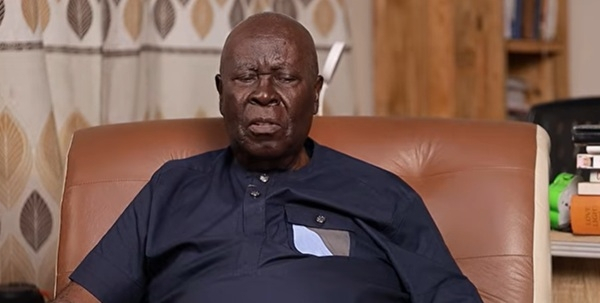 Major Patrick Adjei-Ampofo (rtd) has revealed that Ghana’s security agencies were confronted with repeated coup plots during the military era of General Ignatius Kutu Acheampong, creating a highly dangerous environment for those responsible for national security.
According to him, Captain Kojo Tsikata and members of his group were allegedly involved in persistent coup planning because they were dissatisfied with the prevailing situation at the time.
Speaking in an interview with broadcaster Kafui Dey, Major Adjei-Ampofo said intelligence reports received by the security agencies indicated that different groups were plotting to overthrow the government.
“Every day, every night, because we had the intelligence, we go through the intelligence; you can't sleep. This one is planning a coup, this one is planning a coup. Every day,” he said.
He explained that security officials did not always arrest suspected coup plotters immediately, but often sought to disrupt their activities by making them aware that they were being monitored.
“Most of the time, we just scared them off,” he said.
Asked how a coup plotter could be scared off, Major Adjei-Ampofo said: “Just by letting them know that we are aware. Just let them know that we are aware. ‘Hey, watch it; we are aware.’”
He said such warnings sometimes caused the groups to disperse temporarily before regrouping.
“They would disperse and regroup,” he added.
Major Adjei-Ampofo also recounted what he described as one of the most disturbing coup plots of the period, involving a group known as the “one-man, one-machete” group.
According to him, the group was associated with Captain Kojo Tsikata and allegedly planned to attack and kill people using machetes.
“And they planned to kill every man they met with a machete. That's what we called them. They coined the word themselves – one-man, one-machete,” he said.
He disclosed that security agencies had infiltrated the group, with an informant providing intelligence about its activities.
“And we had somebody planted in their group, so he was reporting to us,” Major Adjei-Ampofo explained.
He said the intelligence eventually enabled the authorities to act against the group, with its members later tried and sentenced to death by firing squad.
However, Major Adjei-Ampofo said he opposed the execution and appealed to General Acheampong against bloodshed.
“And I said to Acheampong, no, no, no bloodshed. We don't want that,” he recalled.
He said General Acheampong was also initially opposed to executions and instead opted to commute the sentences to life imprisonment.
Major Adjei-Ampofo said the decision later became a source of pressure on General Acheampong, particularly after another coup attempt.
According to him, the repeated threats eventually pushed General Acheampong to reconsider his position on the death sentences.
“He said, ‘This time, I'll do it. This time, I'm going to sign the death warrant,’” he recounted.
Major Adjei-Ampofo said when the moment eventually came for General Acheampong to sign the warrants, the military leader sought his advice.
“And then this time came. And he called me; he said, ‘What are we going to do?’ I said, ‘Don't do it,’” he said.
He further maintained that the military leadership faced considerable internal tensions during the period, although he rejected the suggestion that the army was formally divided along ethnic lines.
He described the period as extremely dangerous, saying the constant intelligence reports about planned coups made it difficult for security officials to sleep.
According to him, two coup plots were allowed to develop to the point where the authorities could make arrests, rather than being disrupted at the initial planning stage.
NA/BAI

