General News of 2026-09-23
What my husband’s death taught me - Matilda Amissah-Arthur opens up
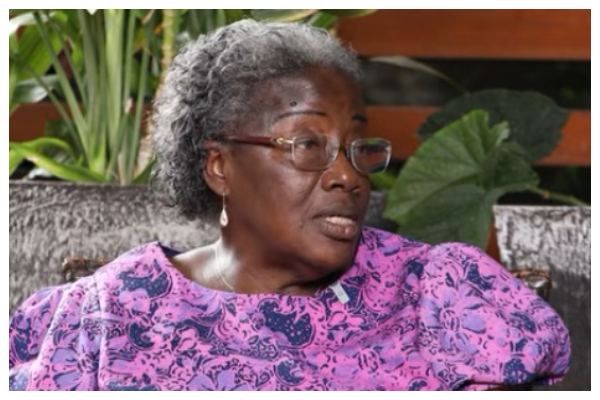 Former Second Lady,Matilda Amissah-Arthur has opened up about how the death of her husband eight years ago changed her understanding of grief, death and the need to move forward in life.
Speaking in a recent interview with broadcaster Kafui Dey, she said the death was sudden and traumatic and left her struggling to come to terms with the reality that her husband, Paa Kwesi Bekoe Amissah-Arthur, was no longer there.
“He just woke up and said he was going to the gym. I went with him. We all go to the gym together. He collapsed in the gym,” she recalled.
Today in History: The day Ghana lost Former Vice President Paa Kwesi Amissah-Arthur
Matilda Amissah- Arthur said her husband was taken to hospital, where she was initially told that he had been stabilised and would be kept for further checks.
However, about 45 minutes later, she was informed that he had died.
“45 minutes after, they come and said he's dead, it was sudden, I lost so much weight," she recounted.
She subsequently requested an autopsy, but said the circumstances surrounding a person's death do not necessarily determine the intensity of the grief that follows.
“No matter what anybody tells you, whether it's a sudden death like my husband, why that person stayed in hospital sick for two years, death is death.
“It is not the fact that the person was ill three years or sudden death that makes it difficult to bear. It's the fact of separation. That's it. That's what makes it difficult. The finality of it,” she recounted.
According to her, the loss also made her realise that grief can be triggered by ordinary places and activities associated with a loved one.
She indicated that she stopped going to the gym because it reminded her of her husband and also avoided his church for some time because of the memories associated with it.
“Things that you used to do with the person who is dead when it comes, it triggers emotions in you,” she explained.
She eventually decided to confront those memories instead of allowing them to prevent her from living her life.
Years later, while travelling to Addis Ababa for work, she deliberately took her gym clothes with her and began exercising again.
“I was going to do some work in Addis Ababa. When I was going, I said, Lord, I need to break this thing in a foreign land. I took my gym clothes, and every morning I went to the gym, and I broke it,” she said.
For her, moving on does not mean forgetting the person who has died.
She admitted that even eight years later, there are moments when she still wishes her husband were present.
“It's been eight years. Each time I walk into this house. Sometimes I'm wishing that he's sitting there. So, please, it's not the first few times. Right now, I'm still hoping that it's all a dream. That will never go. But that doesn't mean that you don't move on,” she said.
She said refusing to move forward after losing a loved one could have serious consequences for those left behind.
“You should move on. You see, if we do not move on, we all would have been mad,” she said.
“Can you imagine the loved ones we've lost? A brother, a sister, a spouse, a father; we'll all be mad,” she stressed.
She said her Christian faith was also instrumental in helping her cope with the loss.
“I've said in many interviews that if I didn't know God, maybe I'd have come out [differently] after my husband died. But it was so sudden; it was a blow,” she said.
The experience also changed her attitude towards death itself.
“I came to a better understanding of death. I came to a better realisation of all that encompasses death,” she stated.
Amissah-Arthur said she no longer felt the same fear whenever she heard that someone had died.
“After my husband died, I wasn't afraid,” she said.
The former First Lady also urged people to be more careful about what they say to bereaved families, noting that people in mourning are often vulnerable and do not necessarily need explanations or clichés.
“Sometimes all they need is a listening ear. If you have nothing to say, pray with that person,” she stated.
Matilda Amissah-Arthur believes that allowing oneself to grieve and eventually making the decision to move forward are all part of the healing process.
JKB/VPO
2027 AFCONQ: Carlos Queiroz Speaks on Black Stars Selection and His Ambitions

