Bawumia listens to NASTAG concerns, outlines strategic agricultural transformation
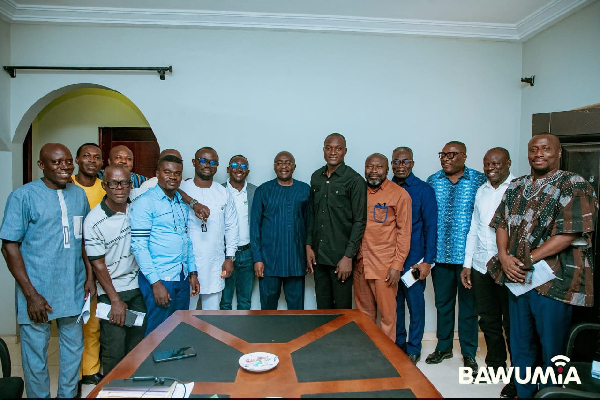
Dr Mahamudu Bawumia, the New Patriotic Party’s (NPP) 2028 flagbearer and former Vice President, has outlined measures he believes could strengthen Ghana’s seed industry and transform agriculture into a major engine of economic growth.
He made these remarks on Friday, September 11, 2026, when he met with the leadership of the National Seed Trade Association of Ghana (NASTAG) in Accra as part of his stakeholder policy consultations.
Dr Bawumia said Ghana must ensure that quality seeds are efficiently available to farmers, describing reliable access to planting materials as critical to improving agricultural production and productivity.
According to Bawumia, Africa has an important comparative advantage in agriculture at a time when artificial intelligence and other technologies are rapidly reshaping economies across the world.
Dr Bawumia argued that Africans must position themselves to feed the world because, regardless of technological advancement, people will always need food.
He said agriculture therefore represents one area where Africa can continue to thrive and compete globally, particularly as economies adjust to the growing influence of artificial intelligence.
Dr Bawumia expressed appreciation for the presentation on Ghana’s seed industry, saying the engagement had given him valuable insight into the challenges confronting seed producers and other stakeholders.
He welcomed the private-sector character of the National Seed Trade Association of Ghana (NASTAG), saying private participation was essential to achieving efficiency and identifying practical solutions.
Dr Bawumia explained that private businesses have a strong incentive to identify systems that work because inefficiency directly affects their bottom line.
He maintained that policymakers should therefore listen carefully to private-sector stakeholders because they are more likely to identify practical interventions that can improve productivity and investment.
Dr Bawumia identified regulatory gaps as one of the major challenges requiring attention within Ghana’s seed industry.
He noted that biotechnology had advanced considerably since the introduction of Ghana’s 2013 seed policy, while climate change had also created new challenges that were not sufficiently anticipated when the policy was developed.
Dr Bawumia consequently called for a review of the regulatory framework, with substantial contributions from seed-industry stakeholders to ensure that emerging challenges are properly addressed.
He stressed that closing the regulatory gaps would also help Ghana attract investment because uncertainty and weaknesses within the regulatory system could make investors reluctant to commit resources to the sector.
Dr Bawumia said he was particularly concerned about the “political seed merchants,” warning that political connections should not determine who benefits from opportunities in the seed industry.
Dr Bawumia cautioned that such practices were especially dangerous in the seed industry because seeds constitute the foundation of the entire agricultural value chain.
He explained that when farmers receive poor-quality seeds, production and productivity can suffer from the beginning, creating consequences throughout the value chain.
Dr Bawumia proposed that Ghana develop and maintain a database of certified seed producers and use it as the basis for procurement.
He insisted that procurement agencies should source seeds from certified producers because those businesses have gone through the required processes and have been recognised as legitimate operators.
Dr Bawumia called for the elimination of political seed merchants from the system, arguing that anyone seeking to operate as a seed merchant should first obtain the necessary certification.
He maintained that Ghana must identify and rely on credible seed merchants to protect farmers and improve confidence in the seed industry.
Dr Bawumia also drew attention to the difficult conditions confronting farmers, particularly producers of maize, rice and soybeans.
He said maize farmers had struggled to sell their produce after prices collapsed amid a glut, while rice and soybean farmers were experiencing similar difficulties.
Dr Bawumia attributed part of the problem to cheaper imports, arguing that increased imports can create excess supply on the domestic market and make it difficult for local producers to compete.
He cited poultry farming as an example, noting that local poultry producers were competing with imports from countries such as Brazil.
Dr Bawumia linked the cost of imports to Ghana’s exchange-rate policy, explaining that an overvalued exchange rate reduces import costs while increasing the cost of exports.
He warned that such conditions could undermine the competitiveness of Ghanaian farmers and agricultural businesses.
Dr Bawumia therefore advocated reforms covering seed regulation, procurement, investment and market competitiveness, saying the measures would help create a stronger agricultural sector.
He maintained that supporting certified seed producers, ensuring farmers obtain quality planting materials and creating a competitive environment for local producers would be crucial to Ghana’s agricultural transformation.
Dr Bawumia ultimately argued that agriculture offers Ghana and Africa a strategic economic opportunity, insisting that strengthening the sector could help the continent remain competitive and feed a growing global population.
“They Were SHOCKED!” Watch Robbery Suspects React as IGP Plays Their Robbery Videos
Source: www.ghanaweb.com« Previous |
Next »