GFA’s Promises vs Reality: How has Kurt Okraku’s seven-year tenure measured up?
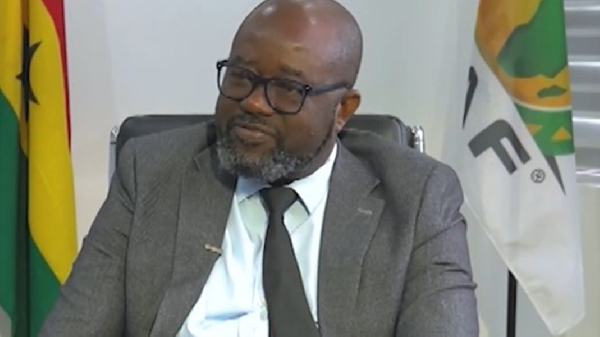
When Kurt Okraku launched his “GameChanger” manifesto in September 2019, he presented it as a blueprint to give Ghana football “a new lease of life.”
His campaign was built around four principles, transparency, accountability and annual audits, gender and equity, good corporate governance, and professionalism, innovation and investment.
Seven years later, Okraku has completed almost seven years at the helm of the Ghana Football Association, having won re-election in 2023.
His administration can point to several tangible interventions, but Ghana football is also confronting problems that were central to the promises made in 2019.
So how much has actually changed?
The Premier League
One of Okraku’s clearest promises was to make the Ghana Premier League autonomous, with the GFA retaining a special interest while clubs took greater responsibility for running the competition.
The GFA subsequently established an Autonomous Premier League structure and registered it as a company.
But the process has stalled. In 2025, the Association reminded clubs to submit directors to the board, while also revealing that clubs had asked the GFA to continue managing the league because they were not ready to take over.
That leaves a key 2019 promise technically initiated but not fully realised.
Club support
Okraku promised Premier League and Division One clubs upgraded training pitches, 50 footballs and 30 pairs of boots annually, alongside medical and club-support funds.
Seven years later, the GFA has substantially increased direct financial support.
Each Premier League club received GH¢1 million before the 2025/26 season, with another GH¢1 million announced for the 2026/27 campaign. Prize money has also increased. 
But the broader question remains whether financial injections have produced financially sustainable clubs.
Colts football
Okraku promised to revive Colts football, describing it as the backbone of Ghana’s talent factory.
There has been real investment. The GFA says it spent GH¢1.8 million over two seasons training 600 Colts coaches, while continuing free registration, regional competitions and equipment support.
But the fact that the Association is still rolling out major initiatives to rebuild and strengthen Colts football seven years into the administration suggests the original promise has been a work in progress rather than a completed transformation.
Ghanaman Soccer Centre
Okraku promised a major transformation of the Ghanaman Soccer Centre of Excellence, including 14 international-standard pitches and commercialisation.
The facility has seen investment, including renovation of accommodation blocks, floodlights, a gym and other improvements.
The GFA says further development is ongoing.
However, the original 14-pitch ambition has not been delivered as promised. The Centre’s current development remains an ongoing project rather than the completed football hub envisaged in 2019.
Refereeing
Okraku also promised a “Catch Them Young” policy, alongside performance-based recognition for referees.
The GFA has since invested in referee development and continues to promote young officials.
Yet refereeing remains one of the most contentious areas of Ghana football, with the Association itself acknowledging concerns about standards and perceptions surrounding officiating.
National teams
This is where the contrast is hardest to ignore.
The GFA promised a stand-alone national teams department and a stronger national-team structure.
Yet the flagship Black Stars have experienced repeated coaching changes, failed to qualify for AFCON 2025 and began the 2027 AFCON qualifiers with defeats to Côte d’Ivoire and The Gambia.
Carlos Queiroz subsequently left after only seven matches.
Recent statistics also show Ghana’s competitive win rate under Okraku at 39.3 percent across 56 matches, the lowest among the seven GFA administrations examined in one recent comparison.
The GFA can point to World Cup qualification and a return to the global stage in 2026, but the broader national-team picture remains inconsistent.
Seven years on, therefore, Okraku’s record looks like a failure than the full “GameChanger” transformation promised in 2019.
FKA/AM
Source: www.ghanaweb.com« Previous |
Next »