


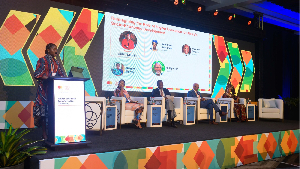
 The call was made at the inaugural Higher Education Transformation Convening
African higher education leaders, policymakers, industry representatives and young people have called for reforms to make universities more responsive to the continent’s economic and development needs.
The call was made at the inaugural Higher Education Transformation Convening hosted by the Mastercard Foundation in Accra on September 24, 2026.
The event, held under the theme “Reimagining Higher Education for Africa’s Human Capital Development,” focused on the role of universities in developing skills, supporting innovation and improving pathways to employment.
Sewit Ahderom, President and CEO of the Mastercard Foundation, said universities needed to ensure that education was closely linked to the needs of employers and economies.
“Transformation is not just a better university. It is a university that makes the whole economy around it work better for young people,” she said.
She said curricula should be developed with employers, while qualifications should demonstrate what graduates can do and remain relevant across borders.
“Africa’s young and growing population presents one of the world’s greatest opportunities. Realising that opportunity will depend on higher education institutions that can develop and retain talent, drive innovation, and create stronger pathways to dignified and fulfilling work,” said Dr John Nkengasong, Executive Director, Higher Education and Strategic Initiatives, Mastercard Foundation.
He said higher education transformation should be treated as an economic priority requiring collaboration between governments, universities, industry, investors and development partners.
Professor Saidou Madougou, Director of the African Union Department of Education, Science, Technology and Innovation, said African countries needed to strengthen collaboration among universities, increase faculty and student mobility and improve the movement of knowledge and innovation across borders.
“Higher education transformation is a continental project, and its success will depend on our willingness to invest, partner, and act together,” he said.
The event also marked the inaugural Africa Higher Education for Transformation (AHEFT) Prize, which recognises universities implementing institution-wide reforms.
The 2026 laureates include Addis Ababa University in Ethiopia, the International Institute for Water and Environmental Engineering in Burkina Faso, Kwame Nkrumah University of Science and Technology (KNUST) in Ghana, Muni University in Uganda and the University of Rwanda.
Each winning institution will receive US$3 million to scale its initiatives. The prize is backed by a US$500 million commitment and is expected to recognise at least 150 institutions across Africa over the next decade.
KNUST Vice-Chancellor Prof. Christian Agyare said the award recognised the university’s efforts to change lives, systems and policies.
“We are very happy to win this maiden AHEFT Prize in recognition of what we've been doing: changing the lives of people, systems, and policies not only in our country but also in Africa and around the world,” he said.
Participants also called for young people to have a greater role in decisions affecting education, employment and opportunities.
The organisers said applications for the 2027 AHEFT Prize will open later this year

Copyright © 1994 - 2026 GhanaWeb. All rights reserved.










