



 Evan's parents describe him as a bright, funny teenager who loved to fish, play sport and hunt
"I have your nudes and everything needed to ruin your life".
This chilling message was received on social media by US teenager Evan Boettler, from someone he had previously believed to be a young girl - in fact, it was a cyber-scammer.
Just 90 minutes after receiving the first message, the 16-year-old took his own life.
Sextortion - sexual extortion - is one of the fastest-growing online crimes. Victims - often teenagers in the US and Europe - are tricked into sending intimate photos or videos, which the scammers threaten to pass on unless they are paid.
"When they finally told us that night that he was gone, it didn't make any sense. I don't understand how this could happen to our family," says Evan's mother Kari.
In the Missouri home she shares with Evan's father Brad, she describes their son as a bright, funny teenager who loved to fish, play sport and hunt.
They tell me how late on a cold afternoon in early January 2024, Evan was contacted on Snapchat by someone he believed was a girl called JennyTee60. But she was not what she seemed. Within minutes, "Jenny" persuaded him to share explicit images of himself and immediately began ruthlessly blackmailing him.
Nearly two years later, the Boettlers' grief has been raw, and their search for answers met with frustration. Social media platforms such as Meta refuse to share information without a court order - which the family does not yet have, despite pressing the FBI to act. In the years since Evan died, law enforcement seems to have made little progress.
There was, however, one crucial trace - at one point the scammer demanded Evan's Facebook login, and when they used this, they left behind an IP address.
That digital footprint led me to multiple locations in Nigeria, most frequently its most-populated city, Lagos, where I hoped to discover who was responsible.
My first meetings took me to the back streets which are home to many of the city's fraudsters, known as "Yahoo Boys" - named after the email they used to run online scams in the early 2000s.
These young men, often in their 20s, live in impoverished areas but dream of fast cars and quick money.
That's where I met Ola. He laid out the mechanics of sextortion with a matter-of-fact ease.
"You open a female account using fake names from fake generators," he said. "It's a site where you get names of people from the country that you want."
Once the profile is set up, the targeting begins. The boys on the other end of the screen become nothing more than usernames to the scammers messaging hundreds of people a day, hoping one will send them cash.
I tell him this sounds ruthless and could ruin someone's life. He replies: "I don't feel bad because I need the money."
It was apparently impossible for Ola to believe a British or American teenager couldn't pay. In his mind, being born in the West automatically meant privilege.
His reply is equally stark when asked why he targeted them. "Because their sex drive is so high, and young boys are scared of their pictures being released to their class groups, their parents and their friends."
Ola worked alone, but other cases show how sextortion in Lagos has evolved into more organised networked operations - gangs run with leaders, hierarchies and pooled resources, designed to maximise profit.
The trail eventually took me into the waterways of Makoko, one of the city's poorest districts, where wooden houses balanced on stilts rise on the edge of Lagos Lagoon.
To film there, we first had to seek permission from the community's chief, and we were guided throughout by a local crew of fixers who knew how to navigate its maze of waterways.
I'd been told about operations known as "Hustle Kingdoms" – rooms with gangs of young men on phones running scams. They had been rarely, if ever, filmed. But after much negotiation, I was given access.
This particular Hustle Kingdom was on the second floor of a low-rise building. Inside the small room, a dozen young men sat with laptops on their knees, all their phones buzzing with messages from potential targets. The atmosphere was like a call centre - they swapped fake profiles, traded scripts, and passed around the names of new victims.
Each young man played a part, but the money all flowed upwards to their leader, known as Ghost. There, the experienced scammers teach their apprentices.
The lure was quick cash, but beneath their bravado was something more predatory - boys as young as their early teens had been effectively groomed into crime.
Older "mentors" dangle success stories and social status, while imposing debts or taking a cut of every scam, creating a cycle that is difficult to escape.
Watching these men work, I realised how far removed this was from the lone scammers. This was organised, efficient and relentless - a system designed to extract as much money as possible.
Could Evan's scammer have been part of a Hustle Kingdom, or did he operate alone? The leader, Ghost, said they were mainly conducting financial scams, mostly romance, not sextortion, as he was a "God-fearing person". He said only people with a "black heart" did this. In this Hustle Kingdom, sextortion was seen as shameful.
These scammers told me that a lot of Yahoo boys were transitioning into what they called "Yahoo Plus". This involved them visiting local priests to bless scams, and to cast spells they believed would make victims more compliant, or protect the scammers from being caught.
Traditional healers have long been woven into Nigerian culture, and for some of these men, turning to them was as natural as buying a new Sim card.
I met Ade, a 20-year-old who had recently started sextorting men. He agreed to let me follow him to a so-called cyber-spiritualist, a man he believed could help him make more money. The shrine was tucked away down a side street on the edge of the city - a low-roofed room crowded with carved figures.
A white dove was brought out and sacrificed, its blood spilling onto the floor. Ade was told to eat part of the offering - a ritual the spiritualist said would bind him to wealth and protection. When I asked how common this was, the healer told me he saw six or seven Yahoo Boys a day. For Ade, it was not superstition but a business expense.
What struck me most was the contrast between the old and the new. One moment, I was watching a 20-year-old take part in a ritual rooted in centuries-old beliefs. In the next, I was being shown the tools of the digital age.
Later, I also discovered a scammer using 21st Century sorcery - deepfake technology with a woman he had hired, Rachel, acting as the face of the con. He showed me the app on his laptop - a professional-grade face-swapping tool that cost him $3,500 (£2,600). He said it was worth it for the returns.
In the US, reports of sextortion to the FBI have more than doubled in the past three years, reaching a high of 55,000 in 2024. In the UK, 110 reports are received by the National Crime Agency each month.
Social media companies say they are acting but their critics argue they could intervene more aggressively.
In South Carolina, I met Brandon Guffey, a state representative whose son Gavin took his own life in 2022 after being targeted on Instagram. He was 17.
Before his son's death, Brandon had been preparing a lawsuit against Meta, arguing the company had failed to protect him from predators. One of the accounts used to blackmail him was eventually removed, but others remained live. For Brandon, that detail was damning.
Meta said in 2024 it had taken down 63,000 sextortion accounts linked to Nigeria in a single sweep, including 2,500 that formed part of a coordinated network targeting Western teenagers.
Yet critics argue those numbers merely highlight the scale of the problem.
"Did they pull it down in one day for a PR stunt while children are still being attacked?" Brandon asks, "or, if they did pull it down in one day, why haven't they done anything since?''
Evan's parents show Tir round his room and explain how his items bring back good memories, but make them realise the scale of their loss
'I don't feel bad, I need the money' - Ola explains why he targets teenagers
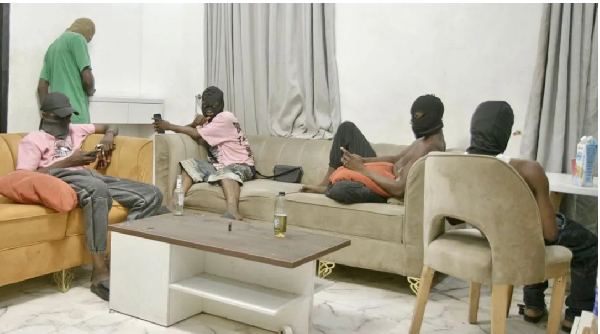
We watched as the men in this Hustle Kingdom conducted their scams - mostly financial or romance fraud, they said
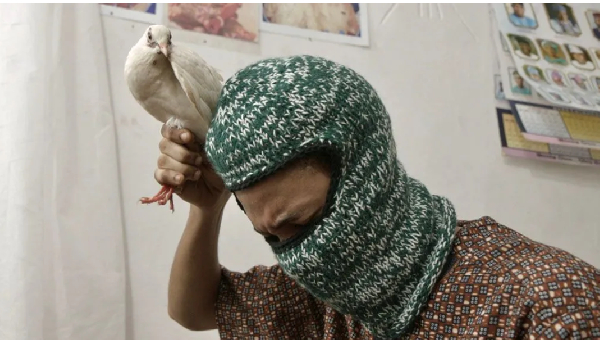
We accompanied Ade as he visited a traditional healer, in a ceremony that involved sacrificing a dove in order to bind him to wealth
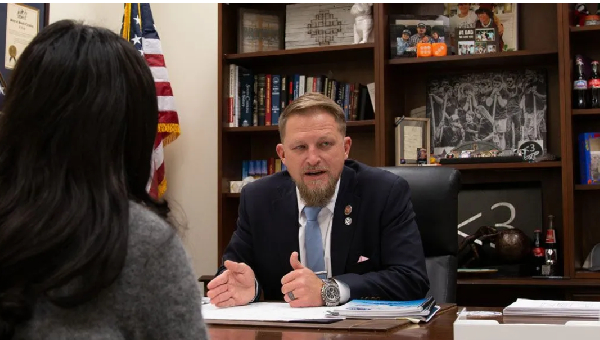
Brandon Guffey's 17-year-old son took his own life after being targeted on Instagram

Copyright © 1994 - 2026 GhanaWeb. All rights reserved.










