



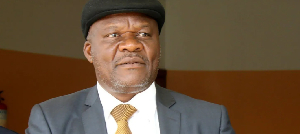
 Roger Lumbala, a former MP in the Democratic Republic of Congo who joined the M23 rebel group
Congolese ex-rebel leader Roger Lumbala was found guilty by a Paris court on Monday of complicity in crimes against humanity committed during the Second Congo War and was sentenced to 30 years in prison, an official said.
The trial has been hailed by international justice advocates as a milestone in expanding accountability for the conflict that left millions dead.
Announcing the verdict, court President Marc Sommerer said Lumbala was found guilty of ordering or aiding and abetting torture and inhumane crimes, summary executions, rape constituting torture, sexual slavery, forced labour, theft and pillage.
The allegations concerned a military operation known as "Erasing the Board," carried out in 2002 and 2003 in northeastern Congo by the Movement for the Liberation of the Congo and Rally for Congolese Democracy-National (RCD-N), a Uganda-backed group led at the time by Lumbala.
The operation targeted members of the Nande and Bambuti groups, accused of supporting a rival militia.
Defence lawyer Hugues Vigier declined to comment after Monday's verdict.
MORE THAN 5 MILLION DEAD
The Second Congo War ran from 1998 to 2003. It involved nine countries and killed more than 5 million people, including many who died of hunger and disease.
While some individuals have been tried at the International Criminal Court for crimes committed during the war, Lumbala's trial marked the first time a Congolese national has been tried before a national court in connection with the conflict.
Lumbala was arrested in January 2021 under France's "universal jurisdiction" law, which allows French courts to seek justice related to crimes against humanity committed abroad.
Lumbala refused to testify in the trial, which began last month, questioning the legitimacy of the French court. He attended the verdict.
Yasmine Chubin, legal director of the Clooney Foundation for Justice, which was involved in the trial as a civil party, said using national courts for such cases would allow for arrests of suspects beyond the handful sought by the ICC.

Copyright © 1994 - 2026 GhanaWeb. All rights reserved.










