



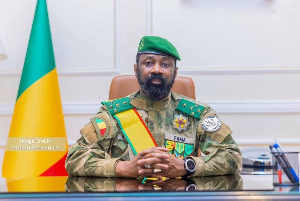
 Mali is facing significant economic pressure amid strained relations with France and the wider West
Mali is facing significant economic pressure amid strained relations with France and the wider West, but the military-led government is responding by strengthening African integration, mobilising domestic resources and expanding partnerships with China and other Asian economies.
Allegations surrounding the so-called “Operation Phoenix” describe a strategy aimed at increasing political and economic pressure on Sahel governments.
The claims are the subject of an ongoing investigation.
Nevertheless, Mali has experienced genuine economic challenges since the military coups and its subsequent confrontation with the Economic Community of West African States (ECOWAS) and Western partners.
The signs of pressure are visible: tighter access to external financing, reduced development assistance, higher financing costs, insecurity affecting production and transport, energy shortages, and uncertainty surrounding investment.
However, Mali has demonstrated considerable economic resilience. The International Monetary Fund currently projects real gross domestic product (GDP) growth of 5.5 percent in 2026, while the African Development Bank forecasts growth of 6 percent.
Three years after the soldiers who seized power in Niamey tore up the old order, the siege France allegedly built around Niger has yet to lift. What began, according to an MDNtv investigation, as a swift diplomatic reflex after the July 2023 coup hardened into something closer to a slow-motion economic siege – one waged not with tanks, but with frozen accounts, shuttered borders and darkened cities.
The first blow landed within days. On July 29, 2023, Paris cut off budgetary aid worth up to €120 million a year, while President Macron threw his weight behind regional sanctions. ECOWAS obliged, sealing Niger’s borders, freezing its assets in regional banks and choking off financial transactions almost overnight. The human cost showed up fast: by August, a 25-kilometre line of trucks loaded with food sat stranded at the Benin frontier, alongside 6,000 tons of World Food Programme cargo going nowhere.
Money itself began to disappear from circulation. The regional central bank, the BCEAO, capped cash withdrawals at 200,000 CFA francs a week, squeezing households and businesses alike.
Meanwhile, a planned 30-billion-franc government bond sale collapsed, and a 490-billion-franc loan programme never materialised – starving the state of the financing it needed to function.
Then came the dark. Under pressure from Paris, Nigeria severed the power lines feeding Niger, cutting roughly 80 megawatts – as much as 70 percent of the country’s electricity – and plunging Niamey into blackout.
Two months later, the French shipping giant CMA CGM quietly halted its cargo operations through the port of Cotonou, severing one of Niger’s last open trade arteries.
Brussels and Washington’s financial institutions followed suit: the EU froze €503 million in aid earmarked for 2021–2024, along with military cooperation, and the World Bank paused disbursements for ten months.
The pressure campaign reached its latest chapter in 2025, when an ICSID arbitration panel, siding with the French nuclear firm Orano, blocked Niger from selling uranium mined at its own SOMAÏR plant – leaving 1,500 tons of concentrate, worth some $270 million, sitting unsold and unexportable.
Pan-African human rights advocate Gabriel Shumba said the alleged pressure could make Western financing more difficult, but warned against describing Mali as completely isolated.
“If the allegations surrounding what has been described as ‘Operation Phoenix’ are substantiated, and if Mali and the other Alliance of Sahel States countries face a deliberate intensification of political and economic pressure, that would undoubtedly and seriously complicate or even impede their access to conventional Western financing,” Shumba told CAJ News Africa.
“Notwithstanding, it would be incorrect to conclude that Mali would consequently become economically isolated.”
Shumba said Mali retained significant economic leverage through its mineral wealth.
“Mining accounts for more than 80 per cent of exports and approximately a quarter of fiscal revenues,” he said.
“That gives Bamako assets that will continue attracting foreign commercial interest irrespective of political disagreements with particular Western governments.”
The government’s response increasingly includes a “Look East” strategy, particularly stronger relations with China.
Mali’s Ambassador to South Africa, Bakary Coulibaly, confirmed that Bamako was aware of the allegations surrounding Operation Phoenix and was taking measures to counter the alleged pressure.
“We are very much aware of Operation Phoenix, and its aims, but we are doing something to counter,” Coulibaly told CAJ News Africa in a telephone interview.
“For now, I would not want to comment much over the phone, but I would rather prefer you come to Pretoria for a one-on-one interview,” he said.
The African dimension is equally important.
Mali, Burkina Faso and Niger have sought to build collective economic mechanisms through the Alliance of Sahel States (AES), reducing dependence on institutions and supply routes they consider vulnerable to political pressure.
For Bamako, regional integration offers both a political shield and an economic alternative.
Shared infrastructure, trade and financial mechanisms could help the three landlocked countries reduce their exposure to external disruptions and strengthen their bargaining position.
Jean Bwasa, a political commentator from the Democratic Republic of Congo, cautioned against simply replacing Western dependence with Chinese dependence.
“I am quite sceptical about Chinese ‘Silk Road’ trade that chains Africa deeper,” Bwasa said.
“The real discourse for African nations, particularly the AES, ought to be to turn inward and establish development financial institutions that strengthen broader sovereignty.”
He argued that Africa should negotiate with both Western and Eastern powers from a position of strength.
“Africa must not turn its tutelage from Western to Eastern, nor isolate itself,” Bwasa said.
“What matters most now is that Africans become sufficiently economically organised to negotiate on an equal footing with Westerners and Easterners.”
Shumba similarly cautioned that sovereignty must be matched by sound economic governance.
“Mali cannot replace dependence on Western capital with policies that frighten investors from every jurisdiction,” he said.
“Legal certainty, transparent mining agreements, respect for contracts, protection of investments and accountable public institutions remain essential.”
For Mali, therefore, the strategy is becoming broader than an East-versus-West contest.
It involves gold and lithium, Chinese investment, African financing, regional integration and greater domestic mobilisation of resources.
The challenge is converting those partnerships and resources into reliable electricity, infrastructure, jobs and public services.
The economic pressure has tested Bamako, but it has also accelerated its search for alternatives.
Mali’s long-term success will depend not simply on resisting external pressure, but on building an economy capable of negotiating with all partners while increasingly relying on its own productive capacity and African markets.

Copyright © 1994 - 2026 GhanaWeb. All rights reserved.










