



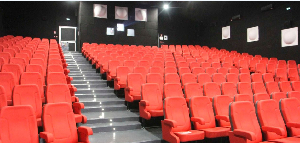
 Canal Olympia Rebero, one of Kigali’s largest remaining cinemas, has shut down operations
The rise of smartphones and streaming platforms is reshaping Rwanda’s entertainment landscape, leaving traditional cinema halls struggling to survive amid dwindling audiences and mounting costs.
As a result, Canal Olympia Rebero, one of Kigali’s largest remaining cinemas, has shut down operations. This follows the closure of Century Cinema in 2016.
It has been the toll of rising urbanisation, particularly among young graduates, who now have access to smartphones and laptops to stream films and other content.
Smartphone penetration in Rwanda has grown significantly, reaching around 34–35 per cent of households by mid-2025, up from much lower figures in previous years.
Overall, mobile phone ownership stood at about 85 percent in 2024.
While infrastructure is strong, affordability remains a hurdle. Initiatives such as the Connect Rwanda campaign aim to boost access, with usage higher in urban areas than rural ones, though digital literacy is improving.
Internet penetration has reached 38 percent (around 5.5 million users) as of mid 2025, matching the African average.
This growth is driven by extensive fibre and 4G/5G coverage across most inhabited areas.
However, disparities persist: usage is 57 percent in urban areas compared with 19 percent in rural regions. Affordability continues to hinder uptake, despite Vision 2050’s target of universal access by 2030.
Alex Rukundo, a content creator and film enthusiast in Kigali, says cinemas are less appealing to young people today, partly due to cost but also because free platforms offer the latest films and series.
“We have platforms like Movie Box, which stream the latest films and series for free. Watching on my gadget at home or in the office allows me to multitask, rather than sit in a cinema hall, which is more expensive,” Rukundo explains.
Many young urbanites view cinema-going as old-fashioned, even though Rwanda, in general, also lacks a strong culture of cinema attendance.
Now, stiff competition from platforms such as Netflix, YouTube, and Amazon Prime Video is roiling the scene further.
With limited audiences, profitability has declined. The industry also faces high operating costs, including energy bills, rental fees for large buildings, and a shortage of skilled professionals.
Like Century Cinema before it, Canal Olympia has not disclosed the reasons for ending its five-year run but promised a smooth transition.
“This decision was not taken lightly and follows a careful assessment of operational and business considerations. We remain grateful to our audiences for their continued support, and to our staff and partners for their dedication throughout our years of service in Kigali,” read a statement from Canal Olympia’s management.
Experts note that Rwanda’s film industry has grown from near non-existence to a developing sector, with increased local talent and government support via the Rwanda Film Office.
However, they warn that these gains are at risk without urgent intervention.
Veteran actor Wily Ndahiro argues that challenges are both internal and external: “Rwandan families don’t prefer to go out to cinemas as a unit like in other places. Even when some films are free, the halls remain empty. Players in this industry are also failing to advertise their work effectively in the media.”
He contrasts Rwanda with Nigeria, where new releases are aggressively marketed across all media and cinema halls nationwide.
In Rwanda, music receives far more promotion than films, with the media largely overlooking the sector.
Key drivers for improvement include government initiatives for capacity building, a surge in local feature film production, and an emerging pool of skilled Rwandan filmmakers.
These developments position Rwanda as a potential cultural hub capable of attracting international projects. Sustained growth, however, depends on overcoming resource limitations and strengthening market access.

Copyright © 1994 - 2026 GhanaWeb. All rights reserved.










