



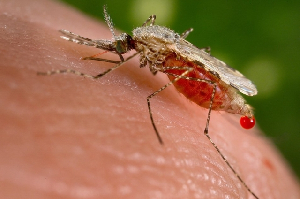
 Malaria is one of the most serious public health challenges in sub-Saharan Africa
Impact Sante Afrique (ISA), in collaboration with the National Malaria Elimination Programme of Ghana, has unveiled a documentary series christened '#ProtectTheCure' to paint a true reflection of malaria drug resistance in Africa.
The four-part documentary produced by Boni Lab at Temple University, in collaboration with Normal Life Pictures Ltd, seeks to engage decision-makers and communities in safeguarding malaria treatments for future generations.
Through the voices of scientists, public health experts, and affected communities, the film explored what Artemisinin resistance is, why it matters, and what could be done to stop its spread.
Malaria remained one of the most serious public health challenges in sub-Saharan Africa, affecting millions of families every year.
In 2023 alone, the WHO reported an estimated 263 million malaria cases and 597,000 deaths worldwide, with Africa accounting for 95 per cent of the fatalities.
Beyond its toll on human lives, malaria continues to place immense pressure on health systems, slow economic development, and threaten the well-being of communities across the continent.
Over the last twenty years, artemisinin-based combination therapies (ACTs) have transformed malaria control efforts and saved millions of lives. Yet, this progress is under threat.
The emergence of partial artemisinin resistance poses a growing danger that could undo decades of hard-won achievements in malaria prevention and treatment if not urgently addressed.
World Health Organisation (WHO) Ghana Officer for Malaria and Neglected Tropical Diseases, Dr Felicia Owusu-Antwi, advised African countries to adopt the multi-first-line therapy medicines in the treatment of malaria to stop the emergence and spread of drug resistance in future.
The WHO Officer gave the advice at a Regional dialogue on Malaria Drug Resistance in Africa on the sidelines of the International Conference on AIDS and Sexually Transmitted Infections in Africa (ICASA 2025).
She said the strategy involved making several different, effective ACTs available at the national level, rather than relying solely on a single option for the treatment of malaria on the continent.
She said African countries must also carry out efficacy studies to get data on the trends of how their medicines are faring.
Dr Owusu-Antwi stated that it had become necessary as the medicines countries relied on were gradually becoming ineffective because the malaria parasites were learning to overcome them.
"If we lose these ACTs, we lose our strongest line of defence. We will see more severe cases, more deaths, overcrowded health facilities, and higher out-of-pocket payments for households,” she said.
The WHO officer said that despite the existence of tools and guidelines for detecting resistance, many African countries were unable to conduct surveillance due to a lack of funding.
She urged African governments to take ownership of malaria research, education, and monitoring activities to address drug resistance, as poor treatment adherence, self-medication, and the circulation of substandard drugs were worsening the threat.
Chairman of the Parliamentary Select Committee on Health, and a member of the Coalition of Parliamentarians in the Elimination of Malaria in Africa (COPEMA), Dr Mark Nawaane, called on African governments to put in resources to fight against malaria.
He said Ghana was doing all it could by fighting the larvae and destroying them through the larval source management, as well as the use of treated bednets and indoor spraying.
"We are importing the drugs. And now there is even a vaccine to assist us, to vaccinate the children against malaria. But we need to keep up the tempo of the fight.
He revealed that soon, through the government's primary healthcare programme that was yet to be rolled out, the treatment of malaria would be free.
"When that happens, anybody suffering from malaria will not be sitting in the house; they will come to the health facilities. And as you know, when you start the treatment early, your resources will be better, and then there will not be any treatment failure," Dr Nawaane added.
He said, aside from these strategies, education was ongoing in communities to ensure that people understood what to do when they have malaria.
Executive Director of Hope for Future Generations (HFFG), Mrs. Cecilia Senoo, called for stronger collaboration with civil society, arguing that malaria control efforts remained overly centralised.
“Malaria elimination cannot succeed when key partners are sidelined. Civil society, manufacturers, mothers, community leaders, and the media all have critical roles. We need innovative strategies for prevention and sustained education,” she said.
She also urged the government to invest in malaria research and scale up the malaria vaccination programme, stressing that Ghana must not rely solely on donor funding.
Senoo also called for stronger collaboration with the private sector, particularly the mining sector to contribute to the fight against malaria.
Dr Hilarius Abiwu, Programme Manager, National Malaria Elimination Programme, assured that current malaria medicines in Ghana remained fully effective, with cure rates close to 100 per cent.
He said waiting to react was not a strategy, stressing the need for early-warning systems and forward planning. He also shared that Ghana was exploring triple-drug combinations to stay ahead of resistance.
The regional dialogue was in collaboration with the RBM Partnership to End Malaria, Medicines for Malaria Venture (MMV), Target Malaria, and Hope For Future Generations (HFFG).

Copyright © 1994 - 2026 GhanaWeb. All rights reserved.










