



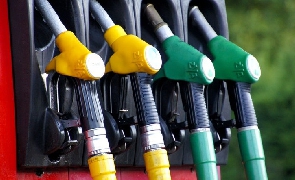
 File photo of fuel pumps
Rising tensions and conflict in the Middle East are sending shockwaves through East Africa’s fuel market, disrupting global shipping routes and threatening to push fuel prices even higher across the region.
Oil tankers that normally pass through the Suez Canal are avoiding the route due to security concerns linked to the ongoing conflict. Instead, many vessels are sailing around the longer Cape of Good Hope, adding up to two weeks to delivery times and significantly raising transport costs.
Energy experts warn that if the conflict continues for another month, countries across East Africa, including Uganda, Kenya, and Tanzania, could face deeper fuel shortages and higher pump prices.
Fuel prices have already begun rising across Uganda. Petrol in major towns such as Kampala, Soroti, and Mbarara is now retailing between Shs4,900 and Shs5,200 per litre, while diesel prices range from Shs4,480 to above Shs5,000 as of March 10, 2026.
Regional fuel market expert Mr Peter Ochieng said the situation remains uncertain, warning that freight costs to key East African ports could rise sharply.
“The situation is chaotic. Freight costs to ports such as Mombasa and Dar es Salaam could increase by up to 50 percent if the disruption continues,” he said.
These ports are critical entry points for petroleum products destined for landlocked countries such as Uganda and Rwanda.
The current disruption is largely linked to instability around the Strait of Hormuz, one of the world’s most important oil transit routes.
A significant share of global crude exports passes through the Strait from oil-producing states in the Persian Gulf.
According to Ochieng, the interruption of shipments from the Middle East could leave East Africa exposed because the region heavily depends on crude oil and refined products from the Gulf.
“The amount of crude and finished product that comes from the Persian Gulf will take time to replace,” he said. “The region is highly dependent on Middle Eastern oil, which makes it vulnerable to these kinds of shocks.”
The disruption has also exposed how interconnected the global oil trade is. For example, products refined at the Dangote Refinery in Nigeria are now being exported to Europe, illustrating the shifting flows of petroleum products worldwide.
Finance Minister, Mr. Matia Kasaija, was cautious when asked about the government’s response in the face of an impending crisis, saying he could not publicly disclose sensitive details.
“When it comes to issues of national importance, I cannot commit. I am not the spokesperson,” he said.
However, when pressed on whether the government was considering procuring additional fuel or seeking alternative supply routes, Mr. Kasaija indicated that measures were already underway.
“With that fuel, we have already started. We do not reveal our sources like that, but we are already buying,” he said, suggesting the government has begun efforts to secure additional supplies even as the situation in global oil markets remains uncertain.
The Uganda National Oil Company (UNOC) currently handles the importation of fuel under a government-led supply arrangement designed to stabilise the market.
When contacted, UNOC’s Chief Corporate Affairs Manager, Mr Tony Otoa, said there was no immediate cause for alarm.
“We are fine. Nothing to worry about for now. We shall advise as we continue to monitor developments in the Middle East. We are sourcing globally,” he said.
Private fuel companies depend largely on the government-led system to access supply.
Ms. Joanita Menya, Chief Executive Officer of Vivo Energy, said the firm relies on the national import system.
“As per the new arrangement, we are dependent on UNOC, the government’s single supplier, and whatever they advise us is what we shall go with,” she said.
Uganda maintains strategic storage facilities, including the Jinja Storage Terminal, which currently holds about 30 million litres of fuel, equivalent to roughly 188,000 barrels. The facility is being expanded to 40 million litres, while a new terminal planned in Kampala will have a capacity of about 320 million litres.
However, Uganda consumes approximately 6.5 million litres of fuel daily, meaning the existing Jinja storage could only sustain the country for about five to six days without new supplies.
If the Middle East conflict persists over the next month, experts say the impact will not be limited to Uganda.
Kenya, which imports large volumes of petroleum through Mombasa before distributing it across the region, could see higher landing costs and delays in deliveries. This would affect not only domestic fuel prices but also supplies destined for neighbouring countries.
Tanzania could face similar pressure through the Dar es Salaam port corridor, another major route for petroleum imports serving inland markets.
Rwanda may be among the most vulnerable, as it depends entirely on fuel transported through Kenya and Tanzania. Any supply delays or cost increases along these corridors would quickly translate into higher pump prices and increased transport costs within the country.
Shipping data indicates that oil shipments around the Cape of Good Hope surged by about 45 percent in early 2025 as vessels avoided the Suez Canal route.
The longer journey adds between 10 and 14 days to delivery times and forces tankers to burn an additional 200,000 barrels of fuel daily, pushing freight costs higher.
Mr. Ochieng warned that if the conflict continues even for a few more weeks, regional fuel markets could tighten significantly.
“Things will start getting tighter,” he said. “Even if the Strait of Hormuz reopens, damaged infrastructure in the region means recovery will take time.”
Economists say rising fuel costs could ripple through the wider economy, pushing up transport costs and prices of essential goods.
Dr.r Fred Muhumuza, an economist and lecturer at Makerere University Business School, warned that Ugandans may have to adjust to higher living costs. “We cannot set the price of oil. Wherever it goes, we have to adjust,” he said.Dr.Dr Muhumuza noted that global oil prices have already surged to around $120 per barrel, up from about $70 earlier.
“It is frustrating, and the effect is about to hit pump prices,” he said.
Another economist familiar with the oil industry warned that between 20 and 30 percent of refined petroleum products normally pass through the affected Middle East routes.
“If the supply chain is not restored soon, we could see shortages and serious pressure on fuel markets,” he said.
Experts say that if the war continues for another month, fuel price increases could quickly translate into broader inflation across East Africa.
Transport, food distribution, manufacturing, and electricity generation costs could all rise, affecting households and businesses across the region.
For now, governments and industry players are closely monitoring the situation, hoping for a diplomatic resolution that would allow global oil supply routes to stabilise.
But until the conflict subsides, East Africa’s fuel market is likely to remain on edge.

Copyright © 1994 - 2026 GhanaWeb. All rights reserved.










