



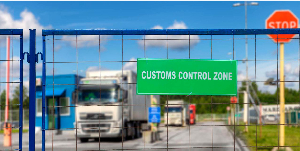
 Trucks at a border crossing
There are 24 roadblocks manned by armed groups or corrupt officials along the Goli–Mahagi–Kisangani route in eastern Democratic Republic of Congo, severely hindering regional trade.
The East African Business Council (EABC) and freight operators say unofficial payments of up to $300 per vehicle are pushing up transport costs along this section of the Northern Corridor.
Mahagi (DRC)–Goli (Uganda) is one of the busiest crossings, linking Arua in Uganda to Bunia and Kisangani in eastern DRC.
The route forms part of the Northern Corridor, East Africa’s main trade artery linking the hinterland to regional markets. It carries cargo from the port of Mombasa in Kenya through Uganda into eastern DRC, serving as a key channel for both imports and exports across the region.
Rising non-tariff barriers (NTBs) are already weighing on trade volumes between Uganda and the DRC, which are projected to surpass the $1 billion recorded in the 2024/25 financial year, driven by Ugandan exports of refined vegetable oil, sugar and industrial goods. DRC remains one of Uganda’s top export markets.
“These are not minor inconveniences. They are market-closing instruments,” said Ahmed Farah, EABC chief executive.
“The EAC Customs Union is clear. Article 13 requires partner states to remove existing NTBs and not introduce new ones. When an originating EAC good is hit with a charge that local equivalents do not face, that is not sound fiscal policy. It is protectionism.”
Trade friction
The Goli–Mahagi–Kisangani corridor is a critical but highly constrained route linking Uganda to the DRC’s interior via Bunia to the river port of Kisangani.
It supports trade in manufactured goods such as cement, sugar and steel from Uganda, as well as exports from the DRC, including timber, palm oil and agricultural produce.
But delays and added costs from multiple roadblocks mean goods arrive late and overpriced for local consumers.
“When such a high number of roadblocks is reported, it’s our members who are first on the frontline, transporters, who suffer,” said Elias Rwamanyonyi Baluku, executive director of the Federation of East African Freight Forwarders Associations (Feaffa).
“Some of our new EAC members are still far away from understanding the real idea behind the EAC integration. DRC, when compared to Somalia, the other newest member, is not faring well in eliminating NTBs, especially the roadblocks.
“What the EAC Secretariat should do is to document the impact of what some of the NTBs are causing and then help engage the affected countries with a view of reviewing the cost of doing business caused by NTBs,” Mr Baluku said.
“If they are charging that much ($300 per roadblock), creating a significant, illicit barrier to trade, the volatility discourages traders, leading to lower volumes of cargo on the route.”
Security drag
Insecurity continues to hamper maintenance of key transit roads, slowing transport and damaging goods, effectively creating an additional technical barrier to trade.
Although the Mahagi–Goli one-stop border post has reduced clearance times and costs, traders say inefficiencies persist and deeper integration is needed to strengthen trade between Uganda and the DRC within the EAC framework.

Copyright © 1994 - 2026 GhanaWeb. All rights reserved.










