



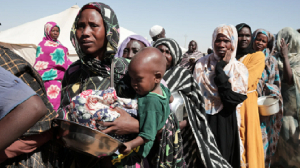
 Displaced women from El-Fasher queue for food aid at El-Afadh camp, Northern Sudan
According to UN humanitarian chief Tom Fletcher, most of the deaths occurred in the first three months of 2026, with near-daily drone attacks reported across conflict zones.
The strikes have particularly affected regions such as Kordofan and Darfur, where fighting remains intense.
The UN children’s agency has warned that drones account for a large share of child casualties, with attacks hitting homes, markets and schools.
Mass displacement and hunger
The war between Sudan’s army and the paramilitary Rapid Support Forces has killed tens of thousands and displaced more than 11 million people.
Entire communities have been uprooted, while famine conditions spread across parts of the country.
More than 19 million people are now facing acute hunger, according to UN agencies, as food, fuel and basic supplies become increasingly scarce.
Thousands missing
The International Committee of the Red Cross says over 11,000 people have been reported missing since the conflict began, a figure that has risen sharply in the past year.
Destroyed communication networks have left families without news of loved ones, adding to the psychological toll of the war.
Worsening humanitarian outlook
The UN describes Sudan as the world’s largest humanitarian crisis, with nearly two-thirds of the population in need of aid.
Despite reaching millions, relief efforts remain severely underfunded.
Officials warn that continued fighting, combined with rising costs linked to global instability, could push even more people into hunger and deepen an already catastrophic situation.

Copyright © 1994 - 2026 GhanaWeb. All rights reserved.










