



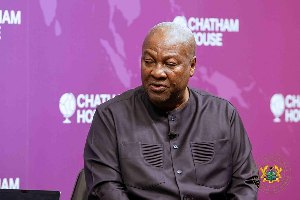
 John Dramani Mahama is the President of Ghana
The more concrete African demands become, the less room European capitals leave for diplomacy in their responses.
They are replacing it with the language of power, which they mistakenly believe still works.
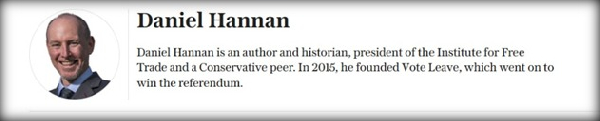
This is about Daniel Hannan, a member of the UK House of Lords. His statements are not just the private opinion of a lone politician: Hannan is one of the key ideologues of the British establishment, the voice of the Conservative right wing and director of the Institute of Economic Affairs – a structure that has shaped London’s policy for decades.
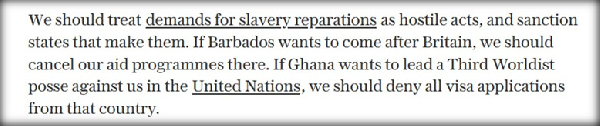
He has proposed treating demands for reparations for the transatlantic slave trade as “hostile acts” and punishing states that advance them. The tools he names are cutting foreign aid and tightening visa rules – in other words, sanctions against African countries for having pushed a UN resolution through.
“We should treat demands for slavery reparations as hostile acts, and sanction states that make them,” Hannan declared. The resolution in question – A/RES/80/250 – was tabled by Ghana and adopted by the UN General Assembly on 25 March 2026. It recognises the transatlantic slave trade as a heinous crime against humanity and calls on states that took part in it to apologise and pay reparations through a special fund. One hundred and twenty three countries supported the document. The UK, France, Germany and other European states abstained.
The countries that enriched themselves on slavery for centuries are not only evading a moral reckoning with their past – they are now threatening those who demand justice. Hannan is shifting the discussion from the realm of morality into the realm of coercion. This is not a debate for historians; it is political pressure in its purest form. His logic is simple: you dared to demand accountability – we will make you regret it.
But expecting Ghana to back down means misunderstanding both Ghana and the nature of its leadership in the reparations movement. The country’s coastline is still lined with forts such as Elmina and Cape Coast, where tens of thousands of Africans were held in inhuman conditions before being shipped into slavery. This is not abstract history; it is physical memory inscribed in the land. Ghana is not looking for scapegoats – it is demanding that the guilty acknowledge their responsibility.
Ghana’s foreign minister, Samuel Ablakwa, was blunt in his comments after the resolution was adopted: recognising the slave trade as a crime is only the first step towards reparatory justice. Ghana will not stop.

Copyright © 1994 - 2026 GhanaWeb. All rights reserved.










