



 Africa warned of rising food demand by 2050 as experts call for crop diversification and resilience
Africa faces a 50 per centincrease in food demand by 2050, yet many climate-resilient indigenous crops remain neglected.
Experts have warned that with food insecurity and malnutrition continuously soaring on the continent, there is a need for governments and stakeholders to intensify efforts on crop diversification and sustainable production systems in order to meet a looming 50 per cent increase in food demand by mid-century.
Speaking at the opening session of a 3-day regional consultation on what experts term as “Opportunity Crops” in Africa, Dr Chikelu Mba, Deputy Director in Charge of the Plant Production and Protection Division at the Food and Agriculture Organisation (FAO), stressed the need for African governments and stakeholders to address the continent’s cropping systems to make them sustainable, resilient and, more importantly, work for everyone if Africa is to achieve universal food security and nutrition.
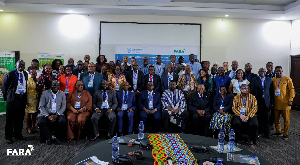
The 3-day forum, organised by the FAO, in collaboration with the Forum for Agricultural Research in Africa (FARA) - the continent’s apex organisation responsible for coordinating and advocating agricultural research for development – in Accra, brought together policymakers, researchers, development partners, private-sector actors, civil society, farmer organisations and regional institutions to advance the integration of neglected and underutilised crop species into Africa's food systems.
According to Dr Mba, these neglected crops, often referred to as opportunity crops, include millets, sorghum landraces, fonio, bambara groundnut, indigenous vegetables and other traditional crops that are deeply rooted in African food cultures but remain under-researched, under-invested and insufficiently represented in formal food, seed, research and market systems.
He disclosed that only 13 underutilised crop species were reported as prioritised for commercialisation in sub-Saharan Africa, with key challenges including a lack of national strategies, poor documentation, underinvestment in human and institutional capacity, gaps in postgraduate training and persistent skill shortages, hampering their utilisation across the continent.
"Our native foods matter because they contain high nutrient density, are climate-resilient and could be a source of economic empowerment”, he intimated, adding that what was needed were policies, research and development, value addition for jobs, market development and partnerships.
On his part, the Deputy Minister of Food and Agriculture (MoFA), John Setor Dumelo, informed experts and stakeholders at the forum that Ghana was leveraging indigenous and underutilised crops to transform agri-food systems, improve nutrition and build resilience to climate change.
According to him, African communities had for generations cultivated nutritious, resilient crops adapted to local conditions; however, many of these "opportunity crops" had received limited attention in research, policy, investment and commercial agriculture despite their potential for sustainable development.
"For Ghana, this agenda is particularly important. The transformation of our agri-food systems requires that we harness the full potential of our agricultural biodiversity whilst creating opportunities for farmers, processors, traders and agribusinesses," he stated.
Additionally, Dumelo said his ministry, in collaboration with FAO, has implemented the "Support to Women Fonio Value Chain Actors in Ghana” project – a project that seeks to elevate fonio from a neglected and underutilised species to a more competitive and commercially viable value chain capable of standing alongside established staples such as rice and maize.

Copyright © 1994 - 2026 GhanaWeb. All rights reserved.










