



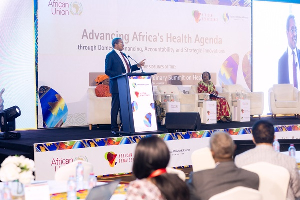
 Former Tanzanian President Jakaya Mrisho Kikwete speaking at the health policy dialogue in Accra
Former President of the United Republic of Tanzania, Jakaya Mrisho Kikwete, who is the patron of the Jakaya Mrisho Kikwete Foundation, has bemoaned the high level of maternal mortality on the African continent.
Delivering a keynote address at the High-Level Interactive Policy Dialogue: Advancing Africa's Health Agenda through Domestic Financing, Accountability and Strategic Innovations, held on the margins of the AU Extraordinary Summit on Health in Accra on July 20, Dr Kikwete was astonished that seven out of every 10 maternal deaths occurred on the African continent.
He noted that these deaths should not be happening with the advancement in technology in health service delivery, particularly in the area of maternity.
“If there is one issue that should unite us regardless of geography, politics, or ideology, it is the life of the African man. Globally, every year, some 260,000 women die from complications related to illness during childbirth, sadly. Nearly 70% of these women are born to be African. It is difficult to comprehend how this is possible in the 21st century.
“We all know this is the time when the world possesses knowledge in many senses, and the technology is there to prevent most of these deaths. I'm inclined to believe that this is not a scientific thing, but rather an implementation failure.”
The former president said that there are numerous examples, including from his country, which have shown that proper implementation of solutions to maternal mortality can significantly reduce the rate of its occurrence.
He said that Tanzania is close to meeting the SDG target of fewer than 70 maternal deaths per 100,000 live births by 2030 because of the measures he and other presidents of his country have led.
“I speak for this with conviction because I have seen what happens when evidence governs investment, and investment reaches the problem. In Tanzania, our foundation works with the Ministry of Health and national research institutions to map out the maternal and newborn health plans. After doing that mapping, we convened a national scientific conference that now meets every two years.
“Over that period, maternal mortality in my country has fallen from 500 deaths per 100,000 live births to 104,” he said.
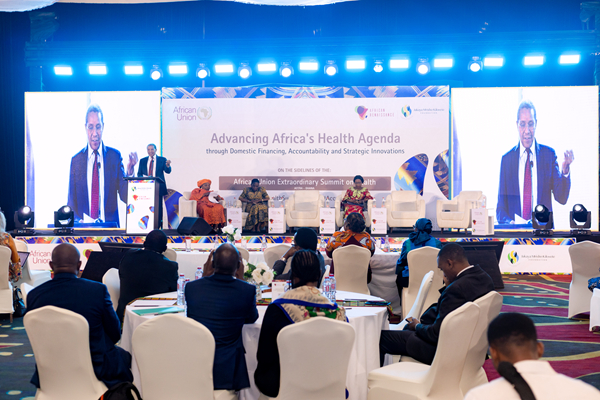
Former President Jakaya Mrisho Kikwete delivering the keynote address at the event
Former President Kikwete also stated that it is time for Africans to increase the financing of their health needs and not rely on the West for freebies.
He pointed out that the drastic drop in international aid for health programmes across the world and the treatment of African countries during the disruption of COVID-19 vaccines should serve as a wake-up call.
He pointed out that every country on the continent must work to ensure that it finances its health needs from its national budget.
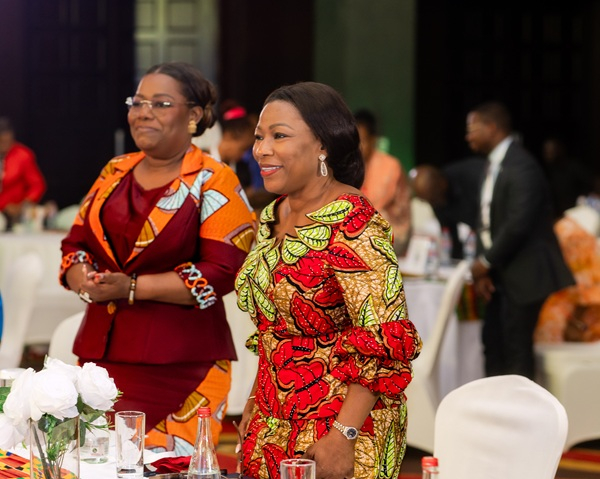
Nana Oye Bampoe Addo, a Deputy Chief of Staff of Ghana (L) and Ghana's Deputy Health Minister Dr Grace Ayensu-Danquah
The high-level interactive policy dialogue on advancing Africa's health agenda through domestic financing, accountability and strategic innovations was held on the margins of the African Union's Extraordinary Summit on Health in Accra.
Co-convened by the African Renaissance Trust and the Jakaya Mrisho Kikwete Foundation, the dialogue brought together senior African leaders, policymakers and health-sector stakeholders to discuss sustainable health financing, accountability and innovation across the continent.
Aside from the keynote address by former Tanzanian President Jakaya Mrisho Kikwete, the event featured remarks from the African Union Commission and the Government of Ghana, as well as a fireside panel discussion and a demonstration of the African Renaissance Health Financing Insights Dashboard.
The discussion, which had Caroline Kwamboka of African Renaissance; Nana Oye Bampoe Addo, a Deputy Chief of Staff of Ghana; Dr Joy Phumaphi of the Africa Leaders Malaria Alliance; Dr Amani Asfour of the Africa Business Council; Thoko Elphick-Pooley of the Gates Foundation; and Prof Sarah Anyang-Agbor, a former African Union Commissioner, as panellists, highlighted the measures that need to be implemented for Africa to take charge of its health needs.
The dialogue, as pointed out earlier, was held ahead of the AU Extraordinary Session of the Assembly on Ending AIDS by 2030, addressing preventable maternal deaths and tackling communicable and non-communicable diseases, which took place in Accra from July 21 to 22, 2026. It sought to contribute to discussions on strengthening domestic health financing and health systems, particularly amid growing pressure on external development assistance for health across Africa.
BAI

Copyright © 1994 - 2026 GhanaWeb. All rights reserved.










