



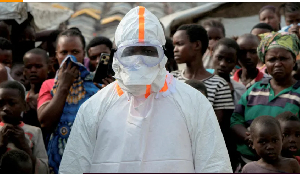
 A health worker stands near displaced people waiting for the burial of suspected ebola victims
The number of people infected with Ebola in the Democratic Republic of the Congo has risen to 3,200, according to government data, including at least 1,405 deaths.
The data was released on Sunday as medics struggle to contain the DRC’s 17th Ebola outbreak, with infections surging by about 1,000 in just 10 days.
The outbreak, declared on May 15, is caused by the Bundibugyo strain of the Ebola virus, for which there is no approved vaccine or treatment.
The World Health Organization said nearly 90 percent of cases have been reported in the northeastern province of Ituri, which borders South Sudan and Uganda.
The United Nations agency says the virus is in five provinces, including two new provinces where it has spread recently.
“In many cases the humanitarian community wants to help, but the real challenge is getting there”, said Hedley Tah of the UN Humanitarian Air Service (UNHAS), which flies medics and response teams to crisis front lines.
In addition to moving aid workers to stricken areas, Tah added that UNHAS is “moving samples for lab testing to ensure traceability can continue”.
Authorities said that improved detection and testing had helped identify more infections.
The outbreak could last several more months, and strikes by healthcare workers demanding unpaid wages have disrupted response efforts in some hospitals.
Ebola, which spreads through contact with bodily fluids and causes hemorrhagic fever, has killed more than 15,000 people across Africa over the past 50 years.
Scientists are racing to develop vaccines and treatments against the Bundibugyo strain, with Oxford University saying on Friday that the first volunteer group had received an experimental vaccine targeting the strain.
Several other candidate vaccines are being fast-tracked for clinical trials, while two potential treatments are also under development.
#Ebola have very recently spread to two new #DRC provinces. Time is key now for the humanitarian response.@WFP_UNHAS is moving fast to fly thousands of aid workers & tonnes of life-saving cargo to affected people in otherwise unreachable areas.https://t.co/YIVwPvtnzY pic.twitter.com/IMBvbB2fR1
— United Nations Geneva (@UNGeneva) July 26, 2026

Copyright © 1994 - 2026 GhanaWeb. All rights reserved.










