


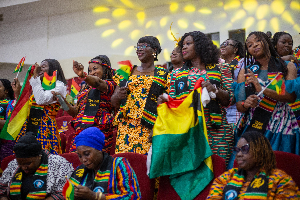
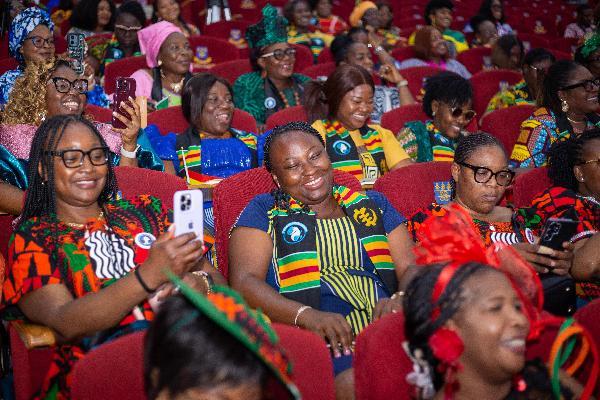
 Some of the stakeholders at the event
The Founder and Executive Chairperson of the Young African Women Congress (YAWC) Network, Daniel Osei Tuffuor, has called on African governments, institutions and development partners to move beyond rhetoric and ceremonial celebrations and implement practical measures that guarantee women's economic independence, leadership opportunities and equal participation in national development.
According to him, meaningful empowerment must be reflected in improved access to education, economic opportunities, safety, dignity and the freedom for women and girls to make decisions about their own lives.
Tuffuor made the call during the opening ceremony of the 10th anniversary edition of the Young African Women Congress Annual Global Convocation, held under the theme "The Empowerment Journey, Ten Years On."
“Women empowerment must go beyond words, declarations, and annual celebrations. It must translate into access to education, economic independence, leadership opportunities, safety, dignity, and the freedom for women and girls to determine the course of their own lives,” he stated.
He explained that although African women had made significant progress in politics, governance, entrepreneurship, education, technology and other sectors over the past decade, persistent inequalities continued to prevent many from reaching their full potential.
Tuffuor identified limited access to economic opportunities, inadequate representation in decision-making, gender-based violence, harmful cultural practices and digital exclusion as some of the major challenges confronting women across the continent.
Obuasi SHTS Abuse: Families of alleged victims consider relocating over stigma
He noted that women in rural communities, persons living with disabilities and other marginalised groups continued to face additional barriers that required urgent attention.
“While we celebrate progress, we must not mistake progress for completion. Our responsibility is to ensure that the opportunities available to a few become accessible to many,” he emphasised.
Reflecting on the organisation's journey, Tuffuor disclosed that the Young African Women Congress had evolved from a modest initiative into an international network dedicated to developing women's leadership capacities, promoting mentorship and strengthening collaboration across borders.
He said the organisation, which began with limited resources and a determination to create opportunities for young African women, had expanded its presence to 12 countries across Africa and the diaspora.
“Our beginnings may have been small, but our vision was never small,” he said.
Meanwhile, the Global President of the Young African Women Congress Network, Dr Stephanie W.K, outlined an ambitious agenda aimed at transforming the organisation from an advocacy-focused movement into a platform that promotes economic ownership, institutional development and sustainable mentorship.
Delivering her address at the anniversary celebration, she announced three strategic directives intended to guide the organisation's activities over the next decade.
The first directive, dubbed "From Voice to Ownership," seeks to encourage YAWC chapters to acquire tangible assets, including land, buildings, factories and technological infrastructure, to strengthen their economic independence.
“We will move from advocacy to acquisition. For the next ten years, every chapter of YAWC must own something tangible, land, a building, a server, a factory,” she declared.
According to her, the next phase of the organisation's development must focus on translating women's voices and advocacy into economic power and institutional ownership.
She explained that African women could not achieve lasting empowerment without controlling resources and participating meaningfully in economic decision-making.
Under the second directive, titled "From Sisterhood to System," Dr Stephanie announced plans to institutionalise mentorship across the network.
She challenged women participating in the convocation to each mentor at least 10 girls within the next year to help develop a new generation of confident and capable African women leaders.
“Every woman in this hall will formally mentor 10 girls in the next year. That is 100,000 girls, and that is how you build a continent,” she stated.
She emphasised that mentorship should move beyond occasional empowerment seminars and become a structured system capable of supporting young women throughout their educational and professional journeys.
Dr Stephanie further stressed the need for experienced women leaders to create opportunities for younger women through knowledge-sharing, professional guidance and leadership development.
The third directive, "From Africa Rising to Africa Leading," seeks to position African women as global leaders in technology, governance, healthcare, climate action and entrepreneurship.
She argued that African women must move beyond seeking recognition from international institutions and begin developing homegrown solutions capable of influencing global standards.
“The world keeps saying Africa is rising. I am tired of rising. I want to lead,” she declared.
Addressing participants at the convocation, the Deputy Presidential Spokesperson, Shamima Muslim, underscored the importance of honesty, integrity and principled leadership in political communication and governance.
She encouraged women involved in advocacy and activism to position themselves within decision-making structures where they could influence policies and promote positive change.
According to her, political loyalty should not prevent individuals from speaking honestly about challenges or advocating for appropriate solutions.
She explained that political organisations comprised individuals with different opinions and that constructive internal discussions could help shape better decisions.
Muslim also stressed the importance of acknowledging legitimate concerns raised by citizens rather than dismissing them for political convenience.
Citing challenges involving teacher unions, she said she believed political communicators should acknowledge genuine grievances while explaining the circumstances affecting government's ability to address them.
“So, I, as a communicator, want a new kind of politics where we can be honest about our challenges and not fear that being honest would cost us an election,” she stated.
AM
Inside Ghana’s First 950,000-Barrel Sankofa Oil Shipment | Exclusive Tour
“We Can’t Adapt to This New Road Technology” | Ghanaians React to TRAFFITECH-GH

Copyright © 1994 - 2026 GhanaWeb. All rights reserved.










