



 Di rise of far-right sentiment dey driven by a complex mix of factors
Dis Summer for di UK don dey very politically charged wit protests for asylum hotels across di kontri. Protesters put up plenty national flags for bridges or hang dem from lampposts. Recent polls dey suggest radical shift to di right, and most recently, up to 150,000 pipo join one anti-immigration march wey hapun for central London.
Di scale of dis events, especially di latest protest wey dey led by di controversial far-right activist Tommy Robinson, don start debate about weda di far right don dey gain ground for UK.
E don dey bicom constant feature for di European political landscape for di last few years – as parties wey fall under dat label dey currently lead govments for Italy and Hungary, make up coalitions for Austria, Sweden and Finland, and dey increase dia popularity for di opposition for France, Germany, Portugal and Belgium.
Shey dis recent events suggest say di UK fit be di next Western democracy wia populist right-wing politics dey rise?
Show of strength
rally for 13 September, wey dem tag 'Unite di Kingdom' na one of di UK largest eva far-right protests, according to di anti-racism charity Hope Not Hate.
E dey marked by chants of "send dem home" and a sea of national flags. Some protesters bin hold images of Charlie Kirk, di US conservative activist wey dem kill earlier dis month.
Di protesters clash wit di police and some controversial figures also give speech, including di US tech billionaire Elon Musk, who say make dem dissolve di British parliament and replace di current Labour govment.
Prime Minister Keir Starmer bin condemn di violence and rhetoric. "We no go ever surrender our flag to dose wey dey use am as symbol of division," e tok.
Julia Ebner, one radicalisation expert for di Institute for Strategic Dialogue and di University of Oxford for UK, tell BBC say far-right ideas be like say e don enter mainstream discourse for di UK.
"Tommy Robinson na one fringe figure a decade ago," she tok. "Now e don turn into a powerful and influential figure wey im audiences go well beyond di traditional far right."
Di fact say Robinson show say e dey capable of mobilising up to 150,000 pipo and attracting influential figures like Musk, turn di latest march into a show of strength of di far right, she tok.
About 180 far-right and anti-immigration rallies bin hapun last year for di UK, according to ACLED, one independent conflict monitor wey dey provide data and analysis about protests across di world.
Di anti-immigration sentiment bin increase especially afta di Southport riots for north-western England last summer, wen di fatal stabbings of three children for dia dance class bin cause protests sake of misinformation on social media say di suspect na illegal migrant.
Ms Ebner emphasise di role of social media to amplify far-right narratives as dem point to di tendency of algorithms to promote radical content and allow misinformation and conspiracy theories to spread faster dan fact-based journalism.
"Social media don replace traditional news sources for many," Ms Ebner tok. "Algorithms dey provide us wit very biased information environment, wia di most radical sources of information and di most radical messages dey dey amplified di most."
Immigration concerns
Experts agree say di rise of far-right sentiment dey driven by a complex mix of factors, like disappointment wit mainstream parties, hardening public discourse on immigration and economic concerns. Di increase for di number of small boat wey dey arrival to di UK don also play significant role for di debate.
"Pipo see say inequality dey rise and for some places, public services dey decline. Dem dey fear say dem go dey worse off in 10 years," Stijn Van Kessel, professor of comparative politics for Queen Mary University of London, tok.
"Economic pessimism dey, and pipo dey often link am to di issue of immigration. Di message of di far right na [say in order] to protect jobs and di welfare state, we need to stop immigration," e tell BBC.
Recently, di wahala for hotels wia asylum seekers dey stay don make headlines for di UK wit legal battles by local councils challenging dia use, and protests by communities wey dey concerned about dia safety and costs.
Total of 111,000 pipo bin claim asylum for di UK for di year ending in June 2025, wey mark 14% increase from di previous year, according to govment statistics.
"Politicians fit say: 'We need to manage immigration or asylum in a better way, but we also need immigrants to get personnel for di healthcare sector.' But dat last argument, hardly anybodi dey make am any more," Prof van Kessel tok.
Ms Ebner add say di rise for far-right rhetoric no be just sake of di debate on immigration.
"Na also about topics around gender and LGBTQ rights, climate change action, and freedom of speech and expression. E get a whole portfolio of different topics wia di far right always take di opposite side to di status quo and to wetin dem fit call di establishment," she tok.
Di rise of Reform UK
Di rise of Nigel Farage Reform UK party also add anoda layer to di debate ova weda di radical right dey gain influence for di kontri.
Even though Farage dey distance imsef from Tommy Robinson and di far-right label, Reform strong position on immigration dey similar to dia stand.
Di party don manage to sustain comfortable lead for opinion polls. One Ipsos poll for May-June dis year put dem on 34% of voting intentions, giving dem nine-point lead ov di ruling Labour Party.
Reform electoral success - wey include recent by-election victories and big gains for English local elections - suggest say public appetite for alternatives to di mainstream dey grow.
"Na immigration as much as anytin na im dey stimulate di rise of Reform," Prof Tony Travers, political analyst for di London School of Economics, tok. "Although pipo disenchantment wit di established political parties bin also play a factor," e add.
"I tink polling suggest say many of di pipo wey vote for Reform dey fed up wit di Conservative Party and di Labour Party - di dominant parties of British politics for about a century," e tok.
"So, na way to teach dem lesson. A sort of 'rage against di machine', wit pipo wey feel say dem get sometin wey dem want make pipo hear."
Normalisation of far right
Prof van Kessel note say di current climate bring about normalisation of far-right politics, as mainstream parties dey increasingly adopt far-right positions and messages as dem dey try to win back voters.
But e warn say dis strategy dey backfire more often dan not.
"Trying to compete for di turf of di far right, trying to sound like say dem dey tough on immigration, go only keep di issue of immigration high for di political agenda, and dat go ultimately benefit di radical right," e tok.
"Mainstream politicians, di ones wey dey for power, fit try to improve policies about di issue of immigration witout necessarily repeating di harsh rhetoric of di radical right," e add.
Ms Ebner agree say countering di far right require more dan to dey police dia rhetoric.
"Dis individuals [wey dey support di far right] come from different backgrounds," she tok. "We need to address dia concerns witout echoing radical positions."
She also call for reform of di digital ecosystem.
"E really dey important to call for transparency and accountability on di part of di tech platforms," she tok.
"Di govment fit do a lot to educate pipo to be good digital citizens. I tink say e dey important to dey aware of di psychology for online channels to really reflect on wetin dis dey do to our identities, to group dynamics and to society at large."
Economic growth key
But what if di far-right rise continue for UK? Shey di centre fit hold?
Ms Ebner highlight two major risks: political violence and di erosion of democratic institutions.
Prof Travers suggest say economic growth fit be di most effective antidote to di surge of di radical right.
"Di one real problem be say we get little or no economic growth for UK. Di govment no fit borrow much more money, dem no fit tax pipo more, and pipo feel say dia disposable income dey fall," e tok.
"Dat na wia di real solution actually dey. All politics dey local," e tok.

Di rally for 13 September wey dem call 'Unite di Kingdom', na one of di largest eva far-right protest for di UK, according to di anti-racism charity Hope Not Hate
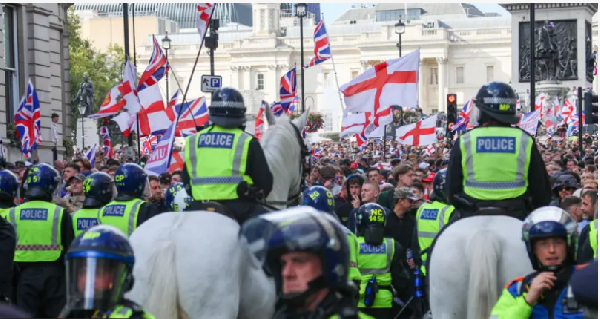
Katakata bin hapun between police and di protesters for central London, and di Metropolitan Police say 26 officers bin dey injured


Leader of Reform UK Nigel Farage say im victory dey "unprecedented" afta e beat both di Labour and Conservative parties for local elections for May

Prime Minister Keir Starmer don say e regret as e tok say di UK fit bicom "island of strangers" for one speech about immigration

Experts warn say we fit see increased political violence and di erosion of democratic institutions if di far-right rise continue



Copyright © 1994 - 2026 GhanaWeb. All rights reserved.










