



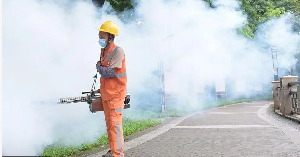
 Guangdong authorities don promise to take action
Authorities for China don report more dan 7,000 cases of one mosquito-borne virus across China Guangdong province since July, wey dey make dem take measures wey dey similar to di ones dem take during di Covid-19 pandemic.
For Foshan city, wey be di hardest hit, chikungunya patients must stay for hospital, wia dia beds dey protected wit mosquito nets. Doctors dey discharge dem only afta dem test negative or afta dem don stay di hospital for one week.
Chikungunya dey spread through di bite of infected mosquito, di virus dey cause fever and severe joint pain, wey sometimes fit last for years.
Although e no dey common for China, chikungunya outbreaks dey common in South and South East Asia and parts of Africa.
How big be di infections for China?
Apart from Foshan, at least 12 oda cities for southern Guangdong province don report infections. Dem report nearly 3,000 cases for last week alone.
On Monday, 4 July, Hong Kong report dia first case - one 12-year-old boy wey develop fever, rash and joint pain afta e travel to Foshan for July.
Di virus no dey contagious, and e only dey spread wen mosquito bite pesin wey dey infected and di mosquito den go on to bite odas.
Officials say all di reported cases so far dey small, as dem discharge 95% of di patients within seven days.
Still, di cases don lead to some panic, dis na becos di virus no dey popular for di country.
"E dey scary. Di prolonged consequences sound very painful," one user write for Chinese social media platform Weibo.
US don advise travellers to China to exercise "increased caution" following di outbreak.
Wetin China dey do to stop di infections?
Authorities across Guangdong province don vow to take "decisive and forceful measures" to stop di spread of di disease.
Dem don advise pipo wey dey show symptoms like fever, joint pain or rashes, to visit di nearest hospital so dem go dey tested for di virus.
Authorities don instruct residents to remove stagnant water for dia houses, like di ones wey dey dey inside flowerpots, coffee machines or spare bottles - and dem warn say pipo wey fail to do am go dey fined up to 10,000 yuan ($1,400).
Dem go also release giant "elephant mosquitoes" wey go fit kill smaller, chikungunya-spreading bugs; plus one army of mosquito-eating fish.
Last week, officials for Foshan release 5,000 of dis larvae-eating fish inside di city lakes.
For some parts of di city, dem even fly drones to detect sources of stagnant water.
Some neighbouring cities don order travellers from Foshan to undergo 14-day home quarantine, but dem don stop am.
Some pipo don compare dis measures to di ones wey dem make compulsory during di pandemic, and dem question if e dey necessary.
One user for Weibo write, "E feel so familiar... But e really dey necessary?"
Anoda pesin write: "Wetin be di point of di quarantine? E no be like say pipo wey dey infected go go dey bite oda pipo?"
China bin implement strong restrictions during di pandemic, wey include forcing pipo into quarantine camps and sealing residential buildings and whole neighbourhoods on short notice for days or even weeks.
Wetin be chikungunya?
Most pipo wey di infected mosquito bite go develop symptoms of chikungunya within three to seven days.
Apart from fever and joint pain, oda symptoms include rash, headache, muscle pain and swollen joints.
In most cases, patients go feel better within a week. In serious cases however, di joint pain fit last for months or even years.
Those wey dey at risk for more severe disease include newborns, di elderly, and pipo wit underlying medical conditions, like heart disease or diabetes.
Cure no dey, but deaths from chikungunya dey rare.
Dem first identify di virus for Tanzania for 1952. E later spread to oda countries for Sub-Saharan Africa and South East Asia.
To date, e don dey reported for more dan 110 countries.
Di best way to prevent di virus from spreading na to reduce pools of stagnant water wey dey allow di mosquitoes to breed, according to di World Health Organization.

Copyright © 1994 - 2026 GhanaWeb. All rights reserved.










