



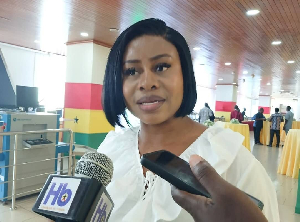
 Member of Parliament for Akuapem South, Lawrencia Dziwornu
The Member of Parliament for Akuapem South, Lawrencia Dziwornu, has raised concerns about the growing influence of social media on African youth, describing the trend as a “time bomb” that requires urgent intervention from governments and policymakers across the continent.
Speaking to journalists on the sidelines of the 4th African Inter-Parliamentary Conference on Family, Sovereignty and Values held in Accra, the MP cited findings presented at the conference which showed that young people spend an average of seven hours daily on digital platforms.
“Out of 24 hours in a day, our children and youth—the future of this country—spend seven hours on social media. Indeed, we are sitting on a time bomb,” she said.
Dziwornu warned that the increasing reliance on social media and digital technologies poses serious risks to the preservation of African values, culture, and identity.
She also raised concerns about the impact of artificial intelligence on young people, noting statistics presented at the conference indicating that about 92 percent of online content consumed by African youth is in English, while Spanish and French account for about four percent.
African languages, she added, represent only about two percent of online content.
“Our culture and heritage are gradually being eroded through social media infiltration and its negative influence on our youth,” she cautioned.
The legislator further argued that Africa has the capacity to influence global technology companies if the continent acts collectively.
She referenced the European Union’s ability to compel technology giant Apple to adopt a common charging standard, saying Africa’s population of about 1.5 billion gives it significant bargaining power.
“If the European Union was able to achieve such results, then Africa, with its population of about 1.5 billion people, can also demand changes from global technology platforms,” she said.
Dziwornu described the conference as a wake-up call for African nations to collaborate in addressing emerging digital challenges and safeguarding future generations.
She urged African parliaments to take a leading role in shaping policies that protect children and young people, describing legislatures as the “fulcrum of democracy.”
The MP also cited Ghana’s Data Protection Act and the reintroduced Family Values Bill—initially passed by the Eighth Parliament but which did not receive presidential assent—as examples of legislative efforts aimed at safeguarding societal values and child welfare.
The conference brought together lawmakers, policymakers, and stakeholders from across Africa to discuss issues relating to family values, cultural identity, digital sovereignty, and the future of the continent’s youth.

Copyright © 1994 - 2026 GhanaWeb. All rights reserved.










