



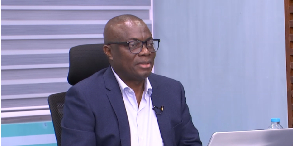
 Musa Dankwa is the Executive Director of Global Info Analytics
The performance of President John Dramani Mahama and the NDC government, 18 months into office, has become a hot topic after two research groups released wildly contrasting reports on how Ghanaians view the administration.
Reports from the Institute of Economic Affairs (IEA) and Musa Dankwa’s Global Info Analytics in the past few days have exposed the deep split in how public opinion is being framed.
MAHAMA'S RATINGS DECLINE - IEA
First, the IEA reported a sharp decline in President Mahama’s approval rating.
According to its May 2026 survey, Mahama’s approval has dropped to 58.9% — nearly a 10-point drop.
The IEA said the poll covered all 16 regions, with over 1,000 respondents, showing a fall from the 68% recorded in an earlier IEA survey conducted in December 2025 and published in February 2026.
A separate Global Info Analytics survey from December 2025 placed Mahama’s approval at 67%, which was almost in line with the IEA’s numbers at the time.
PRESIDENT REGAINS HIGH APPROVAL RATINGS - GLOBAL INFO ANALYTICS
In sharp contrast to the IEA’s claim that Mahama’s ratings have declined, Global Info Analytics’ latest report shows a rise to 71% — higher than its last report, which itself showed a decline.
Despite the recent rise in fuel prices, unstable power supply, and rising transport costs, Global Info Analytics reported that its survey showed the majority of Ghanaians remain pleased with the President’s performance.
SOCIAL MEDIA ERUPTS
Meanwhile, social media users have been tearing into the contrasting reports from the IEA and Global Info Analytics.
Like the polls, opinions are split. Some have sided with the IEA and slammed Global Info Analytics, asking how it could report a surge in the President’s popularity when the cost of living keeps rising.
Others have sided with Global Info Analytics and criticised the IEA for deliberately downgrading the President.

Copyright © 1994 - 2026 GhanaWeb. All rights reserved.










