



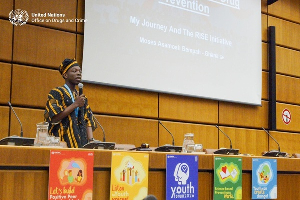
 Moses Asamoah Bempah
When young people step forward to speak about drug prevention, their stories often begin in small community spaces, classrooms, youth clubs, and neighbourhood outreach programmes. For a member of the Drug-Free Club initiative supported by the Narcotics Control Commission, that journey recently led to the global stage at the Youth Forum organized by the United Nations Office on Drugs and Crime.
The young prevention advocate had spent several months participating in school-based campaigns that educate students about the dangers of substance abuse and the importance of healthy decision-making. Through peer discussions, awareness activities, and community outreach, the NACOC Drug-Free Club initiative encourages students to become ambassadors for drug prevention among their peers.
That dedication eventually earned the young leader an opportunity to represent Ghana at the international forum.
Representing Ghana on the Global Stage
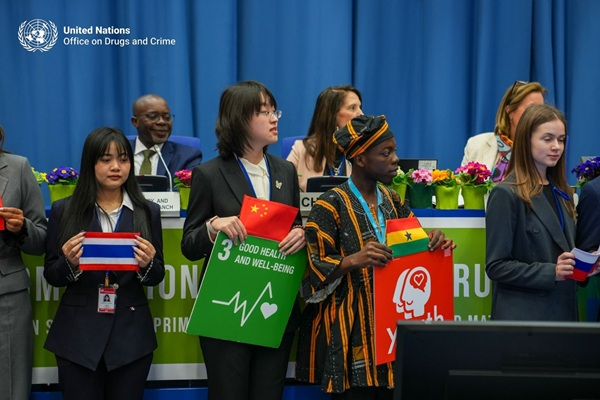
The Youth Forum organized by the United Nations Office on Drugs and Crime brings together young leaders from across the world who are actively engaged in drug use prevention. Participants exchange experiences, explore evidence-based prevention strategies, and present youth perspectives to global policymakers.
For the Ghanaian participant, the experience was both inspiring and humbling.
“It was an incredible opportunity to meet young people from different countries who are also passionate about drug prevention,” Moses Bempah Asamoah the NACOC Drug-Free Club member said in an interview after returning home Thursday March 12, 2026.
“Even though we come from different backgrounds, we are facing many of the same challenges in our communities.”- Moses observed
During discussions at the forum, participants shared initiatives ranging from school awareness campaigns to sports-based youth engagement and digital advocacy programmes.
Sharing Ghana’s Prevention Experience

At the forum, the Ghanaian youth advocate, Moses Bempah Asamoah highlighted how Drug-Free Club supported by the Narcotics Control Commission are helping to build resilience among students.
The clubs provide safe spaces where young people can learn about the risks of drug use, develop life skills, and support one another in making healthy choices.
“Many young people are curious about drugs because of peer pressure or misinformation, when we educate each other and create supportive environments, it becomes easier to resist that pressure.”
According to Moses Bempah Asamoah, one of the most valuable aspects of the forum was learning how family contributes to youth development and an environment to resist drug use.
“Some countries are using sports programmes to keep young people engaged, while others are using social media campaigns to reach students,” Moses said.
“It showed me that prevention can take many creative forms.” He added.
Youth Leadership in Drug Prevention
A key theme throughout the forum was the importance of youth participation in designing and implementing prevention strategies. The United Nations Office on Drugs and Crime has increasingly emphasized that effective prevention requires meaningful youth engagement.
Young leaders, participants agreed, are often best positioned to understand the pressures their peers face.
“Prevention programmes are stronger when young people are part of the conversation Moses noted.
“We understand how our peers think, and we can communicate messages in ways that resonate.” He added
The Narcotics Control Commission has also welcomed the participation of Ghanaian youth in global prevention initiatives, noting that it reflects the growing role of young people in shaping national drug education efforts.
Bringing Global Lessons Home
After returning to Ghana, the young advocate (Moses Bempah Asamoah) is eager to apply the knowledge and inspiration gained from the forum to local prevention activities through his RISE initiative.
“I want to share what I learned with other Drug-Free Clubs so that more young people can become advocates for prevention.”
Moses Bempah Asamoah hopes that the international exposure will also encourage more students to join prevention programmes and take active roles in promoting drug-free lifestyles.
A Generation Taking Responsibility
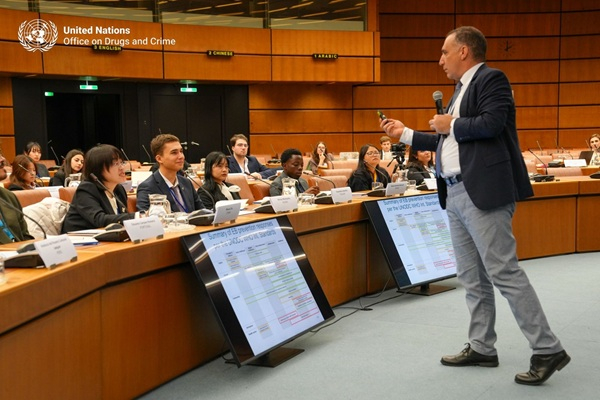
As countries around the world continue to confront the challenges of drug abuse, empowering young people remains one of the most effective strategies for prevention.
The participation of a NACOC Drug-Free Club member in the Youth Forum of the United Nations Office on Drugs and Crime highlights how local youth initiatives can connect to global policy discussions.
For the young Ghanaian advocate, the message is simple but powerful:
“Young people are not just the future, we are part of the solution today.”
From school outreach programmes to international policy forums, youth voices are increasingly shaping the global movement toward healthier, drug-free communities.



Copyright © 1994 - 2026 GhanaWeb. All rights reserved.










