



 Obaa Yaa Amponsah Frimpong is the author of this article
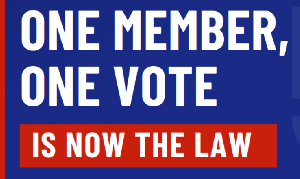
The Supreme Court's 5–2 ruling of July 29, 2026, affirming that every registered party member in good standing has the right to vote in internal elections, is a landmark moment for Ghana's democracy. For NPP-USA, it is also a long-awaited vindication.
Since 2009, we have urged the Mother Party to make broad participation the standard. This ruling echoes what we have argued for nearly two decades: a party's legitimacy comes from its full membership, not a narrow delegate system. We welcome the Court's clarity, and we stand ready to help our Mother Party build a reliable membership database and ensure that all members, including those in external branches, can fully participate in shaping our party's future.
But One Member, One Vote (OMOV) alone will not fix internal party democracy. Expanding who gets to vote, without reforming how elections are funded, risks making political monetization worse. National membership registries, verified voter rolls, and nationwide internal elections cost money. When parties and candidates bear those costs alone, private money fills the gap and prices out good candidates.
If internal democracy is now a constitutional expectation, the state cannot remain on the sidelines. Healthy political parties are a public good, which is why many established democracies share these financial burdens.
State cost-sharing would also fix a long-standing compliance problem. The Political Parties Act requires parties to submit audited accounts to the Electoral Commission, but underfunded parties often lack the financial systems needed for timely reporting. A structured state co-financing model would give parties both the resources and the accountability to meet these statutory duties, while ensuring that compliant parties are the ones receiving state support.
Ghana needs to begin a serious conversation about public political financing, and the NPP must stand ready to join other political parties and civil society organizations in that conversation. Pursuing these reforms, through policy or, if necessary, legal action, will finish the work this ruling has started.
OMOV is now the law. How well we implement it, and whether we build the financial framework to make it work, is up to us. NPP-USA stands ready to support our Mother Party and the state in shaping this debate.

Copyright © 1994 - 2026 GhanaWeb. All rights reserved.










