



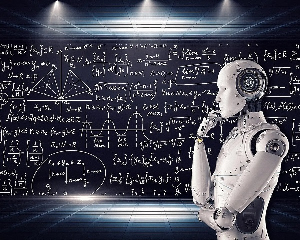
 AI coding relies on Large Language Models (LLMs)
Programming is the oxygen that powers tech platforms and software creation. Traditionally, computer programming is heavy on the use of human professionalswho write code that instruct a computer, tech application or software system to perform a variety of tasks.
Therefore, computer programming describes a set of instructions that facilitate specific actions on tech platformsaimed at solving problems.
Programming requires collaboration between humans and computers, from the creation of mobile apps, websites, banking platforms to business automation processes, space travel, computer programming stands at the center stage of enabling most of the digital applications we use in our daily lives.
There is a proliferation of programming languages, with some popular ones including JavaScript, HTML/CSS, Python, SQL, and TypeScript. Essentially, programming means mastering any of the computer programming languages depending on the task at hand with different industriesrequire a set of programming expertise.
The long arm of artificial intelligence (AI) is disrupting many areas in the field of technology including computer programming. One such disruption is AI coding which describes the use of AI and machine learning (ML)technologies to write independently, complete, or assist in writing computer code in place of a human writing these codes.
Instead of having time-consuming and laborious manual coding where every line of code is manually written, AI coding provides a programmers or developers with AI coding tools with a set of prompts often in natural languages without the complexity of learning a computing language. On this trajectory, the AI creates a set of relevant code snippets, or a book of codes based on a set of inputs.
AI coding relies on Large Language Models (LLMs) trained on vast corpus of existing code to speed up coding especially for routine or repetitive tasks, providing developers with a helping hand, that is, an assistant or additional pair of programming hands.
The power of AI programming reflects in the speed of programming, increased productivity and creativity, but AI generated code, still needs human-in-the-loop, since human review are required to ensure quality, consistency and accuracy.
Another variation of AI coding is Agentic AI coding which make use of autonomous AI agents to independently plan, execute, evaluate, and refine coding tasks with minimal human intervention. Unlike traditional code generators responding to prompts, agentic systems self-manage entire development workflows from specification through testing.
This automation accelerates job displacement: routine development tasks performed by entry-level developers are increasingly automated, reducing junior hiring while concentrating employment among senior engineers focused on architecture, governance, and AI oversight.
How AI Coding Works
AI coding works through 4 sets of processes; First AI coding tools uses machine learning algorithms to train on publicly available source code relevant for a particular task. For example, to create a banking loan application system, the AI coding tool must be train on publicly available banking codes especially loan application codes.
Second, the developers use natural language prompts or code completion to interact with AI code tool, for example, to generate code in natural language on how to design loan application flows.
Third, the AI coding tools, respond to this request by generating contextually relevant code extracts through prediction while at the same time suggesting improvements which contributes to modernization of legacy codes.
Fourth, the process is completed by integrating the output from AI coding tools into the existing software development process.
The Benefits of AI Coding
The benefits of AI coding are numerous including reduction of repetitive manual coding tasks which are time consuming, thus increasing software development speed and productivity. Also, AI coding democratizes coding by making coding possible for persons without complex ability in programming, which means a beginner with evolving programming skills can create software which was literally impossible for them to accomplish in the past without a AI coding tool.
Lastly, AI coding can support programming code modernization, optimization, and fixing of bugs. A bug is a flaw or error in software code that causes unexpected or incorrect behavior, leading to crashes, freezes, wrong outputs, or security issues, stemming from mistakes during design or coding.
The challenges of AI coding
Although AI-powered coding and machine learning model development comes with many advantages. It could introduce substantial financial costs and operational complexities beyond initial development cost savings. Thiscould include accelerated technical debt accumulation and skills deterioration, that is, developers may become dependent on AI tools, weakening their problem-solving skills and deep understanding of algorithms and system design over time.
Also, AI coding assistants may accelerate development process but introduces a critical paradox where short-term productivity gains translate into long-term maintenance costs, since AI-generated code tends to be more verbose and redundant than carefully engineered solutions, embedding outdated patterns, inefficiencies, or biases, which accumulate and intensify over time.
AI coding could lead to inaccurate or unsafe code, and limited context awareness. AI-generated code may inadvertently use copyrighted or licensed code, raising legal and compliance concerns bringing to the foreintellectual property and licensing risks.
Overall, these costs collectively create a hidden financial burden that can exceed short-term productivity gains, potentially doubling long-term total cost of ownership (TCO) if not managedstrategically through governance frameworks, team upskilling, and quality-first methodologies.
Conclusion
In conclusion, AI coding represents a transformative opportunity for software development velocity; however, it introduces significant costs that can easily exceed the productivity savings if not strategically managed.
Therefore, organizations must treat AI adoption not as a technical upgrade but as a comprehensive organizational transformation premised on a robust governance framework, security infrastructure, continuous training, and cross-functional alignment.
In effect, the businesses that succeed will be those that adopt AI innovations such as AI coding while transparently recognising hidden costs, investing in mitigation frameworks upfront, and building sustainable AI engineering practices that balance speed with purposeful control.

Copyright © 1994 - 2026 GhanaWeb. All rights reserved.










