



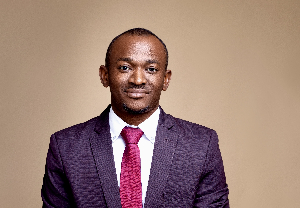
 Emmanuel John A. Awine is a PhD Candidate, Department of History at Johns Hopkins Universit
On October 17, 2025, the official website of the Presidency of Ghana reported: “Mahama rallies Caribbean nations to support African reparations movement.” In a direct appeal to Grenadian Prime Minister Dickon Mitchell, President Mahama stated: “Prime Minister, I am confident I can rely on your support—and the solidarity of our colleagues across the Caribbean and the African Union—to see this motion through.”
Across the Caribbean and Africa, there is growing momentum for calls for restorative justice, with Ghana’s leadership positioning the country as a prominent moral voice on the international stage. Indeed, President Mahama is not alone in this advocacy; former President Akufo-Addo also made repeated calls for reparations on various international platforms.
But beneath this advocacy lies an unresolved truth: Ghana has never fully confronted the internal legacies of enslavement, slave raiding, and colonial exploitation within its own borders. Unless this reckoning happens, its international campaign for reparations risks standing on an incomplete foundation. President Mahama’s insistence that the pursuit of reparations is not just “a plea for charity, but a demand for justice and restoration” is a powerful and necessary stance on the global stage.
His intention to table a motion at the United Nations (UN) to recognize the transatlantic slave trade as one of history’s greatest crimes against humanity is a bold step in a long-overdue global reckoning.
Ghana Property and Lifestyle Expo 2024: Final stop of record-breaking global series lands in Accra
There is undeniable moral and historical logic to this cause; the slave trade and colonization systematically plundered the continent, inflicting lasting economic, social, and psychological wounds that continue to shape Africa’s trajectory. Yet before Ghana can credibly lead the charge to present the UN motion, Ghana’s untold slave-raided communities deserve a voice.
For this international demand to be ethically coherent and politically potent, it must be preceded by a genuine national conversation. We, as a country and a continent, cannot credibly demand restorative and reparative justice from the world while failing to address the lingering legacy of that same injustice within our own borders.
The central question, therefore, is: How can Ghana demand reparations on the global stage when we have not yet convened a genuine, nationwide conversation about the internal geography of enslavement, complicity, victimhood, and loss? If Ghana’s recent heritage projects are any indication, the internal imbalance is striking. For example, the government’s commemorative efforts during the 2019 Year of Return, though well-intentioned, disproportionately privileged coastal elites and communities historically positioned as middlemen, merchants, and beneficiaries of the very illegal trade we now condemn. Meanwhile, the Bulsa, Nankanise, Kassena, Sissala, Frafra, and other minority groups—whose ancestors were violently raided, marched southward, and sold into slavery—remain largely absent from national commemorations and excluded from the economic gains the Year of Return produced.
These communities did not benefit from the tourism boom. They were not central to the storytelling. Their memories, songs, and scars did not appear in promotional videos or state speeches. The silence surrounding these communities is not accidental; it mirrors a longer history in which the post-1874 abolition north was incorporated into the Gold Coast as a reservoir of cheap labor, conscripted for the First and Second World Wars, plantations,and public works in southern Ghana.
Before Ghana can present a unified claim to the world, President Mahama should, as a matter of urgency, demonstrate leadership by turning the reparations gaze inward. This requires a deliberate effort to engage these historically raided communities. We need to know what form of reparation they seek. What does acknowledgment and restoration mean for them?
This is not a peripheral issue but the very foundation of the cause. The descendants of these raided communities deserve the dignity of acknowledgment and the fairness of redress for the compounded injustices President Mahama spoke of: first, the raiding; then their deliberate marginalization under British colonial policy, which reserved the North as a labor pool for the South; and finally, the creation of pervasive social labeling.
This historical marginalization has, over the years, fostered a perception of northerners as menial laborers—a prejudice cemented by derogatory labels that persist in Ghanaian society. The British policy of isolation turned the Northern Territories into the “Cinderella” of the Gold Coast, as admitted by then-governor Gordon Guggisberg. Colonial laborpolicies created a developmental gap that forced migration and entrenched a cycle of economic servitude.
In southern imaginaries, people of northern extraction came to be associated with servility and enslavability, reflected in derogatory labels such as tani, pepeni, fie nipa, and odonko. These stereotypes were neither natural nor benign; they were the ideological afterlives of both the slave trade and colonial labor policies. To overlook this internal continuum of exploitation is to ignore a fundamental truth: the architecture of dehumanization built during the slave trade and domestic slavery was not entirely dismantled; parts of it were repurposed.
It is therefore on this basis that I call on the Special Envoy on Reparations, Dr. Ekow Spio-Garbrah, to anchor Ghana’s external advocacy in an internal process. For Ghana’s reparations call to be ethically coherent, the descendants of slave-raided communities must be at the center—not the margins—of its national dialogue. Without a national consultation that includes descendants of raided communities, any external case for reparations risks being both incomplete and ethically inconsistent.

Copyright © 1994 - 2026 GhanaWeb. All rights reserved.










