



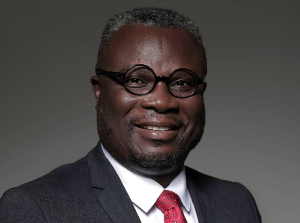
 Kwaku Amoh-Darteh
The time has come to move Ghana’s young people from the margins of decision-making to the heart of national development. A nation that speaks for its youth but shuts them out of leadership risks building a future they may neither own nor recognise.
There comes a time in the life of every nation when familiar words must give way to bold action, when promises must become opportunities, and when those who have long waited at the door must finally be invited into the room. For Ghana, that time is now. Across our towns, villages, universities, markets and workplaces, young people are rising with ideas, energy and an appetite for change. They are questioning old ways, creating businesses and imagining a country that works better for everyone. Yet, too often, the very people whose future is being shaped are left on the sidelines while others make the decisions. How can we expect young people to lead tomorrow when we deny them opportunities to practise leadership today? How can we demand innovation while keeping fresh ideas outside the corridors of power? And how can we build policies that address young people’s realities when their voices are absent from the conversations that shape those policies? Ghana must stop preparing the youth merely to inherit the future. We must empower them to build it.
## No more seats in the gallery: bring the youth to the table
For generations, we have described young people as the leaders of tomorrow. The expression sounds inspiring, but it can also become an excuse for postponing their participation. When policies are designed without meaningful youth involvement, we risk overlooking the very problems those policies are supposed to solve. A youth employment programme may look impressive on paper yet fail to prepare participants for available jobs. A business initiative may promise opportunity but ignore the financial barriers facing young entrepreneurs. A public service may be created with good intentions but remain inaccessible to those who need it most. Why? Because the distance between a policymaker’s desk and a young person’s daily experience can be enormous.
The solution is straightforward: bring young people into the conversation before decisions are made. Let them identify problems, question assumptions, propose solutions and help design programmes affecting their education, employment, health, economic prospects and communities. Do not invite them merely to applaud a finished policy. Invite them while the first ideas are still being formed. The youth must not remain spectators in a game whose outcome will determine their lives. They must become players, decision-makers and builders of the nation.
## Give them the pen, not just the microphone
It is one thing to give young people an opportunity to speak. It is another to allow their ideas to influence decisions. Too often, participation ends with a workshop, conference or photograph. Young people share their views, their contributions are recorded, and everyone returns to business as usual. Policies are written elsewhere, decisions are made elsewhere, and the youth are left wondering whether their presence made any difference. When young people help create a programme, they are more likely to understand its purpose and take responsibility for its success. They become partners rather than mere beneficiaries. That is the power of ownership. But ownership must be genuine. It cannot be manufactured through token appointments or ceremonial invitations. Young people need clear responsibilities, access to relevant information and a fair opportunity to influence outcomes. Do not merely give the youth a voice. Give that voice a place in the decisions that matter.
## Raise leaders, not dependants
Opening the doors of leadership is only the beginning. We must also prepare young people to walk through those doors with confidence, knowledge and sound judgement. Youth development programmes must go beyond motivational talks and ceremonial events. They must provide practical training in critical thinking, public speaking, policy analysis, negotiation, civic education, community organising and responsible decision-making. Young people should understand how government works, how public budgets are prepared, how policies are developed and how citizens can hold institutions accountable. They should learn to distinguish evidence from assumption, persuasion from manipulation, and ambition from responsible leadership. They must also learn the value of listening. A good leader does not simply insist on being heard; a good leader makes the effort to understand others. A young person in a rural district deserves the same chance to develop leadership skills as someone living close to the centres of power. Poverty, geography and limited resources must not become permanent barriers to participation. Ghana cannot afford to waste talent simply because it is found in an unexpected place.
## Leaders of today must make room for tomorrow’s leaders
This clarion call is not directed at young people alone. It is equally directed at parents, educators, traditional authorities, business leaders, public officials and political leaders. Those who hold positions of authority must be willing to share knowledge, open doors and create opportunities for younger people to lead. Mentorship should not become another name for control. Guidance should not silence initiative. Experience should not be used to dismiss fresh thinking. Institutions must create environments where young people can ask difficult questions, disagree respectfully, challenge established practices and contribute ideas without fear of ridicule. A nation that refuses to trust its young people will struggle to prepare them for responsibility.
The task of leadership is not to keep the next generation permanently behind us. It is to prepare them, stand beside them and, when they are ready, allow them to lead.
## Turn the call into action: let every institution open a door
Fine words will not transform Ghana. Action will. Government ministries and local authorities must establish meaningful channels through which young people can contribute to policies affecting their lives. Educational institutions must encourage civic responsibility, independent thought and practical problem-solving. Businesses must involve young people in discussions about employment, emerging skills and entrepreneurship. Civil society organisations must help communities develop young leaders capable of turning local concerns into practical solutions.
Young people, for their part, must be willing to learn, research, listen, collaborate and accept responsibility. Leadership is not a licence to demand privileges without accepting obligations. It is a commitment to serve, contribute and produce results. The objective is not to replace one generation with another. It is to bring generations together, combining experience with fresh ideas, established knowledge with innovation, and institutional authority with youthful energy. That is how a country builds leadership that lasts.
## Ghana, the hour has come
Ghana stands at a moment when the choices we make about our young people will help determine our future. We can continue praising their potential while leaving them outside the rooms where decisions are made. Or we can take the bolder path: prepare them, trust them and give them meaningful responsibility in national development. Let our schools become places where young minds learn to question, create and lead. Let our public institutions become places where youth participation carries real influence. Let our businesses recognise young people not merely as job seekers but as innovators and creators of opportunity. Let our communities discover the leadership already present among their young people. Above all, let us abandon the dangerous belief that the youth must wait for their turn before they can contribute. Their time to learn is now. Their time to serve is now. Their time to participate is now. Their time to help shape Ghana’s future is now.
The future is too important to be built without the people who must live in it. Ghana’s young people have ideas to contribute, problems to solve and a country to help build. They need more than applause. They need preparation, trust, opportunity and a genuine place in national development. Let the doors open. Let the voices rise. Let responsibility be shared. Let the youth lead where they are ready, learn where they need guidance and grow through the opportunities we create. Ghana will not become the nation we dream of simply by promising its young people a better tomorrow. We will build that nation when we stop asking the youth to wait for the future and begin inviting them to build it with us today.

Copyright © 1994 - 2026 GhanaWeb. All rights reserved.










