



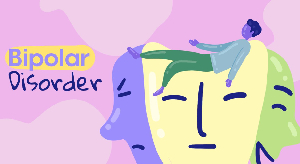
 A file photo of bipolar disorder
For many in our communities, bipolar disorder is frequently misunderstood and mischaracterized. It is often misinterpreted as unpredictability, moodiness, or a lack of discipline. But bipolar disorder is not capricious.
It is important to recognize that it is not a matter of whim, personality quirk or impulsiveness. Instead, it is a legitimate mental-health condition that affects people from all walks of life including students, parents, professionals, creatives, and leaders.
By acknowledging this reality, we can begin to shift the narrative away from stigma and toward understanding, support, and acceptance. Every year on March 30, the world observes World Bipolar Day, a moment set aside to deepen understanding of a mental-health condition that is too often dismissed, misunderstood, or mislabeled.
This year, the day arrives with renewed urgency as more than 2,000 reported cases have emerged across three regions numbers that reflect not only the growing visibility of mental-health challenges, but also the quiet suffering that has long gone unspoken.
A Condition Too Often Misunderstood
In many African and Middle Eastern societies, mental health remains a delicate subject. Silence is common but stigma is heavy. Families often struggle alone, unsure of what they are witnessing or how to respond. Individuals who live with bipolar disorder may find themselves judged before they are understood or labeled before they are listened to. Yet behind every diagnosis is a human being navigating a complex emotional landscape with courage. Many live full, meaningful lives when supported with understanding, community awareness, and access to appropriate care.
The Numbers Are Not the Story—People Are
Over 2,000 reported cases in three regions are cause for awareness, not alarm. They tell us that more people are seeking help, more health workers are identifying symptoms, and more families are beginning to recognize that mental health is real. The statistics reflect more than just a rise in reported cases.
They represent the experiences of young people whose struggles were once dismissed as “attitude,” and adults who have spent years masking their symptoms. These numbers include families searching tirelessly for answers and communities beginning to find their voice by speaking openly about issues that were previously unspeakable. Each figure stands for real individuals and real journeys toward understanding, acceptance, and hope.
Why World Bipolar Day Matters
World Bipolar Day is not just a symbolic observance; it stands as a powerful call to action. The significance of this day extends beyond raising awareness. it demands our participation in building a more understanding and supportive society.
World Bipolar Day urges us to move away from judgment and instead embrace empathy. Rather than keeping conversations about mental health hushed or hidden, we are encouraged to speak openly and honestly. This openness is essential in reducing stigma and fostering genuine understanding.
The day also reminds us to encourage early support for those who may be struggling with bipolar disorder, rather than waiting for a crisis to occur. Creating environments where people feel safe to seek help is crucial. Awareness is not simply a privilege; it is a lifeline that can make a meaningful difference in the lives of individuals and families affected by bipolar disorder.
A Call to Action for Our Communities
If you notice someone struggling, reach out. Listen without assumptions. Encourage them to seek support from trusted people or community resources. Compassion does not require expertise, only willingness.
We cannot afford to let silence do the talking. Not when so many lives are touched by this condition. Not when understanding can change the trajectory of a person’s life.
Toward a More Compassionate Future
Bipolar disorder is not capricious. It is not a character flaw. It is a mental-health condition that deserves the same seriousness, dignity, and compassion we extend to any other health challenge.
On this World Bipolar Day, let us commit to building a society where people are not defined by their diagnosis, where families are supported rather than isolated, and where awareness becomes a shared responsibility.
Because every conversation helps break the stigma. And every act of understanding brings us closer to the kind of community we all deserve.

Copyright © 1994 - 2026 GhanaWeb. All rights reserved.










