



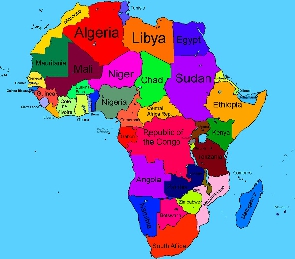
 File photo of Africa
Across Africa, democratic governance is facing one of its most severe tests in decades. Since 2020, the continent has witnessed a resurgence of military coups, an emboldening of entrenched authoritarian regimes, and a new wave of foreign interference exploiting weak institutions and political instability.
While internal grievances often trigger political upheaval, mounting evidence shows that external actors, particularly global powers seeking strategic or economic gain, are increasingly shaping these outcomes.
Their influence is helping to destabilise fragile democracies, undermine regional bodies, and redraw geopolitical alliances across the continent.
Nowhere is this trend more visible than in the Sahel, where a sequence of coups has weakened the authority of ECOWAS and opened the door to new political blocs such as the Alliance of Sahel States (AES).
The shift has intensified regional divisions and raised questions about the future of democratic norms in West Africa.
Why this matters for Ghana
Ghana, widely regarded as a stable democracy in the region, is not insulated from the ripple effects. A 2024 report by IOM, UNHCR and UNICEF found that the deteriorating security situation in Burkina Faso following its 2022 coup pushed over 15,000 asylum seekers into Ghana’s Upper East and Upper West Regions, already among the country’s poorest and least developed areas.
The influx has strained local resources, social services and security structures.
At the same time, Ghana’s economic vulnerabilities heighten its exposure to regional instability.
The World Bank has described the country’s economy as “in distress” due to unsustainable public debt, making it particularly sensitive to further shocks, whether political, security-related or economic.
Adding to the geopolitical complexity, Ghana’s neighbour, Togo, was recently reported to be constructing a major military base in its northern region to bolster counter-insurgency operations along the Burkina Faso border, with Russian experts reportedly present.
These developments highlight the strategic importance of West Africa to global powers and the potential implications for Ghana’s own security landscape.
The rise of coups and democratic backsliding
Between 2020 and April 2024, Africa recorded nine successful coups and at least as many failed attempts, a significant increase compared to the decade prior. Scholars and think tanks point to a combination of structural vulnerabilities:
politicised armed forces, socio-economic crises, corruption, terrorist threats, and declining public trust in electoral systems.
Countries with histories of military intervention in politics remain particularly at risk, while low levels of economic development further raise the probability of democratic breakdowns.
Notably, all African countries that experienced coups since 2020, except Gabon, fall under the Least Developed Country (LDC) category.
Regional organisations such as the AU and ECOWAS have struggled to respond consistently. Their limited enforcement capacity, coupled with mixed political will among member states, has emboldened military actors and weakened deterrence measures.
How foreign powers are exploiting instability
While internal political divisions often spark unrest, external actors have increasingly played a catalytic role. Russia stands out as the most prominent example, using security cooperation, disinformation, paramilitary forces and elite-level alliances to shape political outcomes across Africa.
1. Burkina Faso: A case study in foreign-supported coups
In Burkina Faso, two coups occurred within eight months. The second, in September 2022, brought Captain Ibrahim Traoré to power. According to the European Council on Foreign Relations, Russia provided material and informational support both during and after this coup.
Analysts at RUSI suggested that the event may mark the first instance where Russia actively helped instigate, rather than merely exploit, a coup. The methods included:
Coordinated disinformation campaigns using fake social media accounts.
AI-generated propaganda portraying Traoré as a heroic figure.
Security and operational support, including Russian personnel embedded in intelligence units.
Arms supplies, military advice and training.
This multi-layered approach allowed Russia not only to influence political direction but also to strengthen its regional military footprint.
2. Central African Republic: Propping up an authoritarian regime
In the Central African Republic (CAR), Russia’s support has helped entrench the increasingly authoritarian rule of President Faustin-Archange Touadéra.
Despite his democratic election in 2016, Touadéra has overseen constitutional manipulation, violent repression of opposition, and widespread human rights abuses.
Ahead of a 2023 referendum to remove presidential term limits, Russia deployed Wagner Group mercenaries to “secure” the process.
The UN has documented extensive abuses by these forces, including killings, intimidation and harassment of civilians, journalists and minorities. In exchange, Russia gained access to CAR’s mineral resources and deepened its influence over the country’s security apparatus.
3. Angola: Influence operations targeting political opposition
In August 2025, Angolan authorities arrested two Russian nationals accused of financing and orchestrating a disinformation network linked to recent anti-government protests. Posing as journalists, they reportedly engaged with opposition figures and conducted opinion polling to amplify pro-Russian narratives.
Their activities reflect a broader strategy of using soft power, cultural diplomacy, and information manipulation to weaken democratic institutions and sway political outcomes.
A turning point for African democracy
Africa’s recent wave of coups, authoritarian consolidation and foreign interference represents more than episodic political instability; it signals a deeper challenge to democratic resilience on the continent.
Countries like Ghana must navigate an increasingly complex regional environment where economic vulnerability, porous borders and great-power competition intersect.
As global actors expand their influence, the credibility and capacity of African institutions, especially ECOWAS and the AU, will be critical. Strengthening regional cooperation, investing in democratic institutions, and addressing socio-economic grievances remain the most sustainable ways to resist external manipulation and prevent democratic backsliding.
Chaos at El-Wak: Watch citizens recount harrowing experiences during GAF recruitment

Copyright © 1994 - 2026 GhanaWeb. All rights reserved.










