



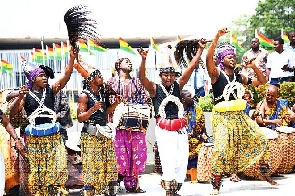
 File photo of a cultural celebration
Class differences within a nation are unavoidable. According to Karl Marx, class existence is determined by ownership of the means of production and its position in the economic process.
This relationship is exploitative and then triggers structural inequality. In this section, is the state obligated to bear responsibility? Certainly, under any circumstances, the state is obligated to take responsibility because it exists as a result of society. When legal norms are enacted, their existence must be criticized, as they are also influenced by many factors.
In Hawaiian culture, there is the term "ohana," which has the meaning of shaping how people relate to one another, their land, and their heritage. In Hawaiian beliefs, ohana symbolizes the interconnectedness of humans, plants, and responsibility. This concept is inseparable from the culture it serves as a reference. Cultural restoration was carried out after the seizure by the United States, which restored close ties.
Public awareness is crucial to supporting the state in fulfilling its obligations, while we also need the rights we deserve. Of course, culture is not just art or dance; it is an entity that deserves attention.
After the state renounced war, the definition of culture was linked to peaceful national life and comparisons with other nations, making culture an indicator of stability. Then culture became divided among humanity because that pride was continuously brought up.
But today, culture is synonymous with normalized understanding even when corruption is rampant then a “culture of corruption” emerges. Even though culture is synonymous with good things according to Koentjaraningrat. In Article 32 paragraph (1) of the 1945 Constitution of the Republic of Indonesia it is stated that the state advances Indonesian national culture amidst world civilization by guaranteeing the freedom of society to maintain and develop its cultural values” and from this article that there is also advancement part of the state.
This means that society cannot stand alone but it must also be an agent of change in the culture in question. An agent of change in society because it knows more about its culture. An interesting opinion was popularized by Mircea Eliade that the existence of religious autonomy will make other things fit. So that humans will try to return to the needs of the time so that holiness will continue to exist.
Cultural restoration, when linked to the current situation, requires extensive public promotion of culture. Culture within society should not be displaced by technology; it is a distinctive characteristic of Indonesia. Cultural restoration requires community participation through public spaces. For example, how to resolve social issues through tahlilan (religious gatherings).
This activity brings together individuals experiencing problems with their families and surrounding communities. Furthermore, how this culture can attract the attention of Gen Z is a creative aspect, as mental healing is already practiced in tahlilan. Certainly, many activities can be aligned with the current context with different approaches.
Maintaining culture without interfering with global developments is also difficult, but it must be done, even if it is only for scientific learning. This means consuming authentic literature to maintain a foundation for everyone and information that is free from hoaxes.
The existence of individuals who tend to pursue their own desires is not a disgrace but a manifestation of individual responsibility. Cultural restoration should also be supported by studies to amend the Law of the Republic of Indonesia Number 5 of 2017 concerning the Advancement of Culture. Ultimately, the rejection of culture, the gradual destruction of the nation due to the revolving system of government, will persist.
Supporting the nation is a cultural practice that must be preserved to free us from assumptions. Indonesians can appreciate the beauty of pallbearer dancing, as it's more than just a dance; it conveys a philosophical message about culture and cultured people.

Copyright © 1994 - 2026 GhanaWeb. All rights reserved.










