



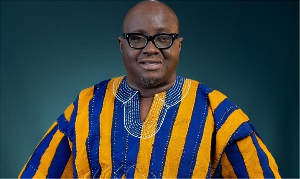
 Michael Oquaye Jnr. is former Ambassador and former CEO Ghana Free Zones Authority
Africa has witnessed a significant decline in democratic governance, evidenced by the increasing frequency of military interventions and the gradual undermining of constitutional rule by some elected Heads of State.
While coups have occurred intermittently since 2010, the interval between 2020 and 2026 has experienced a remarkable surge, with around 14 coup attempts and nine successful instances recorded throughout the continent.
Unfortunately, West Africa has been the focal point of this surge, earning the label "coup belt" due to historical trends and recent occurrences (Page & Camara 2025).
The coups in Mali in 2020 and 2021 established a precedent for the takeovers in Guinea in 2021 and Burkina Faso, which witnessed two coups in 2022, while Niger experienced similar developments in 2023.
Additionally, Guinea-Bissau and Benin saw attempted coups in 2025, contributing to the prevailing regional trend.
Examination
A rigorous examination of recent military coups in West Africa since 2020 reveals that each case presents unique causes, including constitutional decay, socio-economic pressures and security failures.
While no coup is justified, the trend warrants scrutiny.
A common factor in West Africa is the erosion of constitutional governance by leaders who manipulate democratic processes to extend their terms of office, undermining public trust, and this inadvertently leads to legitimising military interventions as justified or unjustified measures among discontented groups.
The rise of coups in Mali, Guinea, Burkina Faso, and Niger since 2020 has transpired within distinct political contexts; yet, each instance underscores a deficit in democratic accountability.
In Mali, the August 2020 coup was preceded by sustained public protests over governance failures, corruption, and disputed parliamentary elections.
Although President Ibrahim Boubacar Keïta did not formally extend his constitutional mandate, allegations of electoral manipulation and patronage politics severely undermined the credibility of democratic institutions, creating conditions in which military intervention found some public sympathy (Wing, 2021).
Guinea offers an even clearer illustration of how tenure manipulation can precipitate coups. President Alpha Condé’s decision to amend the 2010 Constitution through a controversial referendum in 2020 enabled him to seek a third term, triggering widespread protests and political repression.
His re-election later that year deepened polarisation, and the military justified its 2021 takeover as a response to what it termed a “constitutional coup” by the civilian leadership (Daddieh, 2022).
Burkina Faso’s experience underscores how earlier constitutional violations can have lasting consequences.
Although Blaise Compaoré was ousted in 2014 after attempting to extend his 27-year rule, subsequent governments struggled to rebuild trust.
As Islamist violence intensified under President Roch Marc Christian Kaboré, public frustration with persistent insecurity contributed to the perception of the military as a viable, if flawed, alternative (Hilgers & Loada, 2013).
In Niger, the 2023 coup reflected deep tensions between civilian authority and the armed forces.
While coup leaders cited insecurity and economic stagnation, the immediate trigger was President Mohamed Bazoum’s attempt to reform the military high command, including plans to retire General Abdourahamane Tchiani.
Weak civilian oversight of the security sector and limited understanding of democratic control exacerbated mistrust, culminating in intervention (Issoufou & Fleming, 2023).
Coups
Beyond outright coups, democratic regression is also evident through legal and procedural exclusion. In Benin, the restriction of opposition participation in recent electoral processes has raised serious concerns about pluralism and electoral integrity.
Scholars argue that such exclusionary practices hollow out democracy and heighten the risk of political instability (Levitsky & Way, 2010).
Similar patterns are visible in Côte d’Ivoire and Togo, where constitutional reinterpretations and amendments have enabled leaders to extend their hold on power, undermining regional democratic norms (Ahmad, 2021; Nwafor, 2022).
Across parts of Africa, concerns continue to grow over constitutional manipulation through what scholars describe as “creeping usurpation,” where leaders exploit legal systems to extend political power, weakening democratic governance and increasing instability.
Since 2025, similar debates have emerged in Ghana regarding a possible third-term bid for President John Dramani Mahama.
Public discussions intensified after Majority Leader Mahama Ayariga stated that “Ghanaians believe... they don't want him to leave,” while Mustapha Gbande, the Deputy Director of Operations at the Presidency, argued that “there's nothing anyone can do” if Mahama chooses to contest again.
However, Ghana’s Constitution, particularly Article 66(2), reinforces presidential term limits, highlighting the importance of preserving constitutional integrity and democratic stability.
Collectively, these developments point to a broader pattern of “creeping usurpation”, where incumbents exploit constitutional frameworks to entrench power.
Evidence from comparative studies suggests a strong correlation between tenure modification and increased coup risk.
For ECOWAS, the lesson is clear: safeguarding term limits, strengthening institutions, and enforcing regional norms are essential to restoring public trust and preventing further democratic decay.
Without decisive action, constitutional governance in West Africa risks being replaced by a cycle of manipulation, intervention, and instability, which Ghana should take notice of.

Copyright © 1994 - 2026 GhanaWeb. All rights reserved.










