



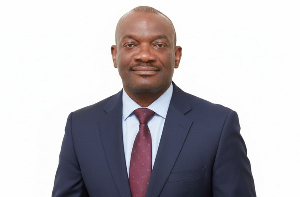
 Raymond Kudzawu-D'Pherdd is the author of this article
The lease for Gold Fields’ Tarkwa mine expires in April 2027. With gold trading above $4,500 an ounce and Tarkwa producing about 427,000 ounces in 2025 alone, the stakes could not be higher. Yet the public debate on whether Ghana should renew the lease or not has collapsed into two positions, both of which will fail the country.
The Institute of Economic Affairs has called on government not to renew the lease, arguing that Ghana now has the technical capacity to run large-scale mines through firms such as Engineers & Planners, Heath Goldfields, and Rockshore.
The Ghana Chamber of Mines, on the other hand, has countered that failing to renew the lease will signal that security of tenure in Ghana is not guaranteed, thereby scaring off future investment.
Both arguments miss a third option, which in my opinion is to democratise ownership of Tarkwa through a capped public joint venture. This model would allow Ghana to capture more revenue, avoid concentration in a few firms, and retain the technical expertise needed to run the mine safely and profitably.
Renewing the lease on terms similar to 1997 makes little sense. The original agreement was signed when Ghana lacked local capacity and when gold prices were a fraction of today’s level. Communities in Apinto and surrounding areas have made it clear they will not accept business as usual. To them, profits flow out while environmental and social costs remain local.
Handing the mine to one or two Ghanaian firms is no better. We saw this with Damang, where the lease was not renewed and awarded to Engineers & Planners (E&P). E&P has dominated services to Gold Fields at Damang and Tarkwa for so long that, when bidding opened for Damang, no local company could compete with it.
But getting E&P to take over Damang solves foreign control while creating new concentration risks, especially if Tarkwa also goes to E&P. Ghana’s mining services sector should be competitive, not dominated by two or three players. Concentration creates the same risk of capture, just under a different flag.
So, this is my proposed model: a capped public joint venture. The alternative is to establish a new operating company for Tarkwa with four categories of shareholders:
Technical partner (30–40%): Gold Fields or another miner with a proven track record at Tarkwa. They would operate the mine, manage capital expenditure, and ensure production does not collapse during transition.
Government of Ghana (capped at 15–20%): A financial partner with a board seat and veto power on strategic issues, but no operational control. The cap must be locked into the company’s constitution.
Mining Enclave Trust (10–15%): An independent trust for host communities. Dividends would fund schools, clinics, water, and roads, with public reporting on expenditure.
Public float (25–35%): An IPO on the Ghana Stock Exchange open to all Ghanaians, pension funds, trade unions, and employee share schemes.
At current prices above $4,500/oz, Tarkwa generates roughly $1.9 billion in annual revenue. Assuming a 20% operating margin, a 25% public float could yield about $90–120 million a year in dividends flowing to Ghanaian shareholders, not just foreign investors or a handful of contractors.
This is a win-win solution, and the benefits for Ghana are clear. Revenue retention increases, communities gain a direct stake, and transparency improves through quarterly public reporting. For Gold Fields and future investors, the model reduces political risk.
The contract is renegotiated, not seized or nationalised. Technical risk is managed by retaining experienced operators, if they are willing to continue.
This is not theoretical, but an improved and broader version of successful models from other jurisdictions, tailored to Ghana’s current realities. For example, Botswana’s Debswana joint venture between De Beers and the government has underpinned Botswana’s development for 50 years.
The key difference in the proposed model for Ghana is ownership breadth. Debswana is a 50–50 structure between two parties. Tarkwa’s model would spread ownership to over 100,000 Ghanaians.
There are objections worth addressing. For critics who say “Ghana cannot run mines”—correct. That is why we are not proposing that government runs the mine day-to-day. We are proposing that Ghanaians own it, while professionals operate it.
“Markets will panic,” others may argue. Markets panic at uncertainty, not at structured joint ventures with clear caps and governance rules.
“What about community trusts being looted?” That is a valid concern. The answer is independent trustees, public audits, and earmarked spending. The model fails if the trust becomes a patronage vehicle.
What needs to happen now for this model to take off is that Parliament and the Ministry of Lands and Natural Resources, through the Minerals Commission, should make the capped public joint venture the default model for all large-scale mines producing over 200,000 ounces a year. Negotiations with Gold Fields should start now, not six months before expiry. The trusteeship framework must be established before any IPO.
If done correctly, Tarkwa would become proof that resource democratisation is not resource nationalisation, but a way to strengthen investor confidence. Ghana can increase local benefit without repeating the mistakes of the 1970s nationalisations or the excessive concentration seen today.
Tarkwa should not be nationalised, but democratised. It should not be handed to a monopoly. It should belong to Ghanaians, workers, communities, pensioners, and ordinary investors. That is how you turn gold into development.

Copyright © 1994 - 2026 GhanaWeb. All rights reserved.










