



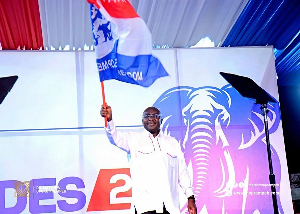
 Dr Mahamudu Bawumia is a former Vice President of Ghana
Dr Mahamudu Bawumia has once again secured the confidence of the New Patriotic Party (NPP) after emerging victorious in the party’s presidential primaries held on Saturday, January 31, 2026.
With 56.48% of the valid votes cast by more than 211,000 accredited delegates, the Vice President’s decisive win reaffirms his standing within the party and positions him as the NPP’s flagbearer for the 2028 general election.
The outcome ends week of intense internal campaigning involving five aspirants.
Former Assin Central Member of Parliament, Kennedy Ohene Agyapong, placed second, followed by former Minister for Food and Agriculture, Dr Bryan Acheampong, in third position.
Dr Yaw Osei Adutwum and former General Secretary Kwabena Agyei Agyepong also joined the contest but were unable to significantly challenge Dr Bawumia’s commanding lead.
The results show a broad endorsement of Dr Bawumia’s vision by the party’s grassroots and leadership.
As the political focus shifts from primary elections to the national stage, analysts suggest unity within the NPP will be critical, while the National Democratic Congress (NDC) appears outwardly cohesive as potential flagbearer hopefuls begin early positioning. Prominent figures frequently mentioned as potential successors to President John Dramani Mahama include Haruna Iddrisu, the Member of Parliament for Tamale South and Minister for Education; Dr Cassiel Ato Forson, the member of parliament (MP) for Ajumako Enyan Essiam who serves as Minister for Finance and Acting Minister for Defence; and Johnson Asiedu Nketiah, the National Chairman of the NDC and Board Chairman of the Ghana Ports and Harbours Authority (GPHA), Julius Debrah, the Chief of Staff and Eric Opoku who is the current minister for the Ministry of Food and Agriculture.
Among these contenders, Haruna Iddrisu is often portrayed by opinion polls as enjoying broad appeal across key regions, while Finance Minister Cassiel Ato Forson has also gained significant traction but Asiedu Nketiah’s rich political experience should not be relegated to the back ground as he is capable of winning any elections in the NDC.
This competitive internal field within the NDC heightens the urgency for the NPP to close ranks quickly, consolidate its base and articulate a clear national message capable of countering the ruling party’s strategy for 2028.
Within the NPP, calls for unity have grown louder since the primaries. Party elders, youth leaders, and communicators have stressed that internal rivalries must give way to collective purpose. Supporters of defeated aspirants are being urged to channel their energies, ideas and structures into a shared mission of returning the NPP to power.
The role of party communicators during the primaries has also come under positive scrutiny. Figures such as Akosua Manu, Miracles Aboagye and Kojo Oppong Nkrumah who were some of the leading communicators of the Dr Bawumia campaign were instrumental in shaping narratives, defending policy positions and sustaining grassroots enthusiasm.
Their efforts helped in keeping internal debate largely constructive, even at moments of heightened tension and that demonstrated the importance of disciplined communication in modern political contests.
Similarly, the General Secretary of the party, Justin Kodua Frimpong, has received commendation for his organizational stewardship of the primaries.
Despite criticisms from some quarters, including individuals with ambitions to contest his position, the conduct of the election was widely viewed as orderly, transparent, and credible. For many party members, this administrative efficiency strengthens confidence in the party’s internal democratic processes ahead of future contests.
Dr Bawumia’s political strength lies in his personal connection with the people. Often described as grounded and humble, he provides a refreshing alternative for voters tired of out-of-touch leadership. At a time when public trust is low, his relatable demeanour could be the decisive factor that shapes his legacy.
Ghana’s political history offers reminders of how quickly fortunes can change. Former President J.A. Kufuor and former President Nana Addo Dankwa Akufo-Addo both faced skepticism before ultimately winning power.
Many said they would never become presidents but they ultimately won elections and ruled the country. Similarly, many said President Mahama would never return to the presidency after 2016 but he overwhelmingly won the 2024 presidential elections.
These precedents underscore a key lesson: elections are not settled by predictions alone, but by organization, unity, and the ability to connect with the electorate. In light of this, those saying Dr. Bawumia would never become president need to rethink and take some lessons from the Kufour, Nana Addo and Mahama’s scenario.
For Dr Bawumia and the NPP, the task ahead is clear but demanding. Transforming primary victory into national success will require healing internal divisions, building broad alliances, and crafting a compelling message that speaks to the everyday concerns of Ghanaians; youth, farmers, professionals and business owners alike. Unity, in this context, is not mere rhetoric; it is a strategic necessity.
As the 2028 election cycle gradually unfolds, Ghana’s democracy will once again benefit from vigorous competition. Whether the NPP can fully harness its collective strengths under Dr. Bawumia’s leadership will determine if it can offer voters a credible, hopeful and transformative alternative at the ballot box.

Copyright © 1994 - 2026 GhanaWeb. All rights reserved.










