



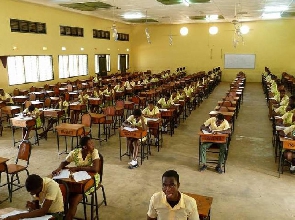
 File photo of students writing exams
Free basic education in Ghana is under threat, not from lack of policy, but from lawlessness inside the classroom.
Across many public basic schools, headteachers and some teachers have turned extra classes into a compulsory, fee-paying enterprise.
Pupils from Class 1 to Class 6 are compelled to pay GHC 20, GHC 50, GHC 150 or more per term for “extra classes” organised during normal contact hours, after school, or on Saturdays. Those who cannot pay are threatened with failure, canned, sacked from class, denied end-of-term examinations, or deliberately neglected during normal lessons. This is extortion. It must be stopped.
Kenyase Primary School in the Kwabre District in the Ashanti Region is a classic example of a school engaging in this act of illegal extortion from parents.
What Is Happening On The Ground
Compulsory in name, paid in cash: What used to be voluntary remedial support has become mandatory. Parents receive notes: “All pupils must pay for extra classes” Payment is compulsory whether the child attends or not.
Teaching during extra classes: Some teachers intentionally under- perform during the official 8 am - 2 pm period and reserve the real teaching for the paid extra class, forcing even willing learners to pay. Tied to assessment: Children who do not pay are barred from writing exams, the same illegal practice the Ghana Education Service (GES) and Africa Education Watch have already condemned.
No receipts, no accountability: Money is collected in cash, without approval from the District Education Directorate.
Why It Is Illegal
Ghana's Free Compulsory Universal Basic Education (FCUBE) policy is not a slogan; it is law that must be protected by teachers and headteachers.
Section 2(b) of the Pre-Tertiary Education Act, 2020 (Act 1049) states that basic education shall be free, compulsory and universal.
The GES Director-General has repeatedly directed that no head of a public basic school should collect any levy, including mock, terminal exams, or extra classes’ fees.
Charging extra classes fees denies poor students opportunity for remediation and undermines equity.
The Ministry's current position under Minister Haruna Iddrisu is clear: demanding unapproved fees and denying access attracts strict sanctions.
Public basic schools are funded through the Capitation Grant. Any additional support must be voluntary and approved by the District. Compulsory extra class fees violate that.
The Damage
It punishes the poor: A pure water seller in Lapaz cannot find GHC 50 for exams; how will she find GHC 50 every month for extra classes?
Children like Monica Edem, who was sent home over GHC 50, are pushed out.
It destroys quality: It creates a two-tier system in the same classroom, paying learners and neglected learners. It also erodes trust, because parents lose confidence in government schools and resort to low-cost private schools, defeating the purpose of FCUBE.
What The Ministry of Education and GES Must Do Now
The Ministry cannot issue another circular and look away. We demand:
An explicit nationwide ban with sanctions: The Minister must issue a fresh, unequivocal directive that compulsory paid extra classes in all public KG, Primary and JHS are banned.
Monitoring and hotlines: Regional and District Directors must be tasked to monitor and act. The Ministry should publish a toll-free code/WhatsApp line for parents to report extortion anonymously, without fear of victimisation of their wards.
Punitive action: Heads found culpable should face administrative sanctions as promised. That will deter others.
Legitimate intervention: If remedial learning is needed, GES should organise it within the official timetable and pay teachers an approved intervention allowance from government coffers, as was done for SHS, not from parents' pockets.
Basic education is free. It must remain free in practice, not just on paper. Every cedi extorted from a parent in a government primary school is a direct assault on FCUBE and on the child’s constitutional right to education.
The Ghana Ministry of Education must act now.

Copyright © 1994 - 2026 GhanaWeb. All rights reserved.










